Akhilesh Yadav calls on youth to raise Constitution against rulers
Synopsis
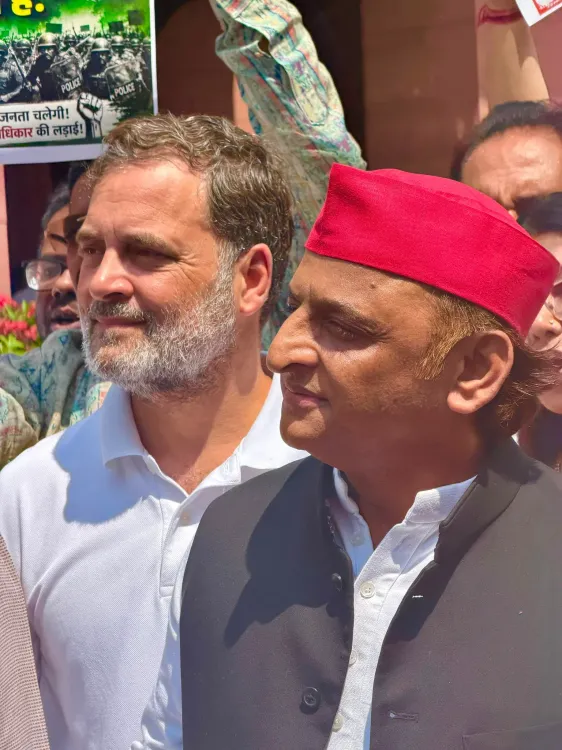
Samajwadi Party president Akhilesh Yadav on 23 July 2026 posted a Hindi verse on X calling on Indian youth to raise the Constitution as a symbol of resistance against rulers who refuse to listen, signalling a fresh opposition mobilisation push.
Key Takeaways
Akhilesh Yadav posted a Hindi verse on 23 July 2026 calling on youth to hold the Constitution as a tool of resistance.
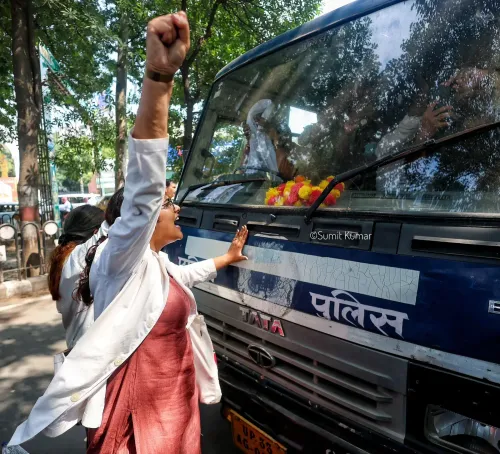
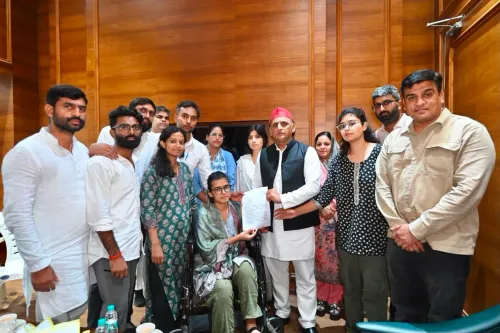
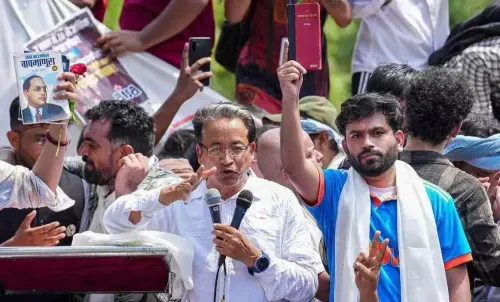
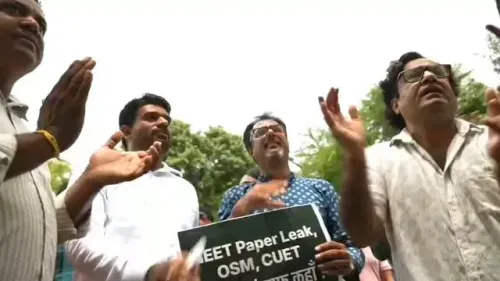
The post translates as: 'When the ruler will not listen, this declaration must be made — the youth will not stop now, Constitution in hand!' The message was accompanied by three images , reinforcing the visual appeal around constitutional themes.
Samajwadi Party has historically invoked constitutional values — secularism, federalism, social justice — as the core of its opposition politics.
The post targets Indian youth as the primary audience and agent of political resistance.
The rhetoric fits a broader pattern of opposition parties mobilising around constitutional protection ahead of electoral cycles in Uttar Pradesh .
Samajwadi Party president Akhilesh Yadav on Thursday, 23 July 2026, issued a sharp political call to action, urging young Indians to hold up the Constitution as a symbol of resistance when those in power refuse to listen. The post, shared on X, is framed as a rallying verse directed at the country's youth and the ruling establishment.
The Hindi-language post reads: 'Jab nahin sunega hukumraan tab karna hoga ye elaan, ab nahin thamega naujawaan le kar haath mein 'Samvidhan'!' — translated as: 'When the ruler will not listen, this declaration must be made — the youth will not stop now, Constitution in hand!'
Context
Akhilesh Yadav has long positioned the Samajwadi Party as a defender of constitutional values, particularly in its opposition to the central government. The verse-like phrasing — with its rhythmic cadence and exclamation marks — signals an attempt to energise party workers and sympathisers, especially younger voters, through emotive political language. The post was accompanied by three images, the contents of which reinforce the visual messaging around the constitutional appeal.
Policy Backdrop
The invocation of the Constitution as a political instrument is a well-established tactic in Indian opposition politics. Samajwadi Party has historically used constitutional principles — secularism, federalism, and social justice — as the ideological bedrock of its campaigns, especially when challenging perceived central government overreach. This approach gained particular salience during debates over governance and rights in Uttar Pradesh and at the national level through the 2010s and beyond.
Across the opposition landscape, framing political resistance through the lens of constitutional protection has become a unifying theme, allowing regional parties to connect local grievances to broader questions of democratic rights. Such rhetoric typically intensifies ahead of electoral cycles, both in Uttar Pradesh — India's most populous state — and at the national level.
Stakeholders and Impact
The primary audience for this message is Indian youth and the Samajwadi Party's support base, particularly in Uttar Pradesh. By centering the youth — 'naujawaan' — as the agent of constitutional defence, Yadav is appealing to a demographic that has shown heightened political awareness in recent years. Opposition supporters are likely to amplify the post as part of broader anti-establishment mobilisation.
The ruling dispensation at both the state and central level is implicitly addressed as the 'hukumraan' (ruler) who 'will not listen' — a framing designed to sharpen the contrast between the opposition's constitutional stance and the government's perceived indifference.
What's Next
Observers will watch whether this post signals the beginning of a coordinated opposition campaign invoking constitutional protections, particularly in the context of Uttar Pradesh state politics. Any follow-up announcements, rallies, or party communications in the coming weeks will indicate whether this is a standalone expression or the opening salvo of a structured political drive. The intensity of youth-focused constitutional rhetoric from the Samajwadi Party is likely to be a key indicator of the party's electoral strategy in the near term.
Point of View
He is attempting to channel generational energy into party mobilisation. The rhythmic, slogan-like phrasing suggests the post is designed as shareable content for ground-level workers, not just a statement for the political class. If followed by coordinated events or campaigns, this could mark the early phase of a structured pre-election push in Uttar Pradesh.
NationPress
22 Oct 2026
Frequently Asked Questions
What did Akhilesh Yadav post on X on 23 July 2026?
Akhilesh Yadav posted a Hindi verse urging Indian youth to hold the Constitution in hand as a declaration of resistance when rulers refuse to listen.
What does Akhilesh Yadav's 'Constitution in hand' post mean?
The post calls on young Indians to use the Constitution as a symbol of political resistance against a ruling establishment perceived as unresponsive to public concerns.
Why is Samajwadi Party invoking the Constitution?
The Samajwadi Party has historically framed its opposition politics around constitutional values such as secularism and social justice, using such rhetoric to mobilise voters, especially youth, against the ruling government.
Is Akhilesh Yadav targeting youth voters with this post?
Yes, the post explicitly centres the youth — referred to as 'naujawaan' in Hindi — as the primary agents of constitutional defence and political resistance.
What is the significance of this post for Uttar Pradesh politics?
The post could signal the start of a coordinated opposition campaign in Uttar Pradesh, where constitutional rhetoric has historically been used to challenge the ruling dispensation ahead of electoral cycles.