Akhilesh Yadav bets big on PDA unity ahead of 2027 UP polls
Synopsis
Samajwadi Party president Akhilesh Yadav has publicly invoked the PDA (Pichhda, Dalit, Alpsankhyak) coalition on X, declaring that unified PDA strength will deliver an even bigger victory — a clear early signal of SP's 2027 Uttar Pradesh election mobilisation.
Key Takeaways
Akhilesh Yadav posted a Hindi rallying message on 26 October 2026 declaring that a united PDA will produce an even bigger SP victory.
PDA stands for Pichhda (backward classes), Dalit, and Alpsankhyak (minorities) — the SP's three-community electoral coalition.
The Samajwadi Party first formally deployed the PDA framework as its core electoral strategy in the 2022 Uttar Pradesh assembly elections .
The post signals early mobilisation ahead of the 2027 Uttar Pradesh assembly elections .
The strategy aims to consolidate non-Yadav OBCs, Dalit voters, and Muslim communities into a single electoral bloc.
Uttar Pradesh's 80 Lok Sabha seats and 400-plus assembly constituencies make its coalition dynamics a national political variable.
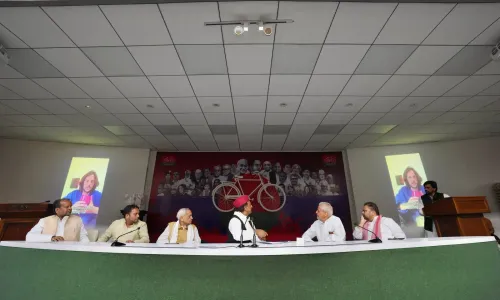
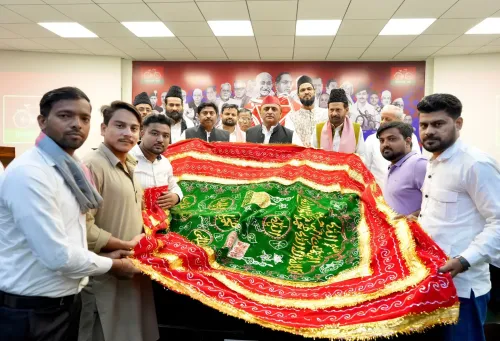
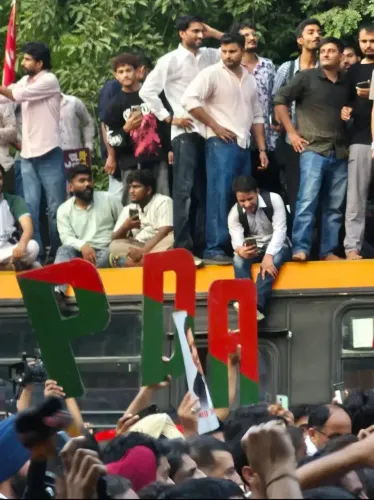
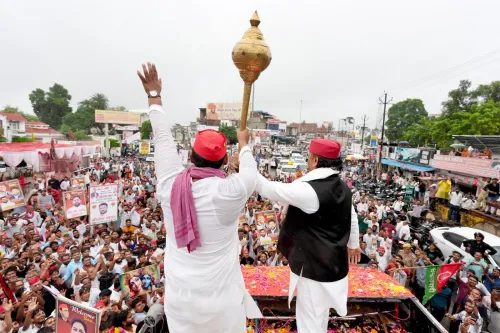
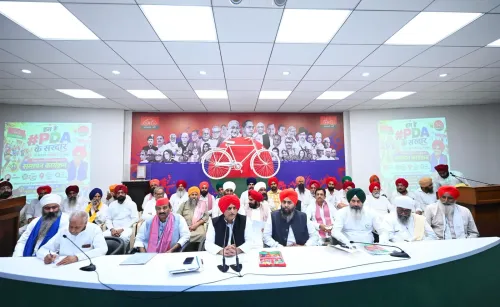
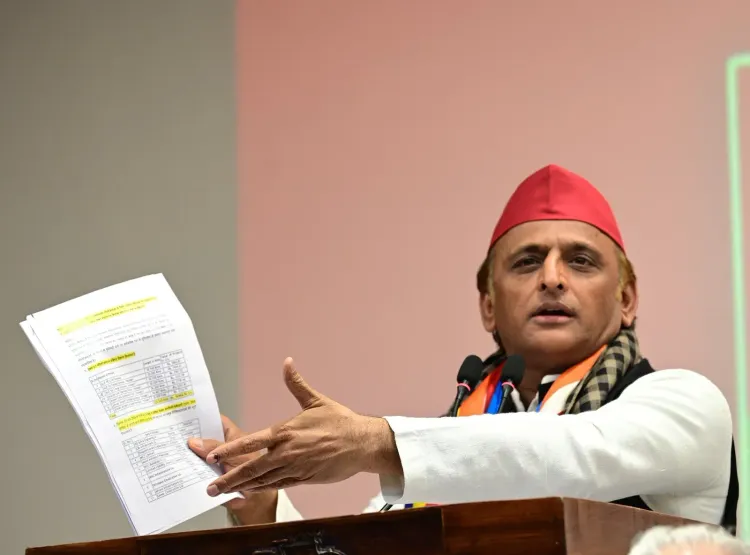
When a coalition roars together, it wins bigger — that is the precise political bet Samajwadi Party president Akhilesh Yadav is placing in public, with a sharp message posted on X on Monday, 26 October 2026. With four images accompanying the post, the signal is unmistakable: the PDA engine is warming up well ahead of the 2027 Uttar Pradesh assembly elections.
Yadav's post, in Hindi, reads: 'Jab PDA ki taaqat ek saath khadi hogi toh hamare PDA ki jeet aur bhi badi hogi!' — 'When the strength of PDA stands together, our PDA's victory will be even greater!' Compact, combative, and calibrated: a rallying cry aimed squarely at his three-community base.
What PDA actually means — and why it keeps coming back
PDA stands for Pichhda (backward classes), Dalit, and Alpsankhyak (minorities) — the three-legged social coalition the Samajwadi Party formally deployed as its core electoral strategy in the 2022 Uttar Pradesh assembly elections. The logic is arithmetic as much as ideology: none of these groups alone commands a majority, but stitched together they form a formidable bloc in a state that sends 80 MPs to the Lok Sabha and fields over 400 assembly constituencies.
Uttar Pradesh politics has always run on the fuel of caste arithmetic. What the SP under Akhilesh did with PDA was give that arithmetic a brand — a rallying label that could travel on a poster, trend on social media, and fit on a campaign T-shirt. The formula attempts to pull in non-Yadav OBCs, Dalit voters, and Muslim communities, broadening the party's base beyond its traditional Yadav-Muslim core.
The 2027 clock is already ticking in Lucknow
The 2027 Uttar Pradesh assembly elections are still months away, but the mobilisation calendar starts now. A post of this kind — paired with images, not just text — is a deliberate activation signal to booth-level workers and community leaders: the PDA frame is the official campaign architecture, and unity is the non-negotiable condition for scale.
Yadav's use of the word 'taaqat' (strength) is notable. It positions the coalition not as a defensive alliance of minorities but as an offensive force — a framing designed to project momentum and pre-empt any narrative of fragmentation within the alliance. For a party that sits in opposition in Lucknow, projecting inevitability is itself a political tool.
With every major Uttar Pradesh election doubling as a national bellwether, how tightly the SP can bind its PDA coalition — and whether alliance talks with other Opposition formations materialise — will define the contest's shape long before a single vote is cast.
Point of View
If sustained from this far out, becomes self-fulfilling: workers organise around it, local leaders align with it, and wavering communities read momentum and follow. The critical watch point is whether the PDA frame can hold together the internally heterogeneous Dalit and non-Yadav OBC blocs, which have historically been poachable by the BJP's own backward-class outreach. If the SP can seal those fissures before the campaign season proper, it enters 2027 with a structurally different political floor than it had in 2022.
NationPress
26 Oct 2026
Frequently Asked Questions
What is PDA in Samajwadi Party politics?
PDA stands for Pichhda (backward classes), Dalit, and Alpsankhyak (minorities) — a three-community social coalition that the Samajwadi Party uses as its core electoral strategy in Uttar Pradesh, first formally deployed in the 2022 state assembly elections.
What did Akhilesh Yadav say about PDA on 26 October 2026?
Akhilesh Yadav posted in Hindi: 'When the strength of PDA stands together, our PDA's victory will be even greater!' — a rallying call directed at his three-community base ahead of the 2027 UP assembly elections.
When are the next Uttar Pradesh assembly elections?
The next Uttar Pradesh assembly elections are due in 2027. Akhilesh Yadav's PDA mobilisation messaging in late 2026 is widely read as early campaign-cycle activation for that contest.
Which communities does the SP's PDA coalition target?
The PDA coalition targets non-Yadav Other Backward Classes (OBCs), Dalit communities, and Muslim minorities — groups that together form a potentially decisive voting bloc across Uttar Pradesh's 400-plus assembly constituencies.
Why is Uttar Pradesh politics important nationally?
Uttar Pradesh sends 80 members to the Lok Sabha — more than any other state — making its caste coalition dynamics a major variable in national election outcomes and a constant focus of all major political parties.