Akhilesh Yadav bets on PDA coalition to crack BJP's hold in UP
Synopsis
Samajwadi Party president Akhilesh Yadav posted a Hindi battle-cry on X, declaring that his PDA — OBC, Dalit, and Minority — coalition will 'smash BJP's pot of sins' with its vote, signalling early mobilisation ahead of the 2027 Uttar Pradesh assembly elections.
Key Takeaways
Akhilesh Yadav posted a rhyming Hindi slogan on 17 October 2026 pledging to crack BJP's dominance through PDA votes.
PDA stands for Pichhda-Dalit-Alpsankhyak — the OBC, Dalit, and minority voter coalition that is the Samajwadi Party's core electoral strategy in Uttar Pradesh.
The formula was first formalised as a campaign plank in the 2022 UP assembly elections , where SP made gains but fell short of a majority.
The post comes roughly a year before the 2027 Uttar Pradesh assembly elections , fought across 403 constituencies in India's most populous state.
BJP has responded to the PDA challenge by cultivating non-Yadav OBC sub-castes; SP's counter-argument is that those communities have been co-opted rather than empowered.
Analysts will watch whether SP can consolidate Dalit votes, historically a BSP stronghold, under the PDA umbrella.
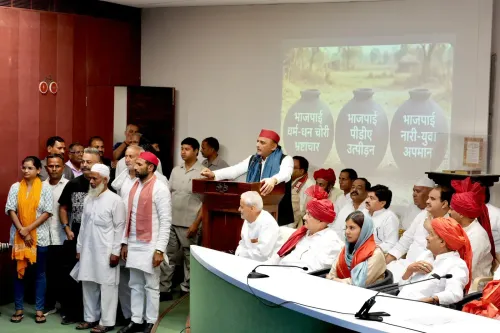
A battle-cry in two lines — and a whole electoral strategy packed inside it. Samajwadi Party president Akhilesh Yadav on Saturday, 17 October 2026 posted a sharp Hindi couplet on X, declaring that the PDA vote — his shorthand for the Pichhda-Dalit-Alpsankhyak (OBC-Dalit-Minority) coalition — will shatter what he called the BJP's 'pot of sins.'
The original post reads: 'PDA' vote ki chot se todenge, BJP ke paap ke ghade fodenge! — 'With the blow of the PDA vote, we will break and smash the BJP's pot of sins!' The imagery is deliberately folk: a ghada (earthen pot) cracked open, sins spilling out. The idiom is rural Uttar Pradesh. The target audience is unmistakable.
What PDA means — and why it still stings BJP
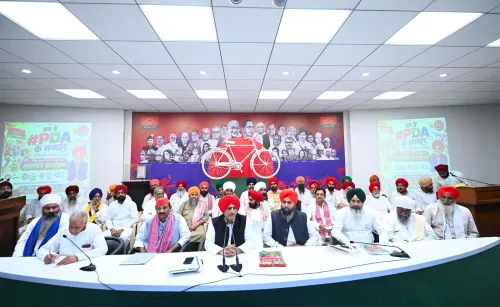
The PDA formula is not new. Akhilesh Yadav formally anchored the Samajwadi Party's 2022 Uttar Pradesh assembly election campaign around this three-part voter coalition: Other Backward Classes (OBCs), Dalits, and religious minorities, principally Muslims. The arithmetic is formidable on paper — these groups together account for a commanding share of Uttar Pradesh's electorate. In 2022, SP improved its tally significantly but ultimately fell short of ousting the BJP government. The party has since worked to deepen and widen the coalition.
The genius — and the gamble — of the PDA frame is that it converts caste identity into a grievance coalition rather than a loyalty network. Yadav's post does exactly that: it names the adversary (BJP), assigns them a moral charge ('sins'), and positions PDA voters as the instrument of correction. That is classic social-justice mobilisation, compressed into a rhyming slogan.
The 2027 UP assembly elections loom large
The timing of the post, in October 2026, places it squarely in the long runway to the 2027 Uttar Pradesh assembly elections — the single biggest state contest in Indian democracy, fought across 403 constituencies in a state of over 240 million people. Every slogan at this stage is a trial balloon: which frame sticks, which metaphor travels on WhatsApp, which line gets chanted at rallies.
For BJP, the PDA challenge is structural. The party has spent years peeling off sub-castes from the OBC bloc — drawing Kurmi, Nishad, and non-Yadav OBC communities into its own tent. SP's counter-move is to argue those communities have been used, not served, and that only a unified PDA front can deliver real power. Akhilesh's October post is a reminder that this argument is being sharpened, not shelved.
Rhetoric as rally fuel — and its limits
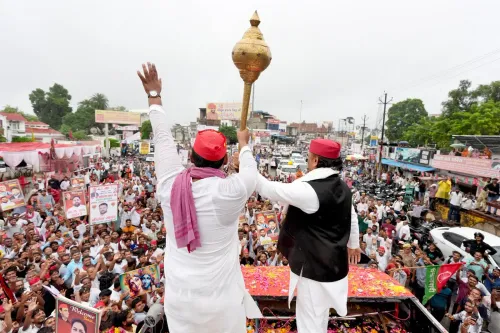
Rhyming political slogans have a proud lineage in Uttar Pradesh politics — from Kanshi Ram's era-defining couplets to the SP's own 'Kaam bolta hai' campaigns. A well-crafted line can outlast an entire press conference. But rhetoric alone does not win 403 seats. Analysts watching the SP will look for what follows: alliance announcements, candidate selection across caste blocs, and whether Dalits — historically drawn more to BSP — actually consolidate behind the SP-led PDA umbrella.
For now, Akhilesh Yadav is doing what good opposition leaders do at this stage of a cycle: keeping the coalition warm, keeping the narrative alive, and making sure the BJP knows the PDA pot is still on the fire.
Point of View
He attempts to convert caste identity into a shared grievance — a harder form of solidarity than mere community loyalty. The post signals that SP has no intention of abandoning the PDA architecture despite its 2022 shortfall; if anything, the party is doubling down on it as the organising principle for 2027. The key test is whether Dalits, who have historically gravitated toward BSP, will accept SP as the credible vehicle for PDA consolidation — a structural challenge no slogan alone can resolve.
NationPress
17 Oct 2026
Frequently Asked Questions
What is PDA in Samajwadi Party politics?
PDA stands for Pichhda-Dalit-Alpsankhyak — a coalition of Other Backward Classes, Dalits, and religious minorities that the Samajwadi Party has positioned as its primary vote base to challenge BJP in Uttar Pradesh.
What did Akhilesh Yadav post on X on 17 October 2026?
He posted a rhyming Hindi couplet declaring that the PDA vote will 'break and smash BJP's pot of sins,' signalling early campaign mobilisation ahead of the 2027 UP assembly elections.
When are the next Uttar Pradesh assembly elections?
The next Uttar Pradesh assembly elections are expected in 2027 , covering all 403 constituencies in India's most populous state.
Did the PDA strategy work in the 2022 UP elections?
In 2022, the Samajwadi Party improved its seat tally significantly by campaigning on the PDA coalition but ultimately fell short of a majority, with BJP retaining power under Chief Minister Yogi Adityanath.
Why do Dalits matter so much to Akhilesh Yadav's PDA coalition?
Dalits form a large share of UP's electorate and have historically backed BSP. If SP can pull even a portion of Dalit voters into the PDA bloc, it significantly changes the caste arithmetic against BJP.