Akhilesh Yadav leads black-cloth protest at Parliament
Synopsis
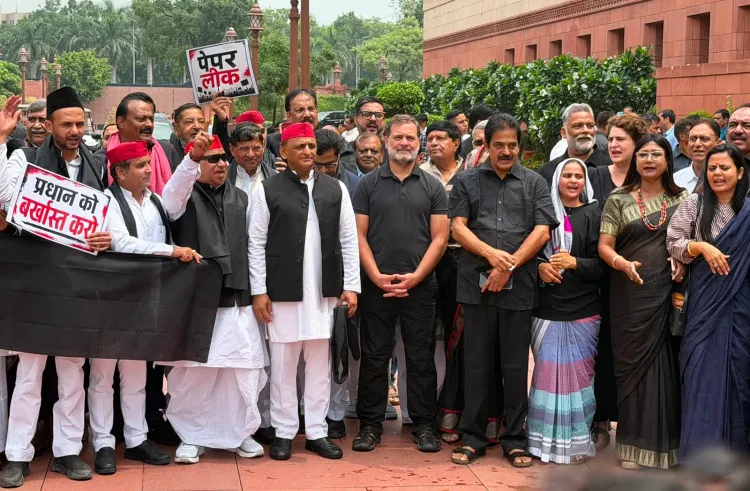
Samajwadi Party president Akhilesh Yadav on 22 July 2026 led opposition MPs carrying black cloth to Parliament, condemning alleged mistreatment of students, parents, and MPs, and declared the BJP's 'Amrit Kaal' a dark era of misrule, vowing continued struggle.
Key Takeaways
Akhilesh Yadav led opposition members with black cloth to Parliament on 22 July 2026 as a protest symbol.
He contrasted the gesture with a separate white-cloth demonstration at Jantar Mantar .
Yadav condemned alleged mistreatment of children, parents, well-wishers, and opposition MPs as 'utterly condemnable.' He reframed the BJP 's self-described ' Amrit Kaal ' as a ' kaala kaal ' (dark era) of misgovernance.
He declared the Samajwadi Party 's stance: 'No compromise; there will be struggle.' The protest is part of a broader INDIA alliance pattern of coordinated parliamentary and extra-parliamentary opposition.
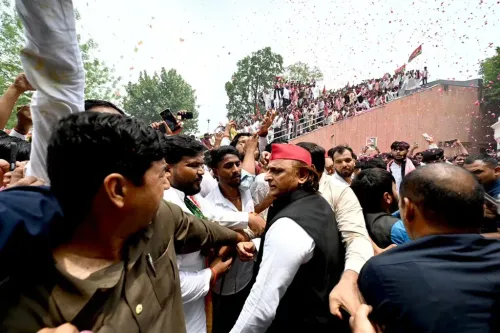
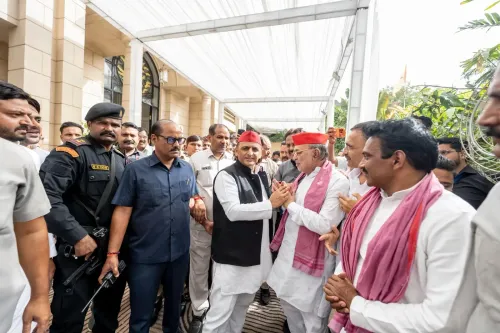
Samajwadi Party president Akhilesh Yadav on Wednesday, 22 July 2026, led opposition members carrying black cloth to Parliament, contrasting the gesture with a separate white-cloth demonstration at Jantar Mantar, and condemned what he described as gross mistreatment of children, parents, and opposition MPs.
Context
Posting on X, Akhilesh Yadav wrote: 'वो सफ़ेद कपड़ा लेकर गये जंतर-मंतर हम काला कपड़ा लेकर पहुँचे संसद!' — 'They went to Jantar Mantar with white cloth; we reached Parliament with black cloth!' The contrast was deliberate: white cloth at Jantar Mantar signalled one set of protesters, while black cloth at Parliament was the opposition's chosen symbol of dissent and mourning.
Yadav declared the alleged mistreatment of students, their parents, well-wishers, and opposition MPs 'utterly condemnable.' He closed with a combative line: 'समझौता नहीं; संघर्ष होगा!' — 'No compromise; there will be struggle!'
Policy Backdrop
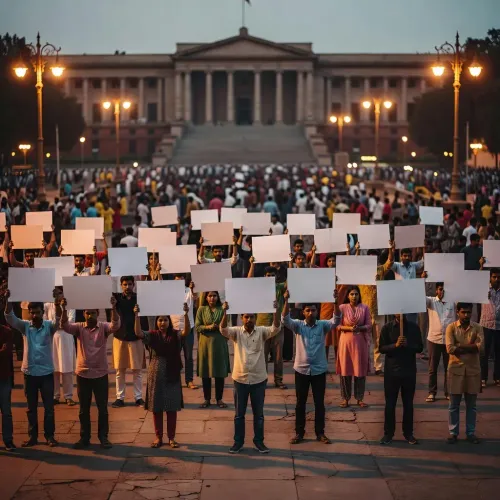
Opposition MPs have staged coordinated protests at both Parliament and Jantar Mantar on multiple occasions since 2014, frequently wearing black attire to signal dissent against the ruling Bharatiya Janata Party. Such demonstrations have become a recurring feature of parliamentary sessions when opposition parties allege procedural high-handedness or mistreatment of demonstrators.
Yadav's post directly targets the BJP's self-described 'Amrit Kaal' — a term the ruling party uses to describe India's journey toward its centenary of independence in 2047. He reframed it as a 'kaala kaal' (dark era) of misrule, saying: 'The BJP's Amrit Kaal will turn into the 'black' era of their misgovernance.' He added that the BJP's record 'will not even be written with coal' — a Hindi idiom suggesting an era too shameful to be recorded in history.
Stakeholders and Impact
The post explicitly names children, their parents, and their well-wishers as victims of alleged mistreatment, alongside opposition MPs. The Samajwadi Party is a key constituent of the INDIA opposition alliance, and Yadav's statement signals that the alliance intends to escalate pressure both inside and outside Parliament.
The invocation of students and parents widens the political frame beyond parliamentary procedure, appealing to a broader public constituency. Symbolic protests — black armbands, black cloth, candle marches — have historically amplified opposition messaging during periods of heightened parliamentary tension.
What's Next
Yadav's closing declaration — 'No compromise; there will be struggle' — signals that the Samajwadi Party and its INDIA alliance partners are unlikely to let the matter rest within the current parliamentary session. Coordination among alliance partners ahead of follow-up protests, and possible escalation of demonstrations at Jantar Mantar and Parliament, will be closely watched.
Whether opposition parties can sustain unified pressure and translate street-level symbolism into legislative impact remains the key question as Parliament's proceedings continue.
Point of View
He broadens the grievance beyond procedural politics into an emotive public-welfare frame, a tactic the Samajwadi Party has used effectively in Uttar Pradesh electoral cycles. The 'Amrit Kaal versus kaala kaal' rhetorical inversion is the opposition's sharpest counter-narrative to the BJP's centenary vision, and its repetition across INDIA alliance leaders suggests coordinated messaging. Whether this symbolism converts into sustained legislative disruption or public mobilisation will test the alliance's cohesion ahead of the next major electoral contest.
NationPress
23 Jul 2026
Frequently Asked Questions
Why did Akhilesh Yadav carry black cloth to Parliament?
Akhilesh Yadav carried black cloth to Parliament on 22 July 2026 as a symbol of protest and mourning, condemning the alleged mistreatment of students, parents, and opposition MPs. Black attire has been a recurring opposition protest symbol in Indian parliamentary politics.
What is the difference between the Jantar Mantar and Parliament protests?
According to Yadav's post, one group of protesters went to Jantar Mantar with white cloth, while the Samajwadi Party and opposition MPs brought black cloth directly to Parliament, signalling a sharper, institution-level dissent.
What did Akhilesh Yadav say about BJP's Amrit Kaal?
Yadav said the BJP's 'Amrit Kaal' would turn into the 'black era' of their misgovernance, and that the BJP's rule would find no place in history — a phrase meaning it is too shameful to be recorded or repeated.
Who are the stakeholders in Akhilesh Yadav's Parliament protest?
Yadav specifically named children, their parents, their well-wishers, and opposition MPs as those who allegedly faced mistreatment, making the protest relevant to both parliamentary and public constituencies.
What is the INDIA alliance's strategy in Parliament?
The INDIA opposition alliance, of which the Samajwadi Party is a key member, has pursued coordinated protests inside Parliament and at Jantar Mantar to highlight alleged misrule, with Yadav's 22 July 2026 action being the latest instance.