Sonowal meets ministry staff, backs Maritime Amrit Kaal Vision 2047
Synopsis
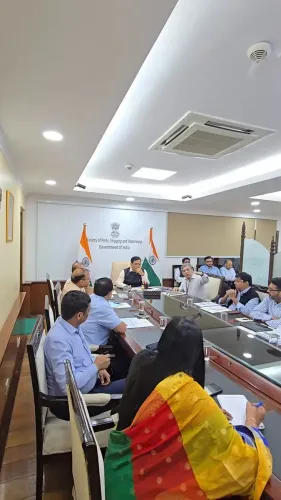
Union Minister Sarbananda Sonowal met young staff of the Ministry of Ports, Shipping and Waterways on 23 July 2026, calling them 'Ambassadors of our Ministry' and urging them to deepen inter-wing knowledge and boost public awareness to advance Maritime Amrit Kaal Vision 2047.
Key Takeaways
Union Minister Sarbananda Sonowal held a staff engagement session at the Ministry of Ports, Shipping and Waterways on 23 July 2026 .
He called young ministry officials the 'Ambassadors of our Ministry,' emphasising their role in driving the Maritime Amrit Kaal Vision 2047 .
Sonowal urged staff to build inter-wing knowledge — cross-divisional familiarity — to improve coordination within the ministry.
Greater public awareness of the ministry's work was a specific goal he outlined for staff-led outreach.
The engagement fits within a broader pattern of Sagarmala Project and Maritime India Vision 2030 capacity-building efforts aimed at India's 2047 maritime targets.
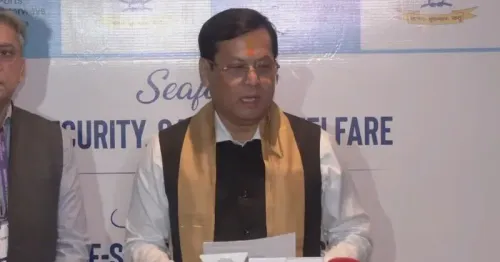
Union Minister of Ports, Shipping and Waterways Sarbananda Sonowal on Thursday, 23 July 2026, held an engagement session with young staff of the Ministry of Ports, Shipping and Waterways, calling them the 'Ambassadors of our Ministry' and drawing on their ideas to advance the Maritime Amrit Kaal Vision 2047.
Context
Sonowal described the interaction as a 'brilliant discussion' and said conversations 'infused with novel ideas and valuable experiences will enrich and anchor our journey towards Maritime Amrit Kaal Vision 2047.' He encouraged staff to deepen inter-wing knowledge — that is, to build familiarity across different divisions of the ministry — and to communicate the ministry's work more actively to the public.
The session signals an internal push to treat frontline ministry personnel not merely as administrators but as active advocates for the sector's transformation. By framing young officials as 'ambassadors,' Sonowal is publicly recognising their role in shaping both policy delivery and public perception.
Policy Backdrop
Maritime Amrit Kaal Vision 2047 is the ministry's long-term roadmap for India's maritime sector, aligned with the nation's centenary of independence. It builds on earlier frameworks: the Maritime India Vision 2030, unveiled in 2021, which set targets for modernising ports and shipping infrastructure, and the Sagarmala Project, launched in 2015, which anchors port-led economic development across India's coastline and inland waterways.
Together, these programmes represent a layered strategy to position India as a global maritime hub — expanding cargo capacity, reducing logistics costs, and developing inland waterway networks. The Ministry of Ports, Shipping and Waterways sits at the centre of executing these targets, making staff capability and institutional cohesion critical to delivery.
Stakeholders and Impact
The immediate beneficiaries of such internal engagement are the ministry's own workforce, whose cross-functional understanding directly affects how policies are designed and communicated. For the broader shipping sector — port operators, logistics firms, inland waterway concessionaires — a more informed and motivated ministry cadre can translate into faster clearances, better coordination, and clearer policy signals.
Public awareness, which Sonowal specifically flagged, matters because large infrastructure programmes under Sagarmala and Maritime Amrit Kaal Vision 2047 require community buy-in at port towns and riverine regions. Staff who can articulate the ministry's work become a direct channel to that goal, fitting the wider Atmanirbhar Bharat and Viksit Bharat frameworks that prioritise citizen-facing communication alongside physical infrastructure.
What's Next
Rollout milestones under Maritime Amrit Kaal Vision 2047 will be the key indicators of whether internal capacity-building translates into on-ground results. Parliamentary sessions and upcoming maritime conferences are expected to surface progress updates on port modernisation targets and waterway development projects.
Sonowal's emphasis on inter-wing knowledge sharing suggests the ministry may formalise such engagements as a recurring practice, potentially feeding into structured outreach campaigns that track public awareness of India's maritime ambitions.
Point of View
Not merely an internal motivational exercise — it signals that the ministry sees public legitimacy as a prerequisite for large-scale maritime infrastructure delivery. The emphasis on inter-wing knowledge sharing points to a recognised coordination gap within the ministry that, if unaddressed, could slow the execution of Maritime Amrit Kaal Vision 2047 targets. This engagement sits within a consistent pattern of the BJP-led government using institutional culture-building to reinforce the narrative of a capable, mission-driven bureaucracy aligned with Viksit Bharat. The real test will be whether such sessions produce measurable improvements in policy rollout speed and citizen-facing communication at port towns and waterway corridors.
NationPress
22 Oct 2026
Frequently Asked Questions
What is Maritime Amrit Kaal Vision 2047?
Maritime Amrit Kaal Vision 2047 is the Indian government's long-term roadmap for developing the country's ports, shipping, and inland waterways sector, aligned with India's centenary of independence in 2047. It builds on earlier frameworks like Maritime India Vision 2030 and the Sagarmala Project.
Who is Sarbananda Sonowal?
Sarbananda Sonowal is the Union Minister of Ports, Shipping and Waterways, a senior BJP leader, and former Chief Minister of Assam. He has held the ports and shipping portfolio since 2021.
What is the Sagarmala Project?
The Sagarmala Project, launched in 2015, is a central government initiative to promote port-led economic development in India by modernising ports, improving connectivity, and developing coastal and inland waterway infrastructure.
Why did Sonowal call ministry staff 'ambassadors'?
Sonowal used the term to emphasise that young ministry officials are not just administrators but active advocates for the ministry's work. He encouraged them to communicate the ministry's transformative efforts to build greater public awareness of India's maritime development agenda.
What is inter-wing knowledge sharing in the context of the Ministry of Ports?
Inter-wing knowledge sharing refers to ministry officials across different divisions — such as ports, shipping, and inland waterways — building familiarity with each other's work. Sonowal urged this to improve coordination and strengthen the ministry's collective capacity to deliver on Maritime Amrit Kaal Vision 2047.