Akhilesh Yadav questions BJP's accountability to public
Synopsis
Samajwadi Party president Akhilesh Yadav on 8 July 2026 questioned how BJP leaders could face ordinary citizens when they were allegedly hiding from the media, sharpening his accountability attack ahead of the 2027 Uttar Pradesh assembly elections.
Key Takeaways
Akhilesh Yadav posted a Hindi-language attack on BJP on 8 July 2026 , questioning its leaders' public accountability.
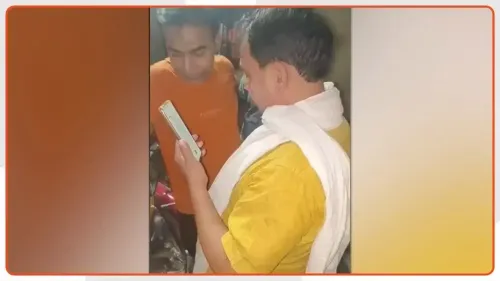
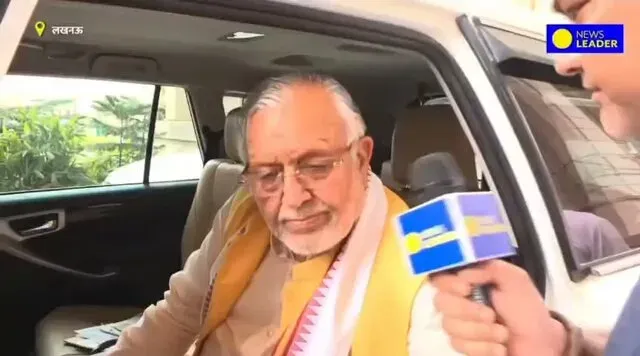
The post asked: 'They may hide their faces from the media, but with what face will BJP leaders go among the people?' An attached video accompanied the post, though no specific individual or incident was named.
Uttar Pradesh has been governed by BJP since 2017 ; SP is the principal opposition party in the state.
Assembly elections in Uttar Pradesh are due in 2027 , making such exchanges a preview of the campaign narrative.
BJP had not issued a formal response at the time of publication.
Samajwadi Party president Akhilesh Yadav on Wednesday, 8 July 2026, launched a sharp attack on the Bharatiya Janata Party, questioning how its leaders could face ordinary citizens when they were allegedly avoiding the media.
Context
Posting on X, Akhilesh Yadav wrote in Hindi: 'Mīḍiyā se to muṃh chipā leṃge, bhājapāī jantā ke bīc kis muṃh ko lekar jāeṃge?' — translated as: 'They may hide their faces from the media, but with what face will the BJP leaders go among the people?' The remark is a pointed two-line rebuke directed at BJP functionaries, implying a disconnect between the ruling party's media conduct and its claim to public accountability.
The post, which carried an attached video, stopped short of naming a specific individual or incident, but its framing — contrasting media avoidance with the expectation of public outreach — signals an effort to put the ruling establishment on the defensive.
Policy Backdrop
Uttar Pradesh, India's most populous state, has been governed by the BJP since 2017. The Samajwadi Party, which held power before that, has consistently sought to frame the BJP's tenure around questions of governance and public accountability.
Opposition parties across India, and the SP in particular, have increasingly used social media to amplify criticism that might otherwise receive limited broadcast coverage. This tactic has become a staple of political communication in the run-up to state elections, with Uttar Pradesh assembly elections due in 2027.
Stakeholders and Impact
UP voters — especially in rural and semi-urban constituencies where both SP and BJP compete directly — are the primary audience for this kind of messaging. By invoking the idea of 'facing the public,' Yadav is appealing to a broadly held expectation that elected representatives and their parties remain accessible and answerable.
The remark also lands in a wider national context where opposition parties have repeatedly raised concerns about ruling-party leaders limiting press interactions. Whether this specific charge relates to a state-level or national development, the political intent is to reinforce an accountability narrative ahead of the 2027 UP polls.
What's Next
The BJP has not, at the time of publication, issued a formal response to Yadav's post. Political observers will watch whether this exchange escalates into a broader debate on media access and public outreach in Uttar Pradesh. With assembly elections less than two years away, such rhetorical skirmishes are likely to intensify as both parties jostle to define the terms of public accountability in the state.
Point of View
Yadav keeps the charge broad enough to resonate across voter segments. The tactic fits a longer SP strategy of positioning BJP as an insular, unaccountable establishment ahead of the 2027 Uttar Pradesh polls. If the underlying controversy gains traction, this post could serve as an early marker of the accountability plank SP intends to run on.
NationPress
8 Jul 2026
Frequently Asked Questions
What did Akhilesh Yadav say about BJP and the media on 8 July 2026?
Akhilesh Yadav posted on X asking how BJP leaders could face ordinary citizens when they were allegedly hiding from the media, using a sharp Hindi phrase that translates to: 'They may hide their faces from the media, but with what face will the BJP leaders go among the people?'
Why is Akhilesh Yadav attacking BJP on media avoidance?
Yadav's attack is part of a broader Samajwadi Party strategy to frame BJP as unaccountable ahead of the 2027 Uttar Pradesh assembly elections, using social media to amplify criticism that might otherwise get limited coverage.
What is the Samajwadi Party's political position in Uttar Pradesh?
The Samajwadi Party is the principal opposition party in Uttar Pradesh, having governed the state before BJP came to power in 2017. It draws its core support from Yadav and Muslim communities and advocates socialist policies.
When are the next Uttar Pradesh assembly elections?
The next Uttar Pradesh assembly elections are due in 2027, and political activity between SP and BJP is expected to intensify in the run-up to that contest.
Has BJP responded to Akhilesh Yadav's post?
At the time of publication, BJP had not issued a formal response to Akhilesh Yadav's 8 July 2026 post questioning the party's media conduct and public accountability.