Akhilesh Yadav targets BJP over temple funds in couplet
Synopsis
Samajwadi Party president Akhilesh Yadav posted a Hindi couplet on 23 June 2026 accusing the BJP of chanting nationalism while misappropriating temple donations, targeting the party's black cap and lotus symbol in a sharp social media attack.
Key Takeaways
Akhilesh Yadav posted a Hindi couplet on X on 23 June 2026 attacking the BJP over alleged misuse of temple donations.
The verse targets two BJP symbols — the black cap and the lotus — linking them to theft of temple offerings ( chadhaava chori ).
The post alleges BJP leaders 'chanted nationalism and devoured temple donations and funds.' The attack continues the Samajwadi Party 's established line of questioning BJP accountability over religious fundraising in Uttar Pradesh .
The couplet format is designed for wide social media circulation among UP voters and temple donors.
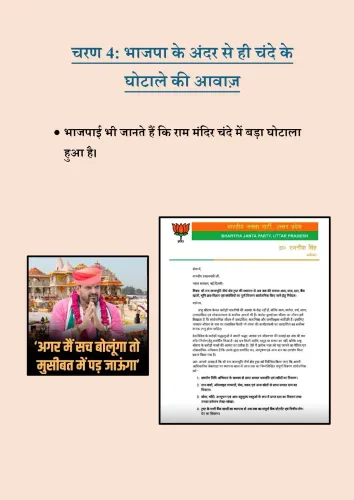
BJP's stewardship of religious institutions, especially post the 2024 Ram Temple consecration , remains a contested political terrain.
Samajwadi Party president Akhilesh Yadav took to X on Tuesday, 23 June 2026, to attack the Bharatiya Janata Party through a sharp Hindi couplet alleging that those who wear the black cap and carry the lotus symbol steal temple offerings while chanting nationalism.
The post, in verse form, reads: 'kaali topi, kamal nishaan, chadhaava chori, inki pehchaan, raashtravaad ka naara lagaaya, mandir ka daan-chanda khaaya' — translated as: 'The black cap, the lotus symbol — stealing temple offerings is their identity; they chanted the slogan of nationalism and devoured the donations and funds of the temple.'
Context
The couplet deploys two of the BJP's most recognisable symbols — the black cap worn by party workers and the lotus, the party's official election symbol — to link nationalist rhetoric with alleged misappropriation of religious donations. Akhilesh Yadav, who leads the principal opposition party in Uttar Pradesh, has consistently targeted the BJP at the intersection of religion, governance and corruption.
The Samajwadi Party has long argued that the BJP exploits Hindu religious sentiment for electoral gain while failing on accountability. This post continues that line of attack in a form — the rhyming doha or couplet — that travels widely on social media.
Policy Backdrop
The BJP's national political identity has been built significantly around Hindu religious causes. The 2024 consecration of the Ram Temple in Ayodhya was a landmark moment, preceded by years of fundraising campaigns that collected donations from crores of Hindu households across India. Questions over the management of religious endowments and temple trusts have periodically surfaced in political discourse.
Opposition parties, including the Samajwadi Party, have pointed to these fundraising drives as examples of the BJP blending religious mobilisation with governance, raising accountability concerns about where donations go and how they are managed.
Stakeholders and Impact
Temple donors across Uttar Pradesh and beyond are the implied constituency of Akhilesh Yadav's message — ordinary devotees who contribute to religious causes and whom the SP is seeking to persuade that their faith is being exploited for political ends. The post is aimed squarely at UP voters, particularly those who may hold both religious sentiment and governance concerns simultaneously.
For the BJP, the attack represents a familiar challenge: the party must defend its stewardship of religious institutions while countering the narrative that nationalism is used as cover for corruption. The couplet format amplifies the message's shareability, making it a grassroots communication tool as much as a political statement.
What's Next
Political observers will watch for a formal response from BJP spokespersons in Lucknow or New Delhi, as well as any escalation of the debate in the Uttar Pradesh assembly or in parliamentary proceedings on religious endowments. The SP has used such social media salvos in the past as precursors to broader campaign themes, suggesting this couplet may signal a sharpened opposition line ahead of future electoral contests in the state.
Point of View
The SP attempts to peel away devout but governance-conscious voters from the ruling party. The verse format is not incidental; it mirrors the BJP's own use of slogans and religious idiom, turning the party's cultural playbook against it. This fits a broader SP strategy of contesting the BJP not just on caste arithmetic but on the credibility of its Hindu nationalist identity. Whether the attack gains traction will depend on whether any concrete institutional accountability question around temple funds emerges to give it factual ballast.
NationPress
24 Jun 2026
Frequently Asked Questions
What did Akhilesh Yadav post about BJP and temple donations?
Akhilesh Yadav posted a Hindi couplet on 23 June 2026 accusing the BJP of stealing temple offerings and donations while chanting nationalist slogans, targeting the party's black cap and lotus symbol.
What does the Hindi couplet by Akhilesh Yadav mean in English?
The couplet translates as: 'The black cap, the lotus symbol — stealing temple offerings is their identity; they chanted the slogan of nationalism and devoured the donations and funds of the temple.'
Why is Samajwadi Party attacking BJP over temple funds?
The Samajwadi Party has long argued that the BJP exploits Hindu religious sentiment and associated fundraising for electoral gain without adequate accountability, a critique that has intensified since the 2024 Ram Temple consecration in Ayodhya.
What is the BJP lotus symbol and black cap Akhilesh referred to?
The lotus is the BJP's official election symbol, and the black cap is worn by BJP workers as a party identifier. Akhilesh Yadav used both symbols rhetorically to associate the party's identity with the alleged misappropriation of temple donations.
What impact could Akhilesh Yadav's post have on UP politics?
The couplet is aimed at UP voters and temple donors, seeking to undermine the BJP's religious credibility. Political observers will watch for BJP responses and whether the theme is raised in the Uttar Pradesh assembly or parliamentary debates on religious endowments.