BJP calls Akhilesh Yadav's Ram Mandir visit opportunistic ahead of 2027 UP polls
Synopsis
With the 2027 UP elections on the horizon, Akhilesh Yadav's planned Ram Mandir visit has united an unlikely coalition of critics — the BJP, Shiv Sena Telangana, and even the All India Imam Association — each charging opportunism, though for starkly different reasons. The episode lays bare how religious symbolism is already shaping the battlefield 14 months before polling day.
Key Takeaways
Akhilesh Yadav is scheduled to visit the Ram Mandir and Hanuman Garhi temple in Ayodhya on 12 December — his first visit since the temple's consecration.
BJP leader Mukhtar Abbas Naqvi said the visit reflected an acknowledgment by Yadav that he 'cannot achieve anything in the upcoming elections.' BJP state spokesperson Dr Samatha G recalled the SP's earlier opposition to the Ram Mandir's construction, questioning the ideological consistency of the visit.
All India Imam Association president Sajid Rashidi called Yadav an 'atheist' and alleged the visit was an attempt to broaden his support base after declining Muslim backing in Uttar Pradesh .
Shiv Sena Telangana President Sinkaru Shivaji said the visit was aimed at 'garnering Hindu votes,' but added it would be unproblematic if undertaken sincerely.
The 2027 Uttar Pradesh Assembly elections are approximately 14 months away, with religious symbolism already emerging as a key political battleground.
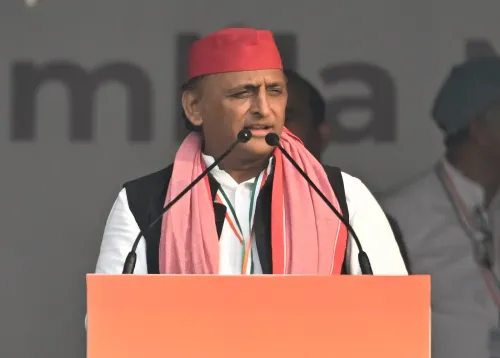
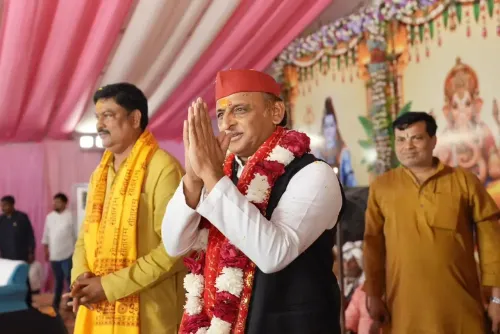
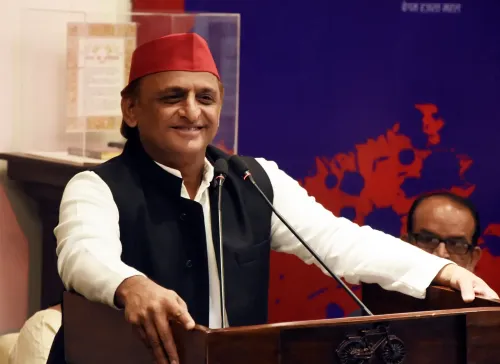
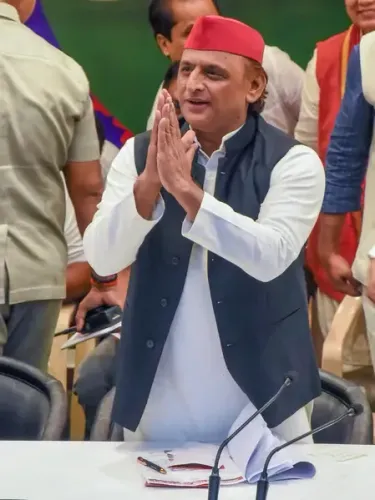
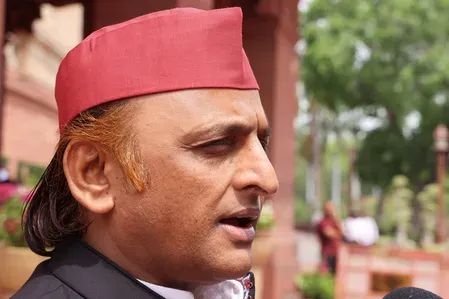
Bharatiya Janata Party (BJP) leaders and other political figures on Thursday, 12 November 2026, accused Samajwadi Party (SP) chief Akhilesh Yadav of deploying religious outreach as an electoral strategy, after it emerged that he plans to visit Ayodhya's Ram Mandir with his family on 12 December — his first visit to the temple since its consecration. The criticism comes roughly 14 months before the 2027 Uttar Pradesh Assembly elections, with rivals arguing the visit is driven by vote-bank calculations rather than genuine faith.
BJP's Charge: 'Religious Tourism Replacing Political Campaigning'
Senior BJP leader Mukhtar Abbas Naqvi did not hold back, suggesting the SP chief's pivot toward temple visits reflected an acknowledgment of limited electoral gains. 'After political campaign trips, Akhilesh Yadav is going on religious trips because he knows he cannot achieve anything in the upcoming elections. That is why he is preparing for that,' Naqvi said.
Naqvi also addressed the broader question of pre-election coalition-building, warning prospective alliance partners that such arrangements rarely outlast the ballot count. 'When elections are near, many people join a coalition; some might suggest that these coalitions are meant to deceive them. The new coalitioners should know that these are temporary and opportunistic, but let them be,' he said.
Party Spokesperson Questions Ideological Consistency
BJP state spokesperson Dr Samatha G recalled the SP's earlier posture on the Ram Temple issue, arguing that Yadav's new-found religious interest sat uneasily with his party's historical record. 'Akhilesh Yadav was initially against the construction of Ram Mandir; now he has become religious. It is surprising how many people suddenly became Hindu as the elections are getting nearer,' she claimed. She added that the BJP remained confident of its own prospects, noting that several new representatives were joining the party ahead of the polls.
Shiv Sena Telangana and All India Imam Association Weigh In
Shiv Sena Telangana President Sinkaru Shivaji questioned the timing of the proposed visit, arguing it was aimed at garnering Hindu votes. 'It is more than 2-3 years since Ram Mandir was built; now he is going to Ram Mandir ahead of the elections to garner the votes of Hindus,' Shivaji said. He added, however, that the visit would be unobjectionable if it were sincere: 'If they are going wholeheartedly, then it is good, no one is going to oppose it, but not for the politics of it.'
In a sharply different line of attack, All India Imam Association president Sajid Rashidi, speaking in New Delhi, rejected the premise that Yadav was embracing Hindu religious practices altogether. 'Calling Akhilesh Yadav a Hindu is wrong. He is an atheist. Yadav has explicitly said that he does not believe in puja archana, and also that he does not believe in gods and goddesses,' Rashidi said. Rashidi also alleged that SP spokesperson Raj Kumar Bhati had reportedly taken 16 oaths pledging not to follow Hindu gods and goddesses — a claim that could not be independently verified.
Rashidi further alleged that Yadav was recalibrating his outreach because his traditional Muslim support base in Uttar Pradesh had grown uncertain. 'Akhilesh Yadav has understood that Muslims of UP are not going to vote for him in the same manner they voted for him previously; that is why, after Muslims, they are now trying to fool the Hindus,' he claimed.
What Yadav's Visit Involves
Akhilesh Yadav is scheduled to visit the Ram Mandir and Hanuman Garhi temple in Ayodhya alongside his family on 12 December. The visit will mark his first trip to the Ram Mandir since its consecration in January 2024. The SP has not issued a formal public response to the BJP's accusations as of the time of reporting.
The Broader Pattern
This episode reflects a well-documented pre-election dynamic in Uttar Pradesh, where parties recalibrate their public religiosity as polls approach. The SP's perceived pivot toward Hindu outreach — combined with the BJP's pointed counter-narrative — signals that religious symbolism will remain a central battleground in the 2027 state elections. How Yadav navigates these competing pressures without alienating either his traditional support base or the new voters he is reportedly courting will be among the defining political tests of the next 14 months.
Point of View
While the Imam Association's criticism from the opposite direction reveals the bind the SP finds itself in: attempting a Hindu outreach without fully conceding the ideological ground. What is striking is that no party is actually opposing the visit; they are contesting its motivation. That framing — 'visit fine, intent suspect' — is a carefully calibrated trap, forcing the SP to either defend its sincerity or abandon the optics altogether. With 14 months to polling day and religious identity set to dominate the narrative, the SP's calculus is high-risk: too much temple symbolism risks alienating its traditional Muslim base, while too little cedes Hindu-outreach space entirely to the BJP.
NationPress
12 Nov 2026
Frequently Asked Questions
When is Akhilesh Yadav visiting the Ram Mandir in Ayodhya?
Akhilesh Yadav is scheduled to visit the Ram Mandir and Hanuman Garhi temple in Ayodhya on 12 December, alongside his family. This will be his first visit to the Ram Mandir since its consecration in January 2024.
Why is the BJP criticising Akhilesh Yadav's Ram Mandir visit?
The BJP alleges the visit is driven purely by electoral calculations ahead of the 2027 Uttar Pradesh Assembly elections rather than genuine religious faith. Senior BJP leader Mukhtar Abbas Naqvi argued Yadav had turned to religious outreach because he believed he 'cannot achieve anything in the upcoming elections.'
What did the All India Imam Association say about Akhilesh Yadav's visit?
All India Imam Association president Sajid Rashidi called Yadav an atheist and rejected the idea that he was embracing Hindu religious practices, claiming the SP chief was attempting to broaden his voter base after a perceived decline in Muslim support in Uttar Pradesh.
Has the Samajwadi Party responded to the BJP's accusations?
No formal public response from the Samajwadi Party had been issued as of the time of reporting on 12 November 2026.
How significant is the Ram Mandir visit in the context of UP's 2027 elections?
The visit highlights how religious symbolism is already a defining battleground in Uttar Pradesh with elections roughly 14 months away. Critics from multiple political quarters have framed it as a signal of the SP recalibrating its support-base strategy after years of positioning perceived as primarily catering to Muslim voters.