Alliance Air flight 9I613 tyre burst at Bilaspur airport, all 41 evacuated safely
Synopsis
A tyre burst on landing could have been far worse — but Alliance Air's rapid ground response at Bilaspur airport on 28 August ensured all 41 occupants walked away unharmed. The incident, involving a government-owned regional carrier central to India's UDAN connectivity push, raises fresh questions about turboprop fleet maintenance on high-frequency regional routes.
Key Takeaways
Alliance Air flight 9I613 suffered a left-side tyre burst while landing at Bilaspur airport , Chhattisgarh , on 28 August at approximately 11 am .
All 41 people on board — 37 passengers and 4 crew members — were safely evacuated; no injuries were reported.
The airline cancelled the onward flight from Bilaspur following the incident.
Alliance Air operates under AI Asset Holding Limited (AIAHL) and connects 55 destinations with over 80 daily departures .
The airline was the launch carrier for India's first UDAN flight on 27 April 2017 on the Shimla–Delhi route.
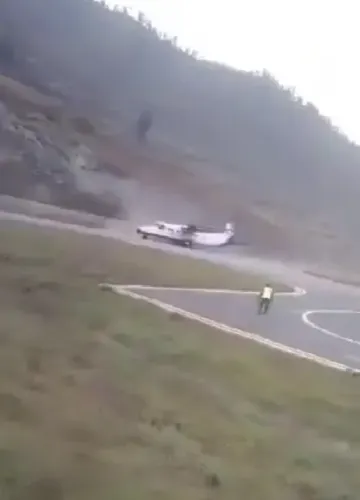
An Alliance Air flight operating the Delhi–Bilaspur route suffered a tyre burst during landing at Bilaspur airport in Chhattisgarh on Friday, 28 August, with all 41 people on board — 37 passengers and four crew members — evacuated without injury, according to officials.
What Happened on the Runway
Flight 9I613 touched down at approximately 11 am when the aircraft's left-side tyre suffered a puncture. The incident brought operations on the runway to a halt as ground crews moved quickly to evacuate all occupants and transfer them from the tarmac to the terminal building. Officials confirmed no injuries were reported.
Onward Flight Cancelled
As a direct consequence of the incident, Alliance Air cancelled the flight that was scheduled to operate onward from Bilaspur. Further details about the technical investigation into the tyre failure are awaited, officials said.
About Alliance Air and Its Regional Role
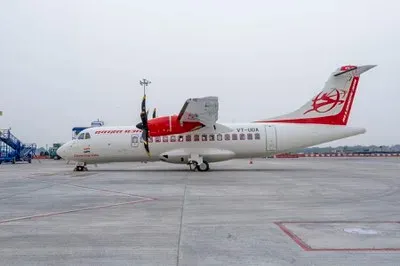
Alliance Air is a government-owned regional carrier headquartered in New Delhi, operating under AI Asset Holding Limited (AIAHL), a government-owned special purpose vehicle formed following the privatisation of Air India. Founded in April 1996 as a subsidiary of Indian Airlines and formerly known as Air India Regional, the airline maintains operational hubs in Bengaluru, Chennai, Delhi, Hyderabad, Kolkata, and Mumbai.
Its fleet consists primarily of turboprop aircraft — the ATR 72-600, ATR 42-600, and Dornier 228 — and currently connects 55 destinations across India with more than 80 daily departures.
Alliance Air's UDAN Significance
The airline has been a key participant in the Centre's flagship UDAN (Regional Connectivity Scheme), which aims to make air travel affordable for underserved regions. Notably, Alliance Air was the launch carrier for the first UDAN flight on 27 April 2017, on the Shimla–Delhi route. Friday's incident at Bilaspur — itself a tier-2 city connected under the scheme — underscores the operational pressures carriers face while servicing thinner regional routes with turboprop fleets.
Aviation safety authorities are expected to review the incident as part of standard protocol; further findings are awaited.
Point of View
And the fact that all 41 occupants escaped unhurt reflects sound emergency response rather than a minor inconvenience. What deserves scrutiny is the broader maintenance picture for Alliance Air's ageing turboprop fleet, which operates high-frequency sorties on thin regional routes under the UDAN scheme — often to airports with limited ground support infrastructure. The government's dual role as airline owner and aviation regulator creates an inherent tension when it comes to independent safety oversight. Friday's incident should prompt a transparent technical review, not just a routine sign-off.
NationPress
12 Oct 2026
Frequently Asked Questions
What happened to Alliance Air flight 9I613 at Bilaspur airport?
Alliance Air flight 9I613, operating the Delhi–Bilaspur route, suffered a tyre burst on its left side during landing at Bilaspur airport in Chhattisgarh on 28 August at around 11 am. All 41 people on board were safely evacuated and no injuries were reported.
Were there any casualties in the Bilaspur airport tyre burst incident?
No. All 37 passengers and 4 crew members on board were evacuated safely from the aircraft to the terminal building. Officials confirmed there were no reports of any injuries.
What did Alliance Air do after the tyre burst?
Following the incident, Alliance Air cancelled the onward flight that was scheduled to depart from Bilaspur. Further details about the technical investigation into the tyre failure are awaited from officials.
What is Alliance Air and what routes does it operate?
Alliance Air is a government-owned regional airline operating under AI Asset Holding Limited (AIAHL). It connects 55 destinations across India with over 80 daily departures, using turboprop aircraft including the ATR 72-600, ATR 42-600, and Dornier 228. It is a key carrier under the Centre's UDAN Regional Connectivity Scheme.
What is the UDAN scheme and what role does Alliance Air play in it?
UDAN (Regional Connectivity Scheme) is a Centre initiative to make air travel affordable and accessible to underserved tier-2 and tier-3 cities. Alliance Air was the launch carrier for the first UDAN flight on 27 April 2017 on the Shimla–Delhi route, and continues to be a frontrunner in the scheme.