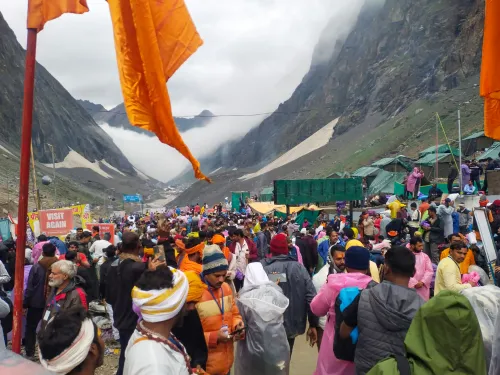
Amarnath Yatra 2026 suspended indefinitely after tracks damaged by adverse weather
Synopsis
With both Baltal and Pahalgam tracks severely damaged and heavy rain forecast across J&K, authorities have shut down the Amarnath Yatra 2026 with no restart date in sight. More than 4.80 lakh pilgrims had already completed darshan before the indefinite halt — but the Chhari Mubarak will still reach the cave shrine on 28 August to formally close the season.
Key Takeaways
Amarnath Yatra 2026 (SANJY-2026) suspended indefinitely on 10 August due to track damage on both the Baltal and Pahalgam routes.
Pilgrims at base camps and Bhagwati Nagar Yatri Niwas, Jammu have been directed to return home; Yatra registration is closed .
The Meteorological Department has forecast heavy to very heavy rain in Jammu and Kashmir over the next 48 hours .
More than 4.80 lakh Yatris completed darshan at the cave shrine — situated at 3,880 metres — since the Yatra began on 3 July 2026 .
The Chhari Mubarak will travel the traditional Pahalgam route and reach the cave shrine on 28 August 2026 , the formal conclusion date.
No helicopter services operated this year; the area beyond base camps was declared a 'No Fly Zone' .
The Amarnath Yatra 2026 (SANJY-2026) has been suspended indefinitely following severe damage to tracks on both the North Kashmir Baltal route and the South Kashmir Pahalgam route, officials announced from Srinagar on 10 August. The decision, taken in the interest of pilgrim safety, comes after an adverse weather advisory issued for Jammu and Kashmir and a forecast of heavy to very heavy rainfall over the next two days.
What Led to the Suspension
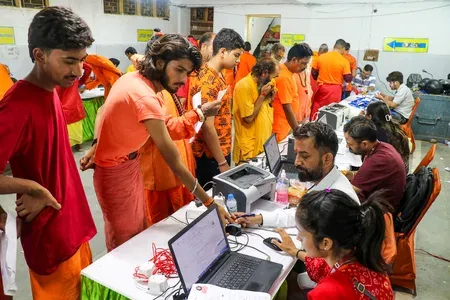
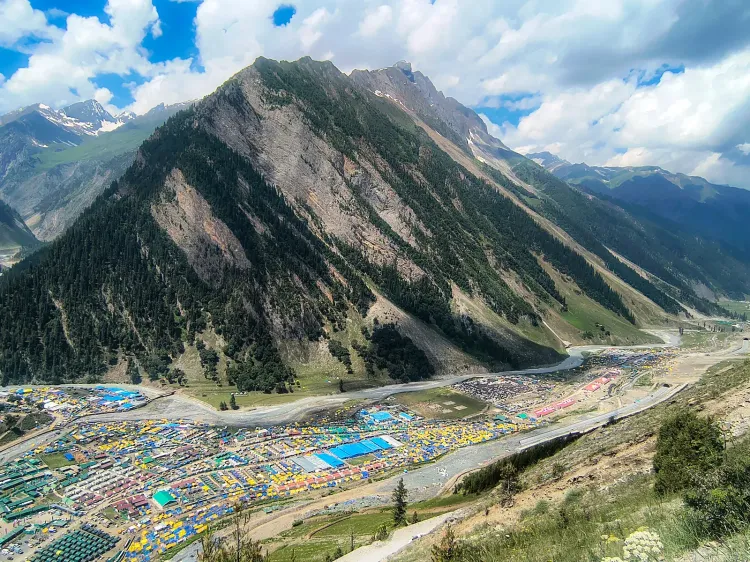
Officials confirmed that damage to both Yatra tracks — connecting the two base camps to the holy cave shrine — is extensive and will take considerable time to repair. Pilgrims currently at the base camps and at the Bhagwati Nagar Yatri Niwas in Jammu have been asked to return home. Registration for SANJY-2026 has been formally closed, and no further movement of Yatris toward the Valley will be permitted this year.
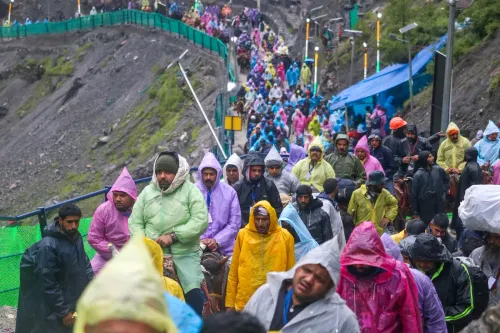
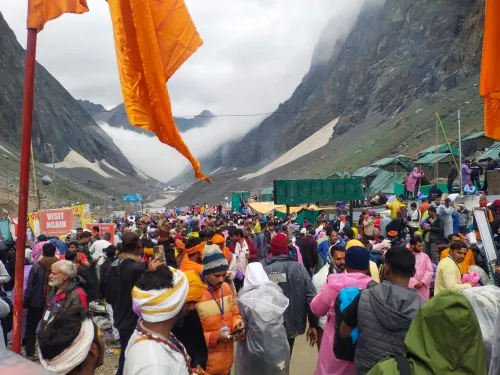
The Meteorological Department has forecast heavy to very heavy rain across Jammu and Kashmir in the coming 48 hours. Given the high altitude and challenging topography of the cave shrine — situated at 3,880 metres above sea level in the Kashmir Himalayas — officials said adverse weather would further deteriorate conditions along both Yatra tracks in the days ahead.
Chhari Mubarak to Complete the Journey
Despite the suspension of the public pilgrimage, officials clarified that the sacred Chhari Mubarak — Lord Shiva's holy mace — will continue along the traditional Pahalgam route and is scheduled to reach the cave shrine on 28 August 2026, the date on which SANJY-2026 will formally conclude. Convoys currently permitted into the Valley will carry only returning pilgrims.
Yatra Milestones Before Suspension
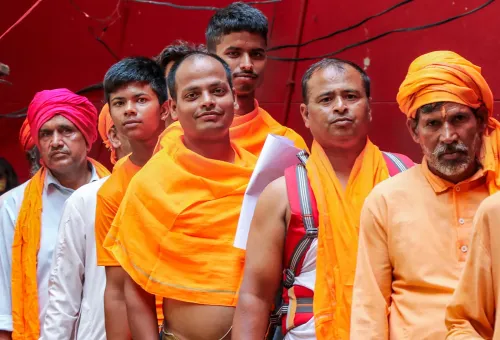
The 57-day-long pilgrimage had commenced on 3 July 2026. By the time of suspension, more than 4.80 lakh Yatris had completed darshan at the holy cave shrine, which houses a naturally occurring ice stalagmite structure that waxes and wanes with the lunar cycle. Devotees regard the formation as a symbol of Lord Shiva's mythical powers.
Notably, no helicopter services were available to pilgrims this year, as the area beyond both base camps had been designated a 'No Fly Zone'.
Security and Safety Record
Officials credited the round-the-clock security deployment by J&K Police, Central Armed Police Forces (CAPFs), and the Army for an incident-free Yatra season. No security-related disruption was reported throughout the pilgrimage period, despite the logistical challenges posed by the no-fly-zone restriction.
With the formal conclusion set for 28 August, authorities are expected to assess track damage and begin restoration work ahead of any future Yatra season.
Point of View
But the decision reflects the hard lessons of past tragedies on high-altitude pilgrimage routes. What deserves scrutiny is the no-fly-zone designation that removed helicopter evacuation as a safety fallback — a policy that, while security-driven, leaves pilgrims with no rapid exit option when ground routes fail. With climate patterns making extreme rainfall events in the Kashmir Himalayas increasingly frequent, the long-term question is whether the Yatra's current infrastructure and contingency frameworks are calibrated for the new weather reality, or whether each season will continue to run this risk.
NationPress
24 Sept 2026
Frequently Asked Questions
Why has the Amarnath Yatra 2026 been suspended?
The Amarnath Yatra 2026 has been suspended indefinitely because severe damage to tracks on both the Baltal and Pahalgam routes has made them unsafe for pilgrims. An adverse weather advisory and a forecast of heavy to very heavy rain in Jammu and Kashmir over the next 48 hours further prompted authorities to halt the pilgrimage in the interest of Yatri safety.
How many pilgrims completed the Amarnath Yatra before the suspension?
More than 4.80 lakh Yatris completed darshan at the holy cave shrine before the suspension was announced on 10 August 2026. The 57-day pilgrimage had begun on 3 July 2026.
Will the Amarnath Yatra 2026 formally conclude despite the suspension?
Yes. Although the public pilgrimage has been halted, the Chhari Mubarak — Lord Shiva's holy mace — will travel the traditional Pahalgam route and reach the cave shrine on 28 August 2026, the date on which SANJY-2026 will formally conclude.
Can pilgrims still travel to the Amarnath cave shrine?
No. Registration for SANJY-2026 has been closed and no further movement of Yatris toward the Valley is permitted. Only convoys carrying pilgrims back from the Valley are being allowed. Pilgrims at base camps and at Bhagwati Nagar Yatri Niwas in Jammu have been asked to return home.
Were helicopter services available during Amarnath Yatra 2026?
No helicopter services were available to pilgrims this year because the area beyond both base camps was designated a 'No Fly Zone'. This meant no aerial evacuation option existed when ground tracks were damaged by adverse weather.