AMCH Dibrugarh performs first-ever Total Elbow Replacement
Synopsis
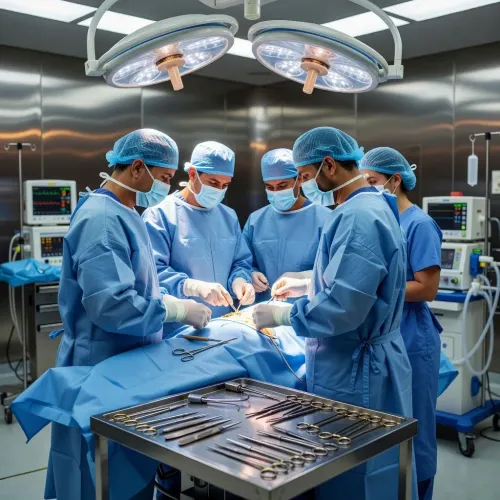
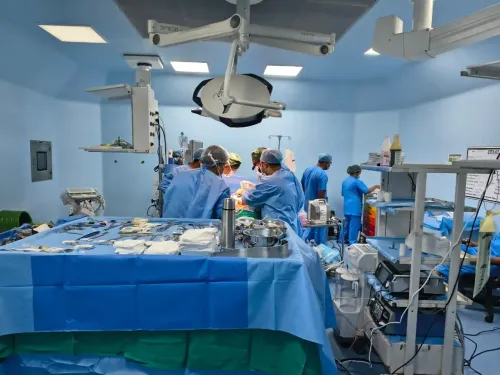
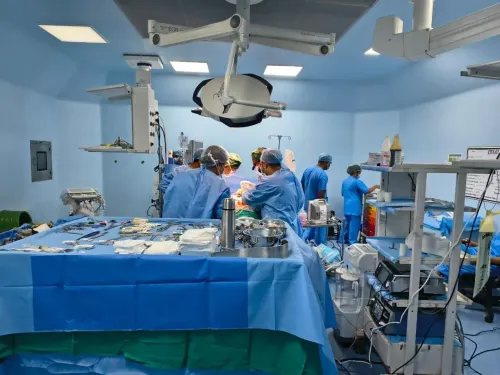
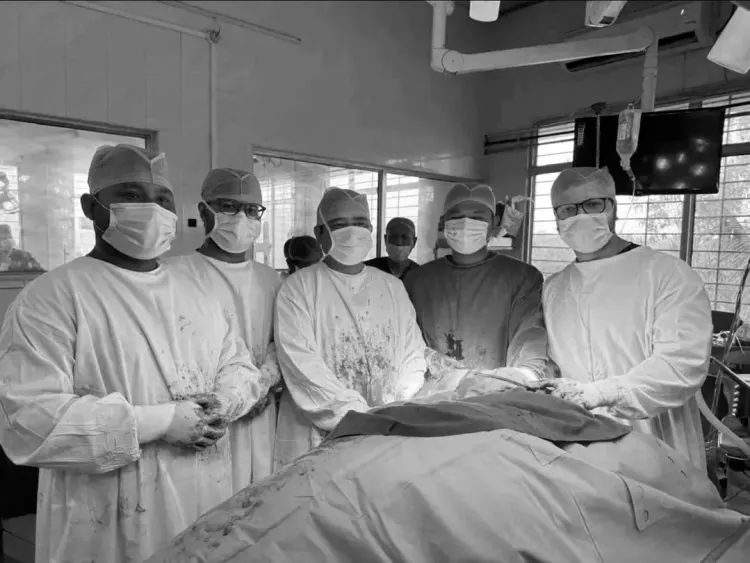
Assam Medical College and Hospital in Dibrugarh performed its first-ever Total Elbow Replacement surgery, bringing relief to a patient who had lived with a neglected fracture-dislocation for five years, marking a landmark step in advanced surgical care for Upper Assam.
Key Takeaways
AMCH Dibrugarh's Department of Orthopaedics completed the hospital's first-ever Total Elbow Replacement surgery.
The patient had been living with a neglected elbow fracture-dislocation for five years , causing severe deformity, persistent pain, and restricted arm use.
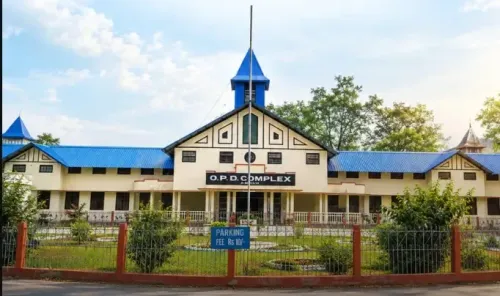
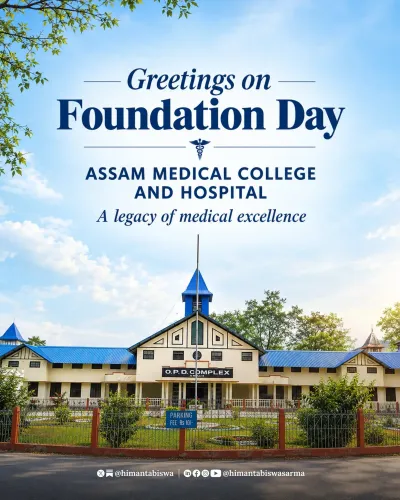
AMCH is Upper Assam's primary tertiary-care and teaching hospital, serving multiple districts in the region.
The milestone reduces the need for patients in Upper Assam to travel to distant metros for complex orthopaedic procedures.
The achievement fits a broader national trend of state governments decentralising advanced surgical capabilities to regional government medical colleges.
Future scale-up of super-specialty services at AMCH and other Assam medical colleges will depend on continued state budget and training investment.
After five years of living with a neglected fracture-dislocation that left one arm severely deformed and nearly unusable, a patient at Assam Medical College and Hospital (AMCH), Dibrugarh, has finally found relief — thanks to a procedure the hospital had never attempted before. The Chief Minister's Office of Assam announced on Monday, 16 November 2026, that AMCH's Department of Orthopaedics had successfully completed the institution's first-ever Total Elbow Replacement surgery.
Five years of pain, one historic surgery
The patient had been enduring severe deformity, persistent pain, and restricted arm function for half a decade — the kind of prolonged suffering that typically forces families in Upper Assam to undertake costly, exhausting journeys to distant metros for specialist care. Total elbow replacement is a complex procedure involving the replacement of damaged joint surfaces with a prosthetic implant; it demands both specialised surgical expertise and advanced equipment rarely available outside major urban centres.
The CMO's post described the outcome as bringing 'renewed hope' to the patient — and the weight of that phrase is easy to understand when measured against five years of limited mobility and chronic pain.
What this means for Upper Assam's healthcare map
AMCH is the primary tertiary-care and teaching hospital serving Upper Assam — a region that includes districts such as Dibrugarh, Tinsukia, Sivasagar, and Jorhat. For decades, patients needing advanced orthopaedic interventions — joint replacements, complex trauma reconstruction — have largely been referred to hospitals in Guwahati or further afield in cities like Vellore or Chennai. Each referral carries financial and logistical burdens that fall hardest on rural and low-income families.
The addition of total elbow replacement to AMCH's surgical repertoire signals a meaningful step in reversing that dependence. It is not an isolated gesture: state governments across northeastern India have been gradually building super-specialty capabilities at regional government medical colleges, reducing the pressure on overloaded metropolitan hospitals and keeping advanced care closer to the communities that need it most.
A template for decentralising advanced orthopaedic care
India's public health infrastructure has long struggled with a stark centre-periphery divide in surgical capability. Procedures like total knee and hip replacements have become increasingly available at district and divisional government hospitals over the past decade, driven by state budget commitments to equipment procurement and surgical training. Total elbow replacement, however, remains far rarer — it accounts for a small fraction of all joint replacement procedures nationally and demands a narrower, more specialised skill set.
That AMCH has now crossed this threshold matters beyond the single patient. It tells surgeons training at the institution that complex upper-limb reconstruction is achievable here. It tells patients in the Brahmaputra Valley's eastern districts that the journey to a distant city is no longer the only option. And it sets a benchmark that other Assam medical colleges — in Silchar, Jorhat, and Barpeta — may now be expected to match.
The CMO framed the achievement as reflecting 'AMCH's growing capabilities in advanced surgical care and its commitment to bringing specialised healthcare services closer to the people of Upper Assam.' Whether the state follows through with the budgetary and training investment needed to make such procedures routine — rather than historic firsts — will be the real measure of that commitment.
Point of View
Not mere optics. For the Himanta Biswa Sarma administration, publicising such achievements through the CMO's official channel is also deliberate political messaging: healthcare delivery in peripheral regions is increasingly a governance credibility issue in northeast India. The harder question is whether this remains a one-off landmark or becomes the foundation for a systematic upgrade of AMCH's orthopaedic and trauma surgery programme.
NationPress
16 Nov 2026
Frequently Asked Questions
What is a Total Elbow Replacement surgery?
Total Elbow Replacement is a surgical procedure in which the damaged surfaces of the elbow joint are replaced with an artificial prosthetic implant, typically performed for severe arthritis, complex fractures, or neglected fracture-dislocations that cause pain and loss of function.
Where is AMCH Dibrugarh located?
Assam Medical College and Hospital (AMCH) is located in Dibrugarh, a major city in Upper Assam and one of the region's primary tertiary healthcare and medical education centres.
Why is this surgery significant for Upper Assam patients?
Upper Assam patients needing complex orthopaedic procedures have historically had to travel to Guwahati or metro cities outside the state. AMCH now performing total elbow replacement locally reduces that burden significantly.
How long had the patient been suffering before this surgery?
According to the Chief Minister's Office of Assam's announcement, the patient had been living with a neglected elbow fracture-dislocation for five years, resulting in severe deformity, persistent pain, and restricted arm use.
Is total elbow replacement common in Indian government hospitals?
No, total elbow replacement is relatively rare even in private hospitals across India. It requires specialised implants and surgical expertise, making AMCH's successful procedure a notable milestone for a government medical college in northeast India.