Amit Shah: 1,400 Urban Cooperative Banks to Join Umbrella Body
Synopsis
Union Home Minister Amit Shah announced that India's 1,400 Urban Cooperative Banks will be integrated into an umbrella organisation to access shared technology, training, and modern banking infrastructure — the latest step in the government's cooperative sector reform drive launched in 2021.
Key Takeaways
1,400 Urban Cooperative Banks across India will be brought under a single umbrella organisation.
The body will provide shared access to technology, staff training, and modern banking facilities .
The move follows the Banking Regulation (Amendment) Act, 2020 , which placed UCBs under tighter RBI oversight.
The Ministry of Cooperation , created in July 2021 under Amit Shah, has been the central institutional driver of cooperative sector reform.
Formal details — legal structure, funding, and rollout timelines — are pending in RBI circulars or government notifications.
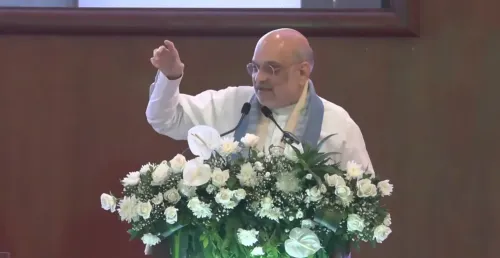
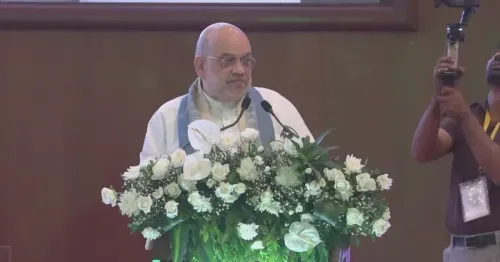
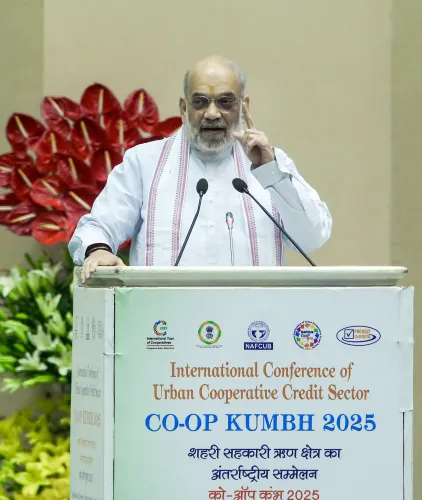
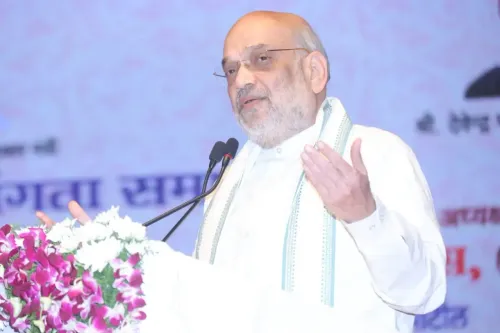
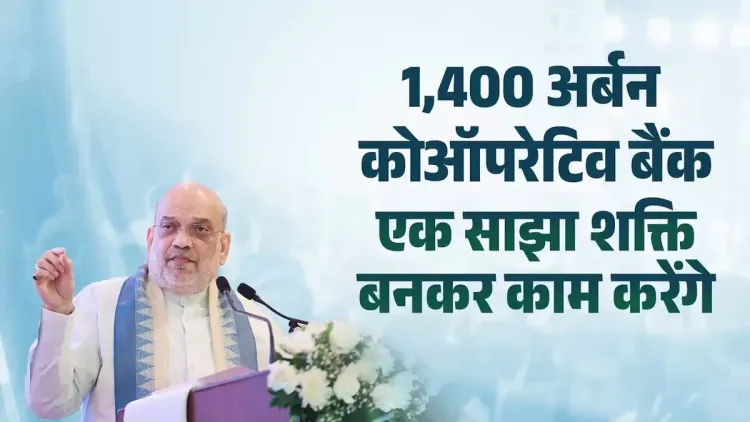
A quiet but consequential shift is underway in India's cooperative banking landscape. Union Home Minister and Minister of Cooperation Amit Shah announced on Saturday, 8 August 2026 that the country's 1,400 Urban Cooperative Banks (UCBs) will be integrated into an umbrella organisation designed to give them shared access to technology, training, and modern banking infrastructure.
Shah's post, in Hindi, stated: 'देश के 1,400 अर्बन कोऑपरेटिव बैंक अम्ब्रेला ऑर्गेनाइजेशन से जुड़कर तकनीक, प्रशिक्षण और आधुनिक बैंकिंग सुविधाओं की साझा शक्ति के रूप में काम करेंगे।' ('The country's 1,400 Urban Cooperative Banks will join the umbrella organisation and work as a shared force of technology, training, and modern banking facilities.')
Why 1,400 small banks needed a single roof
Urban Cooperative Banks serve member-depositors in cities and semi-urban pockets — often the first formal banking touchpoint for small traders, artisans, and lower-income households. But their fragmented structure has long been a liability: individually, most UCBs lack the capital and expertise to build robust IT systems, risk frameworks, or staff-training pipelines that commercial banks take for granted.
The umbrella organisation model addresses precisely that gap — pooling resources so that a small UCB in a tier-3 city can access the same core-banking technology and compliance tools as a larger peer, without bearing the full cost alone.
The reform arc behind the announcement
This announcement sits at the intersection of two structural moves the central government has made since 2020. The Banking Regulation (Amendment) Act, 2020 brought cooperative banks under tighter Reserve Bank of India oversight — a response to high-profile failures that had eroded depositor confidence. Then, in July 2021, the government created the Ministry of Cooperation, with Shah at its head, as a dedicated institutional engine for modernising India's cooperative sector.
The UCB umbrella body is a logical next step in that sequence: regulation tightened first, then a ministry to drive reform, now a shared-services architecture to make compliance and modernisation practically achievable for banks that operate on thin margins.
What depositors and UCBs stand to gain
For the roughly 1,400 UCBs and their millions of depositors, the stakes are tangible. Shared technology platforms can reduce operational risk and fraud exposure. Common training programmes can lift governance standards across the board. And a credible umbrella body can act as a lender of last resort or liquidity backstop — the kind of safety net that has historically been absent from cooperative banking.
The specifics — the umbrella body's legal form, funding structure, and the timeline for rolling out IT platforms and training — are yet to be detailed in formal RBI circulars or government notifications. Those documents will determine how quickly the ambition translates into on-the-ground change for depositors.
India's cooperative banks have waited decades for this kind of systemic support. The architecture is now being assembled — the test is how fast it gets built.
Point of View
A dedicated ministry in 2021, and now a shared-services architecture to make compliance viable at scale. For the BJP, the cooperative sector represents a dense network of community-level economic relationships — modernising it is both a governance goal and a political investment in constituencies that commercial banks have long underserved. The real test will be whether the umbrella body's design gives it genuine financial muscle, or whether it remains a coordination layer without teeth.
NationPress
8 Aug 2026
Frequently Asked Questions
What is the umbrella organisation for Urban Cooperative Banks in India?
It is a proposed shared-services body that will provide India's 1,400 Urban Cooperative Banks with common access to technology platforms, staff training, and modern banking infrastructure, reducing the burden on individual small banks to build these capabilities alone.
Why does Amit Shah oversee cooperative banks?
Amit Shah heads the Ministry of Cooperation, created in July 2021, which is the dedicated central ministry for policy reforms and modernisation of India's cooperative sector, including Urban Cooperative Banks.
How many Urban Cooperative Banks are there in India?
There are approximately 1,400 Urban Cooperative Banks operating across India, serving members in urban and semi-urban areas, often catering to small traders, artisans, and lower-income depositors.
What did the Banking Regulation Amendment Act 2020 do to cooperative banks?
The Banking Regulation (Amendment) Act, 2020 brought cooperative banks under enhanced Reserve Bank of India oversight to address governance weaknesses and improve financial stability after several high-profile bank failures.
What benefits will Urban Cooperative Banks get from the umbrella organisation?
UCBs are expected to gain access to shared core-banking technology, compliance tools, and staff training programmes — resources most individual small cooperative banks cannot afford to build independently.