Anurag Thakur to Students: Question What You Accept Without Thinking
Synopsis
BJP MP Anurag Thakur posted a Hindi message on August 8, 2026, urging students to stay curious, keep their learning instinct alive, and question ideas accepted without thinking — using the IIT entrance exam as a metaphor for life's unpredictable tests.
Key Takeaways
BJP MP Anurag Thakur posted a Hindi-language message on August 8, 2026 , addressed to students.
He drew a contrast between the defined syllabus of the IIT entrance exam and life's unpredictable, open-ended challenges.
He urged three things: maintaining curiosity , keeping the learning instinct alive, and sustaining chetna (conscious awareness).
His sharpest line called on students to examine and question ideas they have accepted without thinking.
The message aligns with Thakur's earlier role as Union Minister for Youth Affairs and Sports , where he oversaw policy for young Indians.
Life, BJP MP Anurag Thakur reminded India's student community on Saturday, August 8, 2026, does not come with a syllabus — and that is precisely the point.
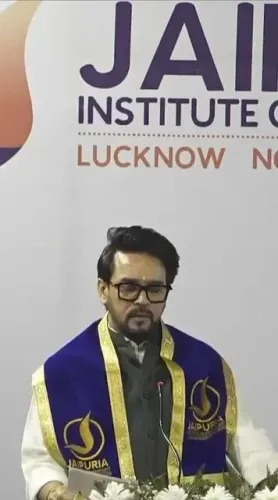
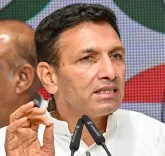
Posting in Hindi on X, the former Union Minister for Youth Affairs and Sports addressed what he called the essential gap between exam preparation and real-world readiness. 'The IIT exam has a syllabus,' he wrote, 'but life's exam has everything out of syllabus.' The message, delivered with a video, cut straight to a tension that millions of Indian students live every day: mastering a defined curriculum while an unpredictable world waits outside the exam hall.
The three things Thakur asked students to keep alive
Thakur's post was built around three imperatives: stay curious (curiosity banaiye rakhiye), keep your learning instinct awake (apni learning instinct ko jagaye rakhiye), and maintain awareness — chetna. The third word carries weight in Hindi; it means not just consciousness but a kind of alert, questioning wakefulness.
He closed with the sharpest line: 'The things accepted without thinking — examine them, question them.' In a country where rote learning and deference to authority have long shaped classroom culture, the call to interrogate received wisdom is a pointed one.
Why an IIT reference lands differently in India
Invoking the IITs is never casual in Indian public discourse. The Joint Entrance Examination is among the world's most competitive, with roughly 1.8 million candidates chasing fewer than 17,000 seats annually. The institutions have become a cultural shorthand for peak academic ambition — and, by extension, for the enormous pressure that ambition generates. Thakur's framing — that even clearing that bar leaves you unprepared for life's actual tests — speaks directly to the anxiety of a generation that has optimised for examinations at the expense of broader intellectual development.
As former minister for Youth Affairs, Thakur oversaw policy touching crores of young Indians, from skill-development schemes to sports infrastructure. The continuity between that portfolio and Saturday's message is visible: the concern is the same, only the platform has shifted from a ministry briefing to a social-media post.
A politician telling students to question things they have accepted without scrutiny — including, implicitly, the systems and ideas they have inherited — is either a genuinely liberating nudge or a reminder that critical thinking is the one skill no entrance exam can test. Either way, the question he planted is the right one to ask.
Point of View
The message taps into a real and growing anxiety: that India's education system produces exam-crackers but not necessarily independent thinkers. For a politician eyeing relevance with a young electorate, framing yourself as the voice urging critical thought is a strategically durable position.
NationPress
8 Aug 2026
Frequently Asked Questions
What did Anurag Thakur post about IIT and life on August 8 2026?
Anurag Thakur posted a Hindi message saying the IIT exam has a fixed syllabus but life's exam is entirely out of syllabus, urging students to stay curious, keep learning, and question ideas they have accepted without thinking.
What does chetna mean in Anurag Thakur's post?
In his post, Thakur used the Hindi word 'chetna' to mean a state of conscious, alert awareness — a wakefulness that goes beyond passive knowledge absorption.
Why did Anurag Thakur mention IIT in his message to students?
The IIT entrance exam is India's most recognisable symbol of high-stakes academic competition. Thakur used it to argue that even the most rigorous exam preparation cannot fully equip a person for life's unpredictable challenges.
What is Anurag Thakur's background in youth and education policy?
Anurag Thakur served as Union Minister for Youth Affairs and Sports, overseeing policy on skill development, sports infrastructure, and youth engagement across India before returning to Parliament as BJP's Lok Sabha MP from Hamirpur, Himachal Pradesh.
How many students appear for the IIT JEE each year?
Approximately 1.8 million candidates sit for the Joint Entrance Examination annually, competing for fewer than 17,000 seats across the IIT system, making it one of the world's most competitive engineering entrance tests.