Anurag Thakur Invokes 'New India' Dream-to-Reality Arc
Synopsis
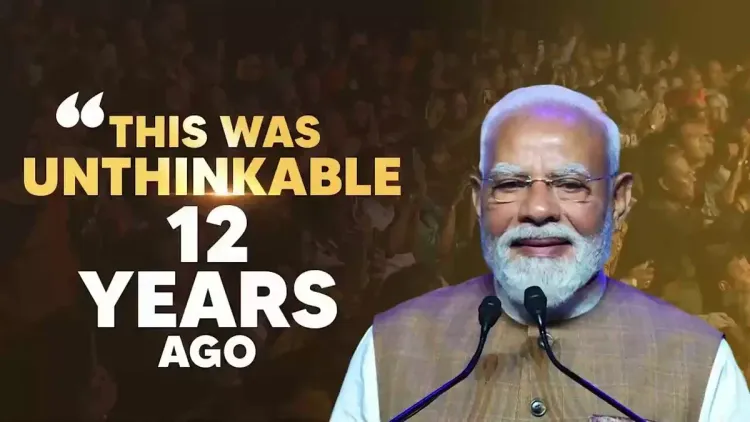
BJP MP Anurag Thakur posted on X on 19 June 2026, declaring that India has turned a long-held dream into reality — invoking the party's signature 'New India' narrative to frame the country's governance journey since 2014 as a story of aspirations fulfilled.
Key Takeaways
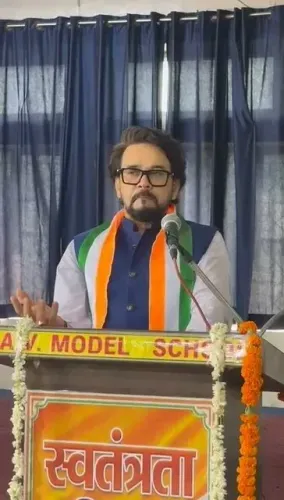
BJP MP Anurag Thakur posted on X on 19 June 2026 with a video attached.
The post stated: 'What was once a dream is today a reality.
This is the identity of the new India.' The 'New India' slogan has anchored BJP political communication since 2014 under PM Narendra Modi .
Thakur is a former Union Minister of Information and Broadcasting and Youth Affairs and Sports , and a Lok Sabha MP from Hamirpur, Himachal Pradesh .
The post did not name a specific scheme or project; the video content was not independently detailed.
The messaging fits a broader BJP pattern of linking governance outcomes to a national transformation narrative.
BJP MP Anurag Thakur on Friday, 19 June 2026, took to X to post a message framing India's governance journey as the fulfilment of long-held national aspirations, writing: 'Jo kabhi sapna tha, woh aaj sacchai hai' ('What was once a dream is today a reality'). The post, which carried a video, concluded: 'Yahi naye Bharat ki pehchaan hai' ('This is the identity of the new India').
Context
The phrase 'naya Bharat' — New India — has been a central pillar of the BJP's political communication since 2014, when Prime Minister Narendra Modi's government came to power and began anchoring its policy agenda to a narrative of national transformation. Thakur, a Lok Sabha MP from Hamirpur, Himachal Pradesh and a former Union Minister who held the portfolios of Information and Broadcasting and Youth Affairs and Sports, is one of the party's most visible communicators and regularly amplifies this messaging on social media.
The 19 June post did not name a specific scheme, project, or event. Its language — 'dreams becoming reality' — is a recurring motif in BJP outreach, used to present infrastructure, digital, and social-sector outcomes as the realisation of aspirations that predated the current government.
Policy Backdrop
The 'New India' framing has been deployed across a wide range of policy domains over the past decade, from digital payments and broadband connectivity to highway construction and welfare delivery. BJP leaders have consistently used the language of aspiration fulfilled to connect individual scheme outcomes to a larger arc of national progress.
Thakur's tenure as minister gave him direct association with flagship initiatives in sports infrastructure and media policy. His continued use of this vocabulary as a backbench MP signals that the 'New India' narrative remains a live communication tool for the party heading into the second half of the 2020s.
Stakeholders and Impact
The primary audience for such messaging is the BJP's broad support base — voters who identify with the party's development narrative — as well as undecided citizens who may be persuaded by evidence of governance delivery. The video attached to the post, whose specific content is not detailed in available information, is likely intended to provide visual grounding for the claim.
Opposition parties have historically contested the 'dream-to-reality' framing, arguing that headline announcements do not always translate to ground-level change. The post is therefore also a marker in the ongoing contest over how India's governance record since 2014 is perceived and communicated.
What's Next
Observers will watch for follow-up statements from BJP leaders that link this post to a specific scheme, milestone, or parliamentary moment. Any elaboration in Parliament or at party events could clarify the precise achievement the post is referencing. The broader pattern suggests the messaging is part of a sustained pre-election or mid-term communication push to consolidate the party's development story with the electorate.
Point of View
Forward-looking national identity claim rather than citing specific data points. The deliberate vagueness of the language is a feature, not a bug: it allows supporters to project their own preferred achievement onto the message. As the party moves deeper into the second half of its current term, such posts serve as low-cost, high-reach signals to the base that the 2014 promise remains on track. The attachment of a video suggests an attempt to anchor the abstract claim in visual evidence, a tactic the party has refined considerably since its early social-media campaigns.
NationPress
18 Sept 2026
Frequently Asked Questions
What did Anurag Thakur post on X on 19 June 2026?
Anurag Thakur posted a message in Hindi stating 'What was once a dream is today a reality — this is the identity of the new India,' accompanied by a video.
What does 'New India' mean in BJP's political messaging?
'New India' or 'Naya Bharat' is a slogan adopted by the BJP since 2014 to describe its vision of national transformation through infrastructure, digital growth, and welfare delivery under PM Narendra Modi.
Who is Anurag Thakur?
Anurag Thakur is a BJP Lok Sabha MP from Hamirpur in Himachal Pradesh and a former Union Minister who held the Information and Broadcasting and Youth Affairs and Sports portfolios.
Which specific scheme or project did Anurag Thakur refer to in his post?
The post did not name a specific scheme or project; the precise achievement referenced could not be identified from the text alone.
Why do BJP leaders use the 'dream becoming reality' phrase?
The phrase is a recurring motif in BJP communication, used to present policy and infrastructure outcomes as the fulfilment of long-standing national aspirations and to reinforce the party's development narrative since 2014.