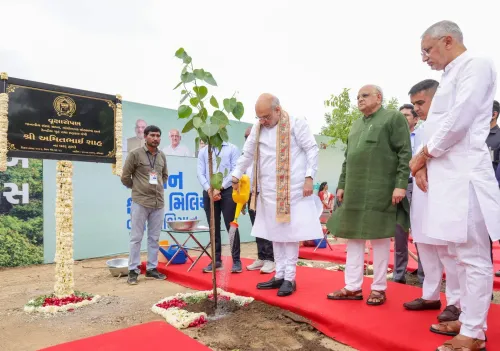
Amit Shah Backs 'Ek Ped Maa Ke Naam' Drive in Gandhinagar
Synopsis
Union Home Minister Amit Shah met plantation drive volunteers in Ahmedabad on 16 July 2026, congratulating them on advancing the 'Ek Ped Maa Ke Naam' campaign and reaffirming the goal of making Gandhinagar Lok Sabha constituency a fully green parliamentary seat.
Key Takeaways
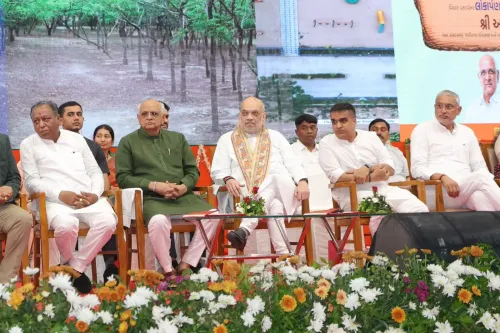
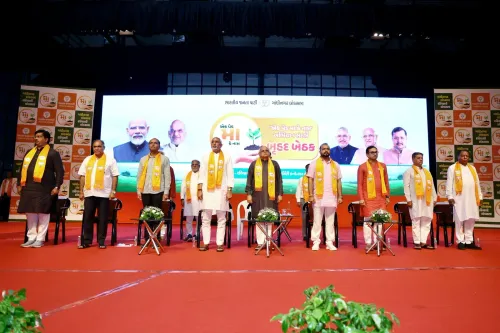
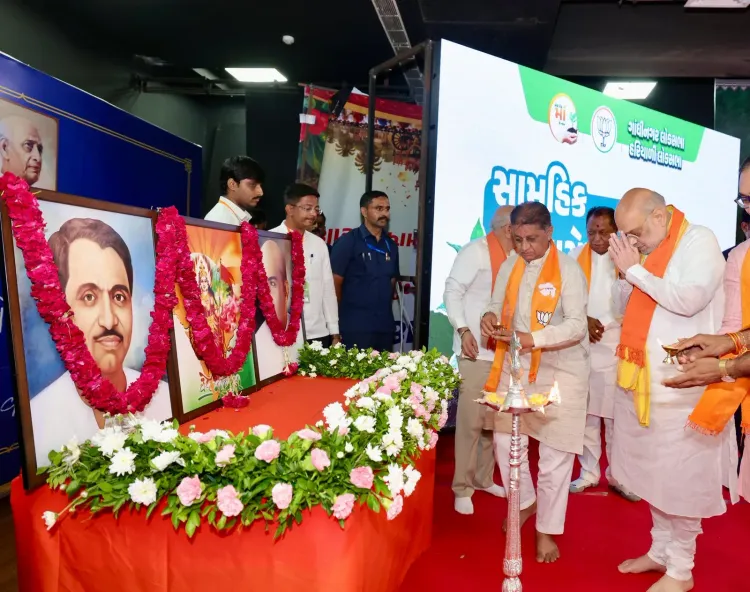
Union Home Minister Amit Shah met workers in Ahmedabad on 16 July 2026 to review the mass tree-plantation drive in the Gandhinagar Lok Sabha constituency.
The drive runs under PM Modi 's national 'Ek Ped Maa Ke Naam' (One Tree in Mother's Name) campaign, launched on World Environment Day 2024 .
The stated goal is to convert Gandhinagar Lok Sabha into a 'Harit Lok Sabha' — a fully green parliamentary constituency.
Shah stressed that ensuring the survival and regular maintenance of every sapling until it becomes a mature tree is a 'collective responsibility.' The initiative is driven by BJP workers and local volunteers , with local residents identified as direct beneficiaries of increased green cover.
Long-term sapling survival rates will be a key metric for assessing whether the Gandhinagar model can be replicated in other constituencies.
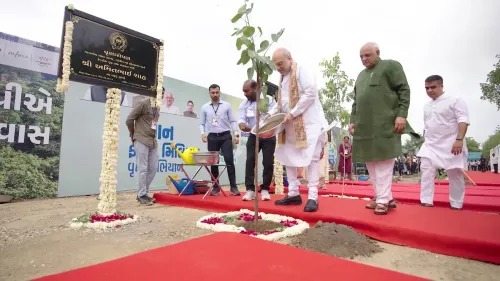
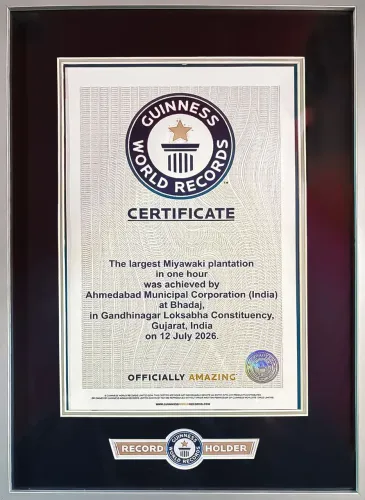
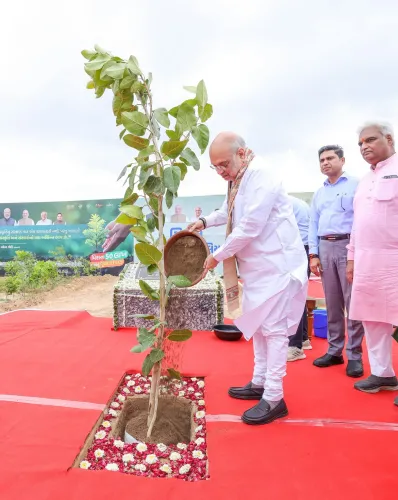
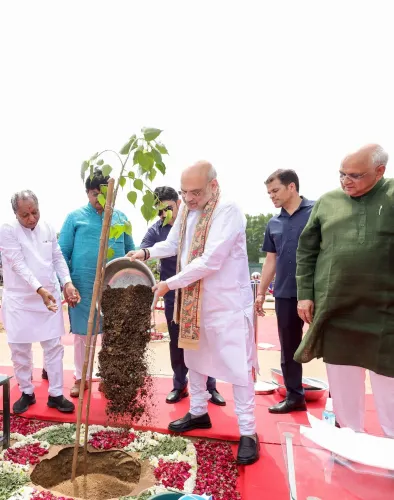
Union Home Minister Amit Shah met grassroots workers in Ahmedabad on Thursday, 16 July 2026, congratulating them on their contributions to a mass tree-plantation drive aimed at converting the Gandhinagar Lok Sabha constituency into a 'Harit Lok Sabha' (Green Parliamentary Constituency). The initiative is being run under the banner of Prime Minister Narendra Modi's national campaign 'Ek Ped Maa Ke Naam' (One Tree in Mother's Name).
Context
In his post, Shah wrote that Modi's 'Ek Ped Maa Ke Naam' campaign 'is today becoming synonymous with environmental protection across the country.' He added that a 'Samuhik Vrikshaaropan Abhiyan' (Collective Tree Plantation Drive) is being carried out with the resolve to make the Gandhinagar constituency fully green. At the Ahmedabad meeting, Shah personally acknowledged the workers who played a 'notable role' in advancing this drive and discussed the road ahead with them.
Shah also underlined a collective responsibility: 'It is the duty of all of us to ensure the protection of every sapling and its regular care until it becomes a strong tree.' The statement signals a shift in emphasis from planting numbers to long-term survival and maintenance of saplings already in the ground.
Policy Backdrop
Prime Minister Modi launched the 'Ek Ped Maa Ke Naam' campaign on World Environment Day 2024, framing tree plantation as both an ecological and an emotional act — dedicating a tree to one's mother. The campaign quickly became one of the central government's flagship community-driven environmental initiatives, drawing participation from government departments, schools, and local bodies across states.
The Gandhinagar constituency drive extends that national template to the parliamentary level, with Shah — who represents Gandhinagar in the Lok Sabha — taking personal ownership of the local rollout. This mirrors a broader pattern under the current administration of anchoring national environmental goals in constituency-level mobilisation by elected representatives.
Stakeholders and Impact
BJP workers and local volunteers in Ahmedabad and the wider Gandhinagar parliamentary area are the primary actors in the drive, responsible for organising plantation events and, crucially, follow-up maintenance. Local residents are both participants and direct beneficiaries, as increased urban and peri-urban green cover contributes to reduced heat-island effects and improved air quality in one of Gujarat's most densely populated corridors.
Shah's explicit emphasis on aftercare — ensuring each sapling survives to become a mature tree — addresses a well-documented weakness in large-scale plantation programmes in India, where sapling mortality rates have historically undermined headline planting figures.
What's Next
The immediate focus will be on monitoring survival rates and maintenance outcomes for saplings already planted under the Gandhinagar drive. Shah's call for sustained, regular care suggests that follow-up audits or community check-in mechanisms may be formalised in the coming weeks. If the Gandhinagar model demonstrates measurable green-cover gains, it could serve as a template for replication in other BJP-held constituencies ahead of future environmental policy reviews. The broader success of 'Ek Ped Maa Ke Naam' at the national level will likely hinge on whether this constituency-level accountability framework is adopted more widely.
Point of View
Tying his own constituency record to measurable environmental outcomes. By foregrounding aftercare over raw planting numbers, he is also implicitly acknowledging the credibility gap that has long plagued India's large-scale afforestation programmes. The move fits a deliberate pattern of the current administration embedding national flagship schemes within the electoral geography of senior leaders, reinforcing both party organisation and policy ownership. Whether the Gandhinagar drive produces verifiable green-cover data — rather than sapling-count optics — will determine its value as a replicable model.
NationPress
17 Jul 2026
Frequently Asked Questions
What is the 'Ek Ped Maa Ke Naam' campaign?
'Ek Ped Maa Ke Naam' (One Tree in Mother's Name) is a nationwide tree plantation campaign launched by Prime Minister Narendra Modi on World Environment Day 2024, encouraging citizens to plant a tree as a tribute to their mothers and to promote environmental conservation.
What is the 'Harit Lok Sabha' initiative in Gandhinagar?
'Harit Lok Sabha' means 'Green Parliamentary Constituency.' It is a local drive led under Amit Shah's Gandhinagar Lok Sabha seat to achieve comprehensive green cover through a collective plantation campaign called the 'Samuhik Vrikshaaropan Abhiyan.'
Why did Amit Shah meet workers in Ahmedabad on 16 July 2026?
Amit Shah met local BJP workers and volunteers in Ahmedabad to congratulate them on their contributions to the Gandhinagar plantation drive and to discuss the next steps for ensuring every sapling planted survives and is properly maintained.
Why is sapling aftercare important in India's plantation drives?
Large-scale plantation programmes in India have historically recorded high sapling mortality rates, meaning many trees die before maturing. Shah's emphasis on regular care and maintenance directly addresses this challenge to ensure the drive produces lasting environmental impact.
Which constituency does Amit Shah represent in Parliament?
Amit Shah represents the Gandhinagar Lok Sabha constituency in Gujarat in the Indian Parliament.