Amit Shah: Cabinet Clears Rs 6,970 Cr Dwarka Tunnel for Delhi
Synopsis
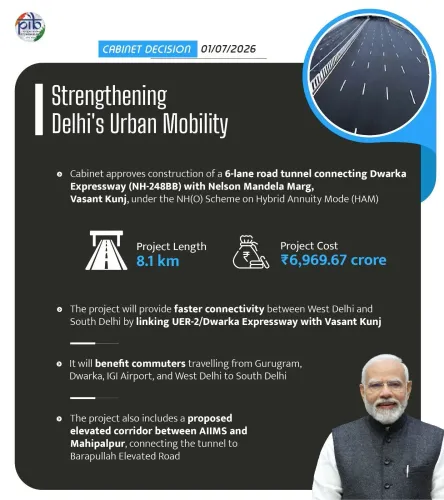
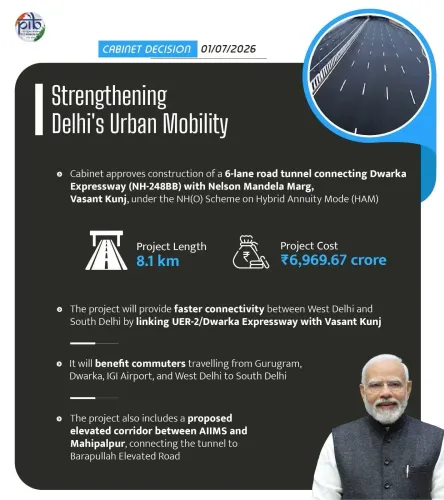
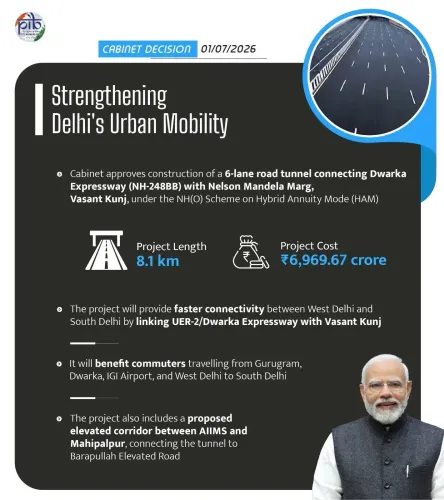
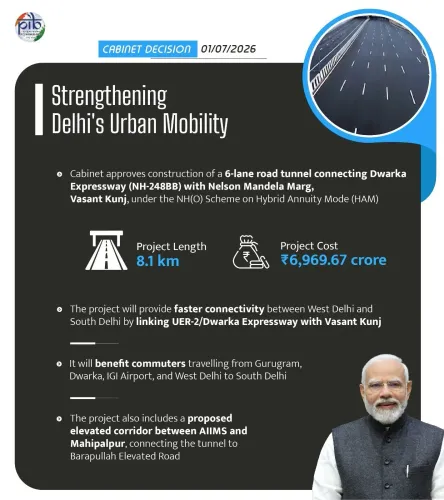
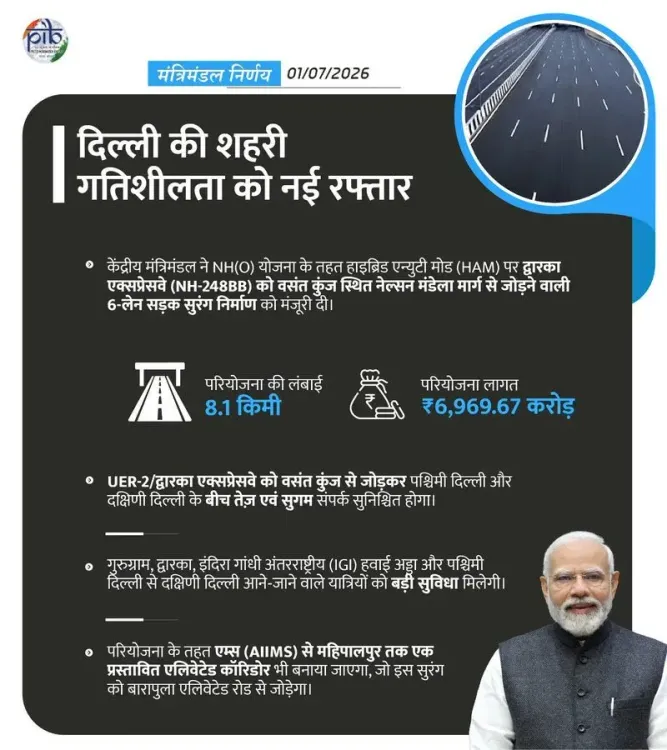
The Union Cabinet on 1 July 2026 approved the Dwarka Tunnel Project — a 6-lane, 8.1-km underground corridor in Delhi costing Rs 6,970 crore — to resolve long-standing traffic congestion between the city's western and southern zones, as announced by Home Minister Amit Shah.
Key Takeaways
The Union Cabinet approved the Dwarka Tunnel Project on 1 July 2026 .
The tunnel will be 6-lane and 8.1 kilometres long, running between western and southern Delhi .
The estimated project cost is Rs 6,970 crore .
The project aims to eliminate chronic traffic congestion on the western-southern Delhi corridor.
It follows earlier central investments such as the Dwarka Expressway under Bharatmala Pariyojana and the Delhi-Meerut RRTS .
Key next steps include environmental clearances, tendering, and coordination with the Delhi government on land and traffic management.
Union Home Minister Amit Shah announced on Wednesday, 1 July 2026 that the Union Cabinet has approved the Dwarka Tunnel Project in Delhi — a 6-lane, 8.1-kilometre underground corridor aimed at easing chronic traffic congestion between the city's western and southern zones, at an estimated cost of Rs 6,970 crore.
Posting on X, Shah wrote: 'मोदी सरकार दिल्ली की कनेक्टिविटी को नई रफ्तार दे रही है' ('The Modi government is giving new momentum to Delhi's connectivity'), adding that the tunnel will 'eliminate traffic problems between western and southern Delhi and ensure fast and seamless connectivity.'
Context
Delhi has long struggled with limited road corridors linking its western and southern zones. Commuters travelling between areas such as Dwarka and south Delhi face significant delays, particularly during peak hours, owing to grade-level intersections and inadequate high-capacity links. The approved tunnel is positioned as a direct response to this structural bottleneck.
The Union Cabinet, chaired by Prime Minister Narendra Modi, cleared the project at its meeting on 1 July 2026, with Shah announcing the decision through his official social media account shortly after.
Policy Backdrop
The approval follows a consistent pattern of central government investment in high-capacity urban transport infrastructure in the National Capital Region. The Dwarka Expressway (NH-148AE), a 14-lane corridor sanctioned under Bharatmala Pariyojana Phase-I in 2015, was an earlier intervention targeting the same southwest Delhi approach roads. The Delhi-Meerut Regional Rapid Transit System (RRTS) corridor, sanctioned in 2019, further underlined the Union government's readiness to commit large central funds to NCR mobility.
The Dwarka Tunnel fits this lineage — a direct Union-funded intervention in the national capital, designed to deliver visible, high-impact infrastructure without dependence on state-level timelines.
Stakeholders and Impact
The primary beneficiaries are daily commuters and residents of western Delhi — particularly the Dwarka sub-city, one of Asia's largest planned residential zones — and south Delhi localities. Reduced travel times are expected to ease pressure on parallel surface roads and improve air quality by cutting idling-engine emissions in congested corridors.
Freight and logistics movement through these zones is also likely to benefit, given that several arterial roads serving industrial and commercial pockets in southwest Delhi feed into the same congested network.
What's Next
The project will now move into detailed project report finalisation, followed by tendering. Key milestones to watch include environmental and forest clearances, land acquisition coordination with the Delhi government, and traffic management planning for the construction phase. Given the tunnel's underground nature, utility shifting and geotechnical surveys in a dense urban environment will be critical early steps.
If executed on schedule, the Dwarka Tunnel would mark one of the most significant additions to Delhi's road infrastructure in the post-expressway era, and is likely to feature prominently in the ruling party's urban governance narrative ahead of future electoral cycles.
Point of View
The BJP signals that Delhi's development is a whole-of-government political priority, not merely a technocratic one. The Rs 6,970 crore price tag and the 8.1-km length make this one of the costliest single urban road tunnels sanctioned in India, raising the stakes for timely delivery. How the project navigates coordination with the AAP-led Delhi government on land and traffic management will be a telling test of Centre-state infrastructure diplomacy in the national capital.
NationPress
1 Jul 2026
Frequently Asked Questions
What is the Dwarka Tunnel Project?
The Dwarka Tunnel Project is a Union Cabinet-approved 6-lane, 8.1-kilometre underground road tunnel in Delhi designed to connect the city's western and southern zones, at an estimated cost of Rs 6,970 crore.
How much will the Dwarka Tunnel cost?
The project is estimated to cost approximately Rs 6,970 crore, funded by the Union government.
Which areas will the Dwarka Tunnel connect?
The tunnel will connect western Delhi — including the Dwarka sub-city — with southern Delhi, providing a high-capacity, congestion-free corridor between the two zones.
When did the Union Cabinet approve the Dwarka Tunnel?
The Union Cabinet approved the Dwarka Tunnel Project on 1 July 2026, with Home Minister Amit Shah announcing the decision on X.
How long is the Dwarka Tunnel?
The Dwarka Tunnel will be 8.1 kilometres long and will have 6 lanes to handle high traffic volumes between western and southern Delhi.