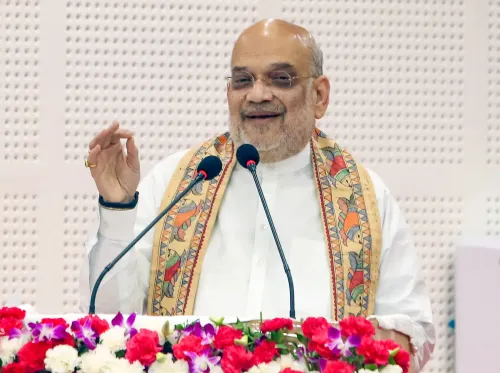
Amit Shah Hails Ahmedabad's 3.5 Lakh Saplings World Record
Synopsis
Union Home Minister Amit Shah on 27 July 2026 celebrated Ahmedabad's Bhadaj locality after PM Modi spotlighted its reported world record — over 3.5 lakh saplings planted in a single hour — during his monthly Mann Ki Baat radio address, drawing national attention to Gujarat's urban greening drive.
Key Takeaways
Union Home Minister Amit Shah posted on X on 27 July 2026 in Hindi and Gujarati expressing pride over the Bhadaj plantation record.
Prime Minister Modi mentioned the feat during Mann Ki Baat , his monthly national radio address.
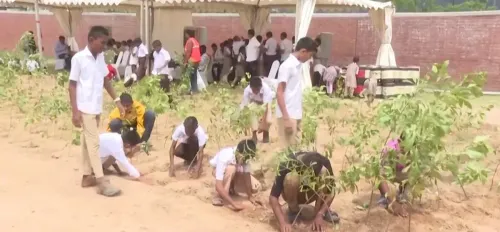
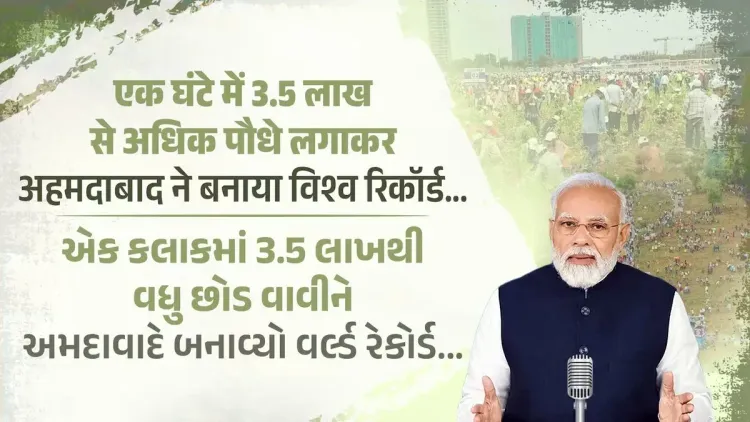
Volunteers at Bhadaj, Ahmedabad reportedly planted over 3.5 lakh (350,000) saplings within one hour , claimed as a world record.
The drive aligns with India's Green India Mission and NDC commitments to expand forest and tree cover by 2030 .
Environmental experts note that sapling survival rates will determine the ecological impact of the record-setting event.
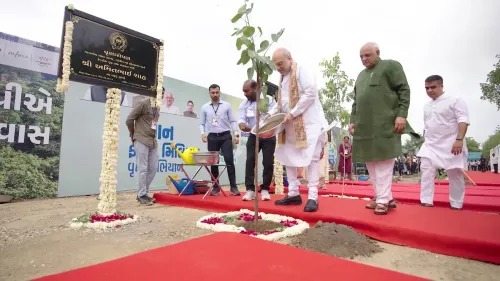
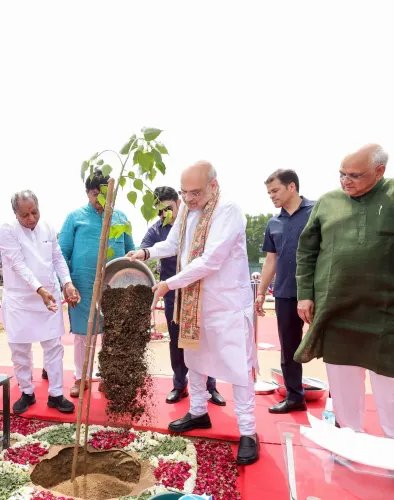
Union Home Minister Amit Shah on Sunday, 27 July 2026 took to X to express pride over Prime Minister Narendra Modi mentioning Ahmedabad's Bhadaj area in his monthly radio programme Mann Ki Baat, where the PM highlighted a reported world record of planting over 3.5 lakh saplings in a single hour.
Shah posted in both Hindi and Gujarati, writing: 'Sabhi Ahmedabadwasiyon ke liye garv ki baat hai' ('It is a matter of pride for all residents of Ahmedabad') that the Prime Minister acknowledged the feat during Mann Ki Baat. The record was set at Bhadaj, a locality in Ahmedabad, Gujarat.
Context
Mann Ki Baat is a monthly radio address launched by Prime Minister Modi in October 2014. The programme has frequently spotlighted citizen-led environmental initiatives, community plantation drives, and climate awareness campaigns from across the country. An acknowledgement in Mann Ki Baat typically lends national visibility to local efforts and is seen as a significant endorsement from the highest executive office.
Ahmedabad, Gujarat's largest city, has a documented history of community-driven urban greening programmes. The Bhadaj event, where volunteers reportedly planted more than 3,50,000 saplings within 60 minutes, represents one of the most ambitious single-session plantation drives undertaken in an Indian city.
Policy Backdrop
The plantation drive aligns with India's Green India Mission, launched in 2014, which aims to expand forest and tree cover and restore degraded ecosystems across states. India has also committed to ambitious afforestation targets under its Nationally Determined Contributions (NDCs) to the Paris Agreement, pledging to create an additional carbon sink of 2.5 to 3 billion tonnes of CO₂ equivalent through forest and tree cover by 2030.
Large-scale, record-oriented plantation events have become a recurring feature of state-level environmental campaigns, serving both ecological and mobilisation purposes. Gujarat has featured prominently in such drives, with state administration actively encouraging public participation in urban forestry initiatives.
Stakeholders and Impact
The primary stakeholders are the residents and volunteers of Ahmedabad who participated in the Bhadaj plantation event. A mention in Mann Ki Baat can catalyse replication of such drives in other cities, creating a peer-recognition dynamic among states competing to demonstrate environmental commitment.
Environmental experts and urban planners note that the long-term value of such events depends on sapling survival rates and sustained post-plantation care. Mass plantation records gain ecological credibility only when follow-up monitoring confirms that a meaningful proportion of the planted saplings take root and mature into trees.
What's Next
Attention will now turn to whether civic bodies in Ahmedabad release official data on sapling survival rates from the Bhadaj event, a metric that environmental groups and policymakers increasingly treat as the true measure of plantation drive success. Future episodes of Mann Ki Baat may revisit the record if follow-up assessments show strong outcomes, potentially positioning Gujarat's model as a template for urban greening nationwide.
Point of View
Creating a layered visibility loop. For Amit Shah, a Gujarati leader, celebrating an Ahmedabad record serves both a national environmental narrative and a regional pride signal ahead of any upcoming civic or state electoral cycle. The Mann Ki Baat mention elevates a local event into a national benchmark, pressuring other states to organise comparable drives. The critical policy question that remains unanswered — sapling survival — will determine whether this record translates into durable green cover or remains a mobilisation milestone.
NationPress
26 Jul 2026
Frequently Asked Questions
What world record was set at Bhadaj in Ahmedabad?
Volunteers at Bhadaj , a locality in Ahmedabad, Gujarat , reportedly set a world record by planting over 3.5 lakh (350,000) saplings in a single hour , an achievement highlighted by Prime Minister Modi during Mann Ki Baat .
What is Mann Ki Baat and why does it matter for environment news?
Mann Ki Baat is a monthly radio address by Prime Minister Narendra Modi , launched in October 2014 , in which he discusses citizen initiatives, national achievements, and social issues. An environmental drive mentioned on the programme receives immediate national visibility.
Why did Amit Shah post about the Ahmedabad tree planting record?
Amit Shah , a senior BJP leader from Gujarat , posted to express pride that Prime Minister Modi acknowledged the Bhadaj plantation world record on Mann Ki Baat , amplifying the achievement to a national audience.
How does this plantation drive connect to India's climate goals?
India's Green India Mission and its Paris Agreement commitments target an additional carbon sink of 2.5 to 3 billion tonnes of CO₂ equivalent through expanded forest and tree cover by 2030 . Large-scale plantation events like the one at Bhadaj contribute to these national afforestation targets.
Will the planted saplings be monitored for survival?
Environmental experts stress that the ecological value of the Bhadaj record depends on post-plantation care and official sapling survival rate assessments. Civic bodies in Ahmedabad are expected to release follow-up data to confirm how many of the 3.5 lakh saplings successfully take root.