Amit Shah Launches Ashok Singhal Birth Centenary Year in Delhi
Synopsis
Union Home Minister Amit Shah and RSS Sarkaryavah Dattatreya Hosabale launched Ashok Singhal's birth centenary year in New Delhi on 27 September 2026, pledging to carry the VHP leader's ideals of cultural consciousness and national pride to every home, especially India's youth.
Key Takeaways
Amit Shah inaugurated Ashok Singhal's birth centenary year in New Delhi on 27 September 2026 .
RSS Sarkaryavah Dattatreya Hosabale was present at the event, signalling full Sangh Parivar participation.
Ashok Singhal was a long-serving RSS pracharak and president of the Vishva Hindu Parishad (VHP) , closely associated with the Ram Janmabhoomi movement.
The centenary year is framed around reaching every home and especially youth audiences with Singhal's ideals of social organisation and cultural consciousness.
A series of programmes across India is expected during the centenary year.
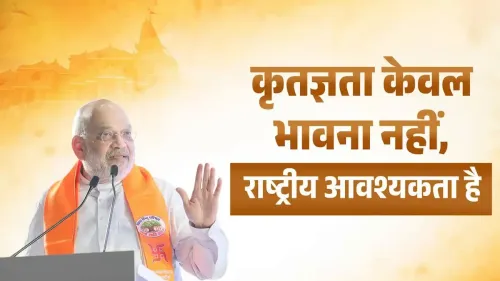
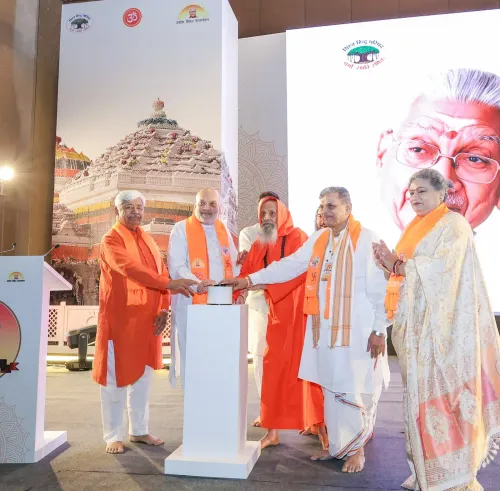
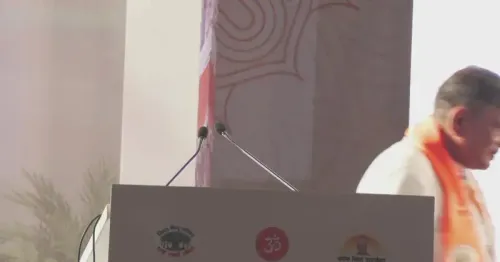
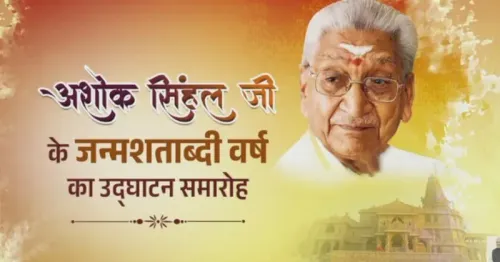
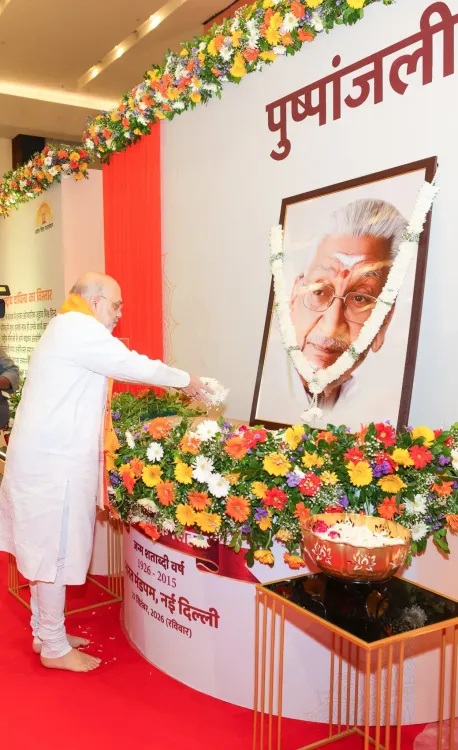
A century after his birth, Ashok Singhal — the man who spent decades mobilising Hindu society and anchoring the Ram Janmabhoomi movement — is being brought back to centre stage. Union Home Minister Amit Shah inaugurated Singhal's birth centenary year on Sunday, 27 September 2026, at an event in New Delhi, marking the occasion alongside Rashtriya Swayamsevak Sangh Sarkaryavah Dattatreya Hosabale.
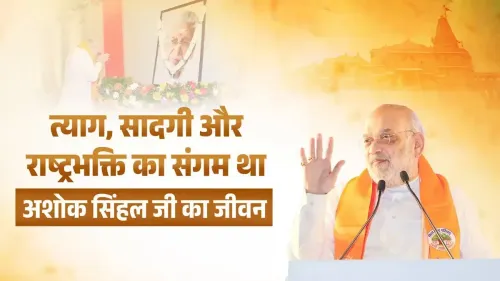
Shah described Singhal's life as proof of how a single individual, through unwavering commitment and dedication, can guide generations toward the path of nation and culture. In his post, he wrote: 'Ashok Singhal ji ka jeevan is baat ka pramaan hai...' — 'Ashok Singhal's life is testimony to how one person, through loyalty and devotion, can show generations the way of the nation and culture.'
Who Was Ashok Singhal — and Why a Centenary Year?
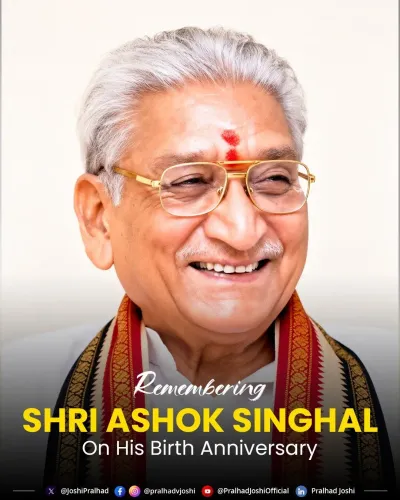
Ashok Singhal, born in 1926, rose from being an RSS pracharak to become the most prominent face of the Vishva Hindu Parishad (VHP), a Hindu religious and cultural organisation founded in 1964 with close ideological links to the RSS. For decades, he was the nerve centre of the campaign to build a Ram temple at Ayodhya — a movement that eventually culminated in the Supreme Court verdict of 2019 and the temple's consecration in 2024, nine years after his death in 2015.
His contribution, in the framing of those who venerate him, was threefold: organising society, awakening cultural consciousness, and filling the nation with self-pride. Shah's post used precisely this language, calling the centenary year an opportunity to carry Singhal's ideals 'to every home and especially to the youth.'
Shah and Hosabale Together — the Sangh Parivar Signal
The joint appearance of a senior BJP minister and the RSS's second-most powerful functionary is not incidental. Dattatreya Hosabale, who holds the office of Sarkaryavah — effectively the RSS's general secretary — represents the organisational spine of the broader Sangh Parivar. BJP ministers regularly participate in RSS and affiliate events honouring senior Sangh leaders, and this inauguration fits that established pattern precisely.
The centenary year is expected to generate a series of programmes across India, with a stated focus on disseminating Singhal's ideas among younger audiences — a demographic that would have no direct memory of the man or the movement he led at its peak.
Reaching the Youth — the Year's Stated Mission
Shah's framing of the centenary as an opportunity to reach 'every home' reflects a broader Sangh Parivar strategy of using anniversaries and birth-centenary events as vehicles for ideological outreach. The RSS, founded in 1925, has deployed similar centenary programming for its own foundational figures in the past. For Singhal, whose legacy is inseparably tied to the Ayodhya chapter — now concluded — the centenary year allows affiliated organisations to shift the narrative from the movement's goal to the man's method: sustained, grassroots social organisation.
The question the year's programming will have to answer is whether Singhal's story resonates as powerfully in a post-temple India as it did when the campaign was still in motion. If the centenary events draw the kind of cross-generational participation Shah envisions, they will double as a measure of the VHP's continuing cultural reach.
Point of View
The Singhal legacy must be repackaged beyond its defining campaign. The centenary year becomes, in effect, a test of whether the VHP can translate historical reverence into contemporary relevance among a generation that came of age after the movement's peak. It also signals that cultural mobilisation — not just electoral calculation — remains a live instrument for the Sangh Parivar.
NationPress
28 Sept 2026
Frequently Asked Questions
Who was Ashok Singhal?
Ashok Singhal was a senior RSS pracharak who served as president of the Vishva Hindu Parishad (VHP) and was the most prominent leader of the Ram Janmabhoomi movement. He passed away in 2015.
What is Ashok Singhal's birth centenary year?
Ashok Singhal was born in 1926, making 2026 his birth centenary year. A series of events across India has been planned to mark the occasion and spread his ideals, especially among the youth.
Who launched Ashok Singhal's centenary year?
Union Home Minister Amit Shah launched the birth centenary year of Ashok Singhal in New Delhi on 27 September 2026, alongside RSS Sarkaryavah Dattatreya Hosabale.
Who is Dattatreya Hosabale?
Dattatreya Hosabale is the Sarkaryavah (general secretary) of the Rashtriya Swayamsevak Sangh (RSS), making him the second-most senior functionary of the organisation.
What is the Vishva Hindu Parishad?
The Vishva Hindu Parishad (VHP) is a Hindu religious and cultural organisation founded in 1964 with close links to the RSS. Ashok Singhal served as its president and led its most consequential campaign — the push to build a Ram temple at Ayodhya.