Amit Shah Inaugurates New Gram Panchayat Office in Kalol
Synopsis
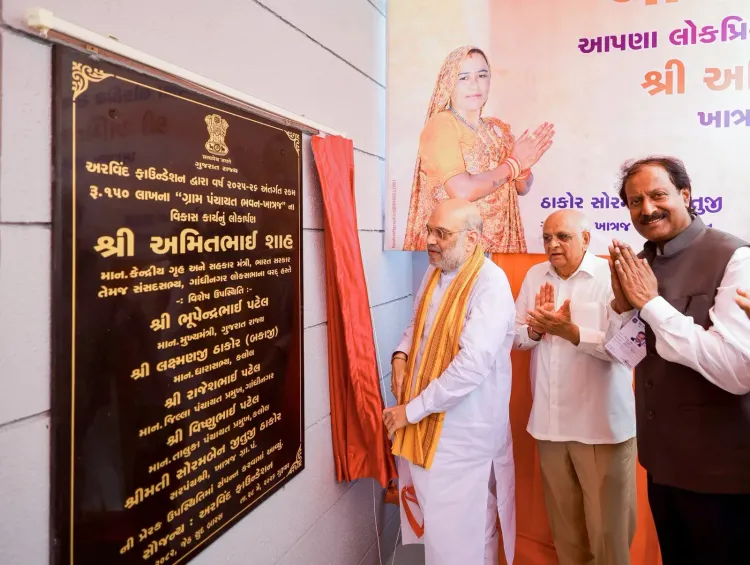
Union Home Minister Amit Shah inaugurated a new gram panchayat office in Kalol, Gandhinagar on 28 May 2026, calling it a vehicle for delivering central and state schemes to every village. The move underscores the Modi government's push to strengthen rural governance infrastructure under the Rashtriya Gram Swaraj Abhiyan.
Key Takeaways
Union Home Minister Amit Shah inaugurated a newly built gram panchayat office in Kalol, Gandhinagar, Gujarat on 28 May 2026 .
Shah described gram panchayats as having become 'an important centre of rural development' under the Modi government .
The new building is intended to serve as a delivery point for both central and state government schemes and for resolving local grievances.
The project aligns with the Rashtriya Gram Swaraj Abhiyan , a centrally sponsored scheme that funds panchayat infrastructure and capacity building.
Kalol falls within Gandhinagar Lok Sabha constituency , which Amit Shah represents in Parliament.
Further panchayat bhawan projects are expected under ongoing phases of the RGSA and potential state budget allocations for 2026-27 .
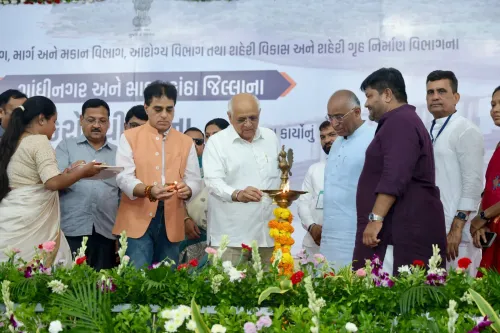
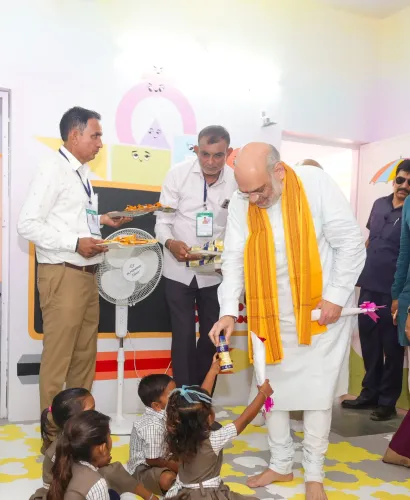
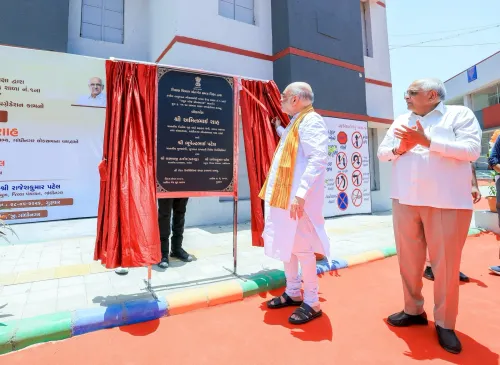
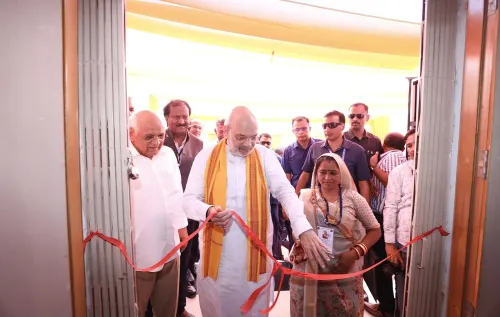
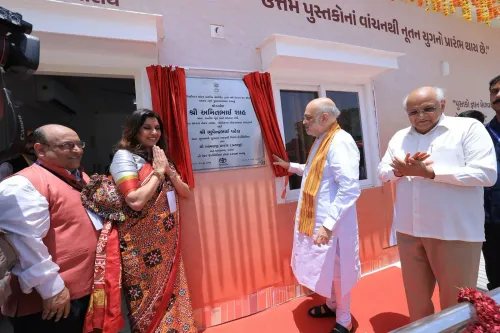
Union Home Minister Amit Shah on Thursday, 28 May 2026, inaugurated a newly constructed gram panchayat office in Kalol, Gandhinagar district, Gujarat, describing the building as a symbol of strengthened rural governance under the Modi government.
Posting on X in Hindi and Gujarati, Shah wrote: 'मोदी सरकार में हमारी ग्राम पंचायतें सशक्त होकर ग्रामीण विकास का अहम केंद्र बनी हैं' ('Under the Modi government, our gram panchayats have become empowered and an important centre of rural development'). He added in Gujarati that the new building would serve as a strong medium for delivering central and state government schemes to every village and resolving people's problems.
Context
Gram panchayats are village-level elected bodies that form the foundation of India's three-tier Panchayati Raj system, enshrined in the 73rd Constitutional Amendment Act of 1992. They are the primary interface between citizens and government welfare programmes covering housing, sanitation, drinking water, and social security. A modern, well-equipped panchayat office is considered essential infrastructure for effective last-mile delivery of these schemes.
Kalol is a town in Gandhinagar district — the same district that houses Gujarat's state capital — making this inauguration visible within a politically significant constituency that Amit Shah himself represents in the Lok Sabha.
Policy Backdrop
The push to upgrade gram panchayat infrastructure has a direct policy anchor in the Rashtriya Gram Swaraj Abhiyan (RGSA), a centrally sponsored scheme restructured and expanded from 2018 onward. The RGSA channels funds and technical support to strengthen panchayat buildings, digital connectivity, and the capacity of elected representatives and functionaries.
The scheme aligns with the broader constitutional mandate under Part IX of the Constitution, which requires devolution of powers and resources to panchayats for planning and implementation of development programmes. Gujarat has consistently integrated national guidelines on decentralised planning into its state-level execution framework, and new panchayat bhawans are a visible output of that approach.
Stakeholders and Impact
The primary beneficiaries of an upgraded panchayat office are rural residents of Kalol and surrounding villages, who gain a dedicated, functional space to access government services, register grievances, and participate in local governance. Panchayat functionaries — including elected sarpanches and secretaries — benefit from improved working conditions that can raise administrative efficiency.
At a wider level, such infrastructure upgrades are viewed as critical to plugging gaps in scheme implementation. When panchayat offices lack basic facilities, the delivery of benefits under programmes in housing, water supply, and rural employment is often delayed or fragmented. A new building with modern amenities is intended to reduce those bottlenecks.
What's Next
Attention will now turn to whether Gujarat's state budget for 2026-27 earmarks additional funds for similar panchayat bhawan projects across other districts. At the national level, the roll-out of further phases of the Rashtriya Gram Swaraj Abhiyan will determine how many more gram panchayats receive comparable infrastructure upgrades in the near term. Shah's public inauguration of this office signals continued political emphasis on visible rural governance milestones ahead of the local body election cycle in Gujarat.
Point of View
Visible delivery — a format the BJP has refined over successive election cycles. The choice of Kalol in Gandhinagar, Gujarat's administrative heartland, amplifies the symbolic weight without requiring a high-profile national event. By invoking the 'Modi government' framing rather than a party-political one, the messaging stays within the register of governance rather than electioneering, which gives it broader reach. The move also reinforces the Centre's ongoing effort to position gram panchayats — and the RGSA in particular — as the institutional backbone of last-mile welfare delivery ahead of any future local body contests in the state.
NationPress
14 Oct 2026
Frequently Asked Questions
What did Amit Shah inaugurate in Kalol on 28 May 2026?
Amit Shah inaugurated a newly constructed gram panchayat office in Kalol, Gandhinagar district, Gujarat, on 28 May 2026. He described it as a centre for rural development and a medium for delivering government schemes to villages.
What is the Rashtriya Gram Swaraj Abhiyan?
The Rashtriya Gram Swaraj Abhiyan (RGSA) is a centrally sponsored scheme restructured and expanded from 2018 onward. It provides funding and training to strengthen gram panchayat buildings, e-governance systems, and the capacity of elected panchayat representatives.
Why is the gram panchayat office inauguration significant?
A modern panchayat office is the primary infrastructure through which central and state welfare schemes — covering housing, water, sanitation, and social security — reach rural citizens. Upgrading these buildings is seen as critical to reducing delays in last-mile delivery.
Where is Kalol located?
Kalol is a town in Gandhinagar district, Gujarat. It falls within the Gandhinagar Lok Sabha constituency, which is represented in Parliament by Union Home Minister Amit Shah.
What legal framework governs gram panchayats in India?
Gram panchayats derive their constitutional status from the 73rd Constitutional Amendment Act of 1992, which inserted Part IX into the Constitution and mandated three-tier Panchayati Raj institutions — at village, intermediate, and district levels — with elected representatives.