CM Bhupendra Patel hails Amit Shah's launch of rural libraries in Gandhinagar
Synopsis
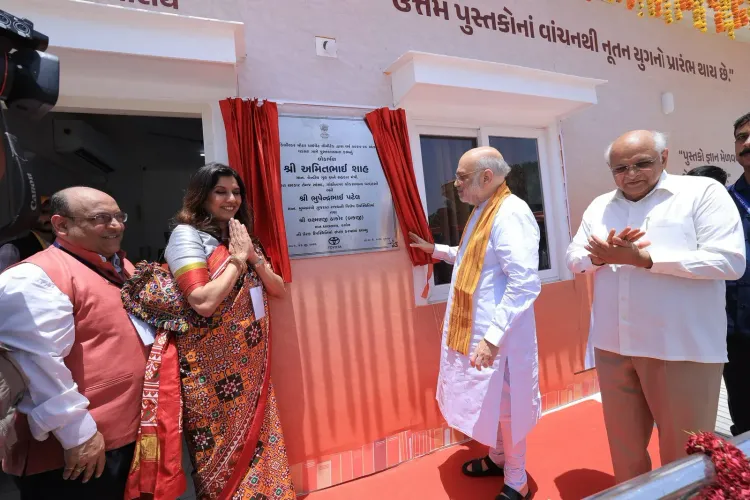
Gujarat CM Bhupendra Patel lauded the launch of a modern pre-fabricated library at Vadsar, Gandhinagar, inaugurated by Union Minister Amit Shah. Built by Toyota Kirloskar in partnership with district authorities, the initiative targets 20 villages in its first phase, with MoUs signed for 40 more, aiming to boost rural youth education.
Key Takeaways
Union Minister Amit Shah inaugurated a Toyota Kirloskar-built pre-fabricated library at Vadsar, Gandhinagar on 28 May 2026 .
The first phase covers 20 villages across Gandhinagar and Kalol talukas.
MoUs were signed at the event for libraries in an additional 40 villages , bringing the total to 60 villages .
The project is a joint initiative of Toyota Kirloskar Motor and the district administration under a CSR framework.
Gujarat CM Bhupendra Patel called it a step 'worthy of emulation' for rural education and knowledge-sharing.
The initiative aligns with India's National Education Policy 2020 and its emphasis on equitable rural learning infrastructure.
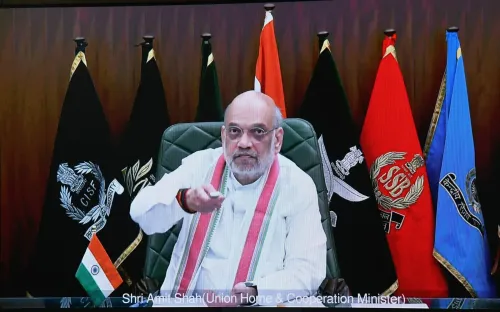
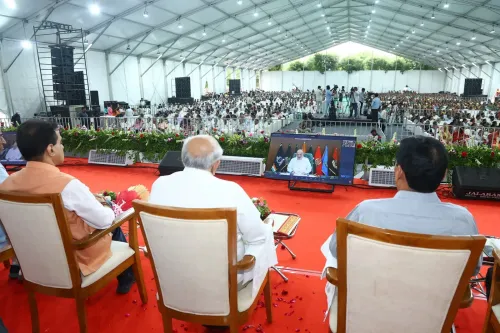
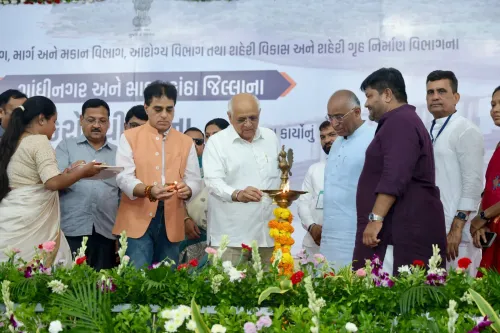
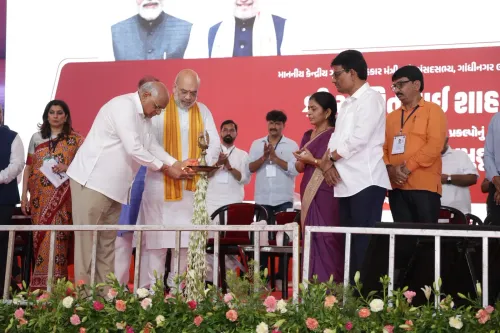
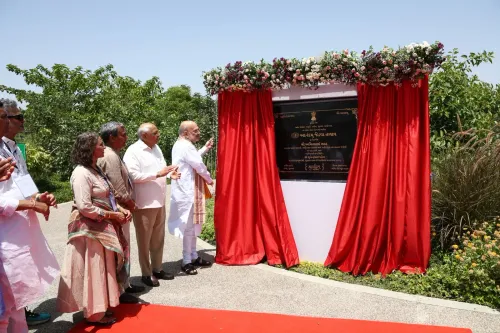
Gujarat Chief Minister Bhupendra Patel on Thursday, 28 May 2026, praised the inauguration of a state-of-the-art pre-fabricated library at Vadsar, Gandhinagar, built by Toyota Kirloskar under a public-private partnership with district authorities. The library was inaugurated by Union Home and Cooperation Minister Amit Shah, marking the first visible milestone of a broader rural literacy drive across Gandhinagar and Kalol.
Posting on X in Gujarati, CM Patel called the initiative 'anusaraniya kadam' — 'a step worthy of emulation' — for spreading education and knowledge in rural areas. He noted that in the first phase, 20 villages across Gandhinagar and Kalol are receiving modern pre-fabricated libraries through this joint effort of district administration and Toyota Kirloskar.
Context
The inauguration at Vadsar is the centrepiece of a rural library rollout conceived as a corporate social responsibility initiative by Toyota Kirloskar Motor, the Japanese-Indian automaker with a significant manufacturing presence in Gujarat. The pre-fabricated format allows for rapid, standardised construction in village settings that may lack conventional building infrastructure. CM Patel described the combined effort of government and society as 'khub umda karya' — 'a very noble endeavour.'
At the same event, Memoranda of Understanding were signed for the construction of similar modern pre-fabricated libraries in an additional 40 villages, taking the total planned footprint to 60 villages in the region. The precise financial terms of these MoUs have not been disclosed publicly.
Policy Backdrop
The project sits within the framework of India's National Education Policy 2020, which prioritises equitable access to quality learning resources and infrastructure in rural and semi-urban areas. Gujarat has consistently leveraged corporate CSR funds to supplement government expenditure on village-level amenities, and this library drive extends that model to educational infrastructure.
Public-private partnerships of this nature have become a recurring feature of rural development in BJP-governed states, with companies directing CSR budgets toward physical assets — libraries, skill centres, sanitation facilities — that complement state schemes. The pre-fabricated library model, in particular, offers a replicable template that could be scaled to other districts or states.
Stakeholders and Impact
The primary beneficiaries are rural youth and village students in Gandhinagar and Kalol talukas, who currently have limited access to curated reading materials and structured study environments. CM Patel stated that these libraries 'will prove to be a blessing for the educational development and bright future of rural youth.'
Toyota Kirloskar gains visible CSR credentials in a state where it operates key facilities, while district administration acquires modern educational infrastructure without a corresponding capital outlay from the state budget. Village panchayats and local educators are expected to manage day-to-day library operations once the units are commissioned.
What's Next
Attention will now shift to the rollout timeline for the 40 additional libraries under the newly signed MoUs, and whether the pre-fabricated model will be extended beyond Gandhinagar district to other parts of Gujarat. The success of this initiative — measured by enrolment, usage rates, and student outcomes — could determine whether similar public-private frameworks are replicated at scale under national rural education programmes.
Point of View
Scalable, and photographable, making it ideal for both CSR reporting and political optics. CM Patel's effusive endorsement on social media underscores how Gujarat's government routinely co-brands corporate CSR as state-driven achievement. The real test will be whether these libraries become active community learning centres or remain symbolic infrastructure — a question that past rural amenity drives in India have often left unanswered.
NationPress
15 Oct 2026
Frequently Asked Questions
Where was the new library inaugurated by Amit Shah in Gujarat?
The library was inaugurated at Vadsar in Gandhinagar district , Gujarat, on 28 May 2026.
Who built the pre-fabricated libraries in Gandhinagar villages?
Toyota Kirloskar Motor built the pre-fabricated libraries as part of its corporate social responsibility programme, in partnership with the Gandhinagar district administration.
How many villages will get libraries under this project?
In the first phase, 20 villages in Gandhinagar and Kalol are receiving libraries. MoUs were signed for an additional 40 villages , bringing the total planned coverage to 60 villages .
What did Gujarat CM Bhupendra Patel say about the library project?
CM Patel called it a step 'worthy of emulation' for spreading education in rural areas, and said the libraries 'will prove to be a blessing for the educational development and bright future of rural youth.'
How does this library project connect to national education policy?
The initiative aligns with India's National Education Policy 2020 , which prioritises equitable access to quality learning resources and infrastructure in rural areas.