Amit Shah Inaugurates JP Narayan Public Library in New Delhi
Synopsis
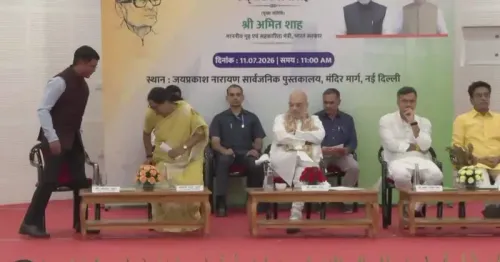
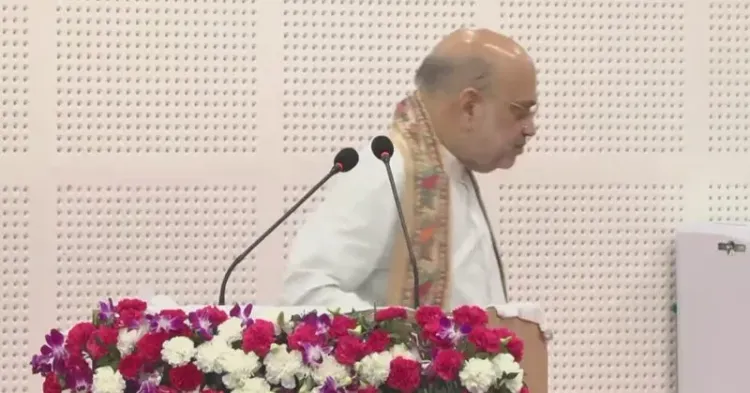
Union Home Minister Amit Shah inaugurated the Jayaprakash Narayan Public Library in New Delhi on July 11, 2026, calling libraries a powerful medium for spreading modern education alongside India's cultural and knowledge traditions — in line with the National Education Policy 2020 and the National Mission on Libraries.
Key Takeaways
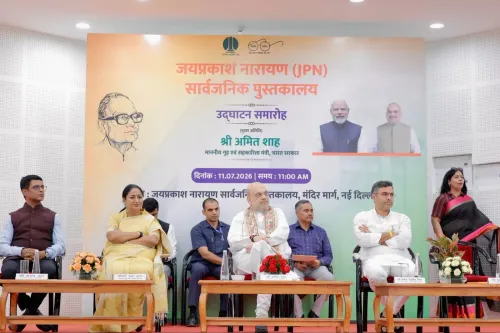
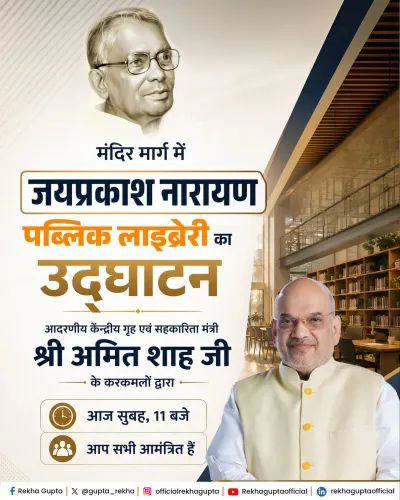
Union Home Minister Amit Shah inaugurated the Jayaprakash Narayan Public Library in New Delhi on July 11, 2026 .
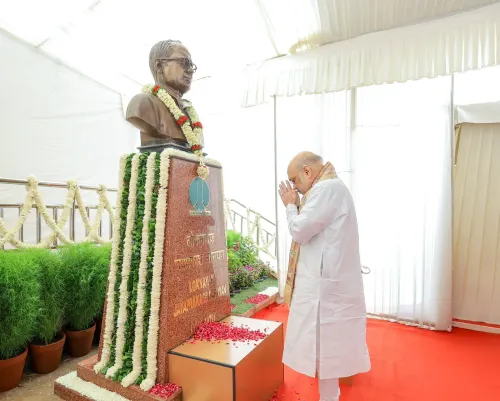
Shah described libraries as 'a powerful medium for taking modern education as well as India's culture and knowledge to every person.' The library is named after Jayaprakash Narayan , the independence activist and socialist leader known for the Total Revolution movement.
The inauguration aligns with the National Education Policy 2020 , which calls for libraries to promote both modern learning and classical Indian knowledge systems.
The National Mission on Libraries , re-energised after 2014, aims to modernise and network public libraries across India.
Students, researchers, and the general public in and around New Delhi are the primary beneficiaries of the new institution.
Union Home Minister Amit Shah inaugurated the Jayaprakash Narayan Public Library in New Delhi on Saturday, July 11, 2026, describing libraries as a powerful medium for spreading both modern education and India's cultural and knowledge traditions to every citizen.
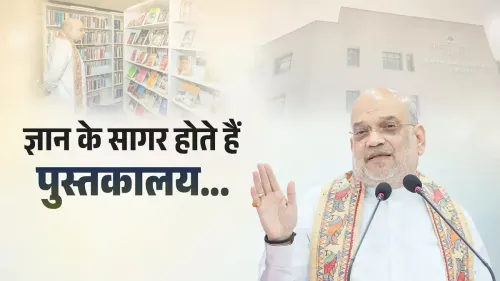
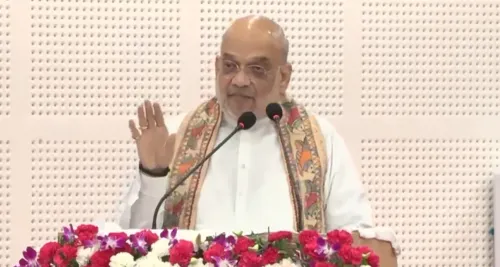
Sharing a live broadcast of the inauguration ceremony on X, Shah wrote: 'पुस्तकालय आधुनिक शिक्षा के साथ-साथ भारत की संस्कृति और ज्ञान को जन-जन तक पहुँचाने का सशक्त माध्यम है' — 'Libraries are a powerful medium for taking modern education as well as India's culture and knowledge to every person.'
Context
The library has been named after Jayaprakash Narayan, the revered independence activist, socialist thinker, and mass leader who remains one of post-independence India's most celebrated political figures. Known popularly as 'JP', Narayan led the landmark Total Revolution movement of the 1970s and is widely regarded as a symbol of democratic values and public service.
Naming a major public library in the national capital after JP carries symbolic weight, positioning the institution at the intersection of democratic ideals and the democratisation of knowledge.
Policy Backdrop
The inauguration aligns with a broader central government push to strengthen library infrastructure across India. The National Education Policy (NEP) 2020 explicitly calls for reinforcing libraries as hubs that promote both contemporary learning and classical Indian knowledge systems.
The National Mission on Libraries, originally launched in 2012 and re-energised after 2014, has aimed at modernising and digitally networking public libraries across states. Platforms such as the National Digital Library and e-PG Pathshala form part of this wider ecosystem that physical libraries are expected to complement under the NEP framework.
Multiple states have seen library inaugurations or upgrades in recent years, often led by cultural departments and education ministries in coordination with central agencies, reflecting a sustained institutional emphasis on public access to knowledge.
Stakeholders and Impact
The primary beneficiaries of the Jayaprakash Narayan Public Library are students, researchers, and the general public in and around New Delhi. A well-resourced public library in the national capital can serve as a model institution, drawing visitors from across the country who travel to Delhi for education, competitive exam preparation, and research.
Shah's framing of libraries as a bridge between modern education and India's cultural heritage suggests the institution is intended to house not only contemporary academic resources but also materials rooted in Indian traditions and classical knowledge — a dual mandate that mirrors the NEP's stated goals.
What's Next
Attention will now turn to the operational rollout of the library, including its collection focus, digital integration with national library platforms, and accessibility for walk-in users. The broader policy question is whether this inauguration accelerates the rollout of similar public library projects in other states and union territories under the NEP and National Mission on Libraries framework.
With the central government having consistently linked library development to its cultural and educational agenda, the Jayaprakash Narayan Public Library is likely to serve as a reference point for future such initiatives across India.
Point of View
Signalling the ruling party's effort to claim a broad, cross-ideological national heritage. Shah's framing of libraries as conduits for both modern education and Indian cultural knowledge tracks closely with the NEP 2020's dual mandate, suggesting this is as much a policy statement as a ceremonial event. The move also reinforces the central government's pattern of using high-profile inaugurations in the national capital to set the tone for state-level replication of cultural and educational infrastructure. Analysts will watch whether this library's model — blending classical Indian knowledge with contemporary resources — is adopted as a template for the wider National Mission on Libraries rollout.
NationPress
9 Oct 2026
Frequently Asked Questions
What is the Jayaprakash Narayan Public Library in New Delhi?
The Jayaprakash Narayan Public Library is a public library inaugurated in New Delhi on July 11, 2026 by Union Home Minister Amit Shah. It is named after the independence activist and socialist leader Jayaprakash Narayan and is intended to serve as a hub for both modern education and Indian cultural knowledge.
Why did Amit Shah inaugurate a library in New Delhi?
Amit Shah inaugurated the Jayaprakash Narayan Public Library as part of the central government's broader push to strengthen public library infrastructure in India, in line with the National Education Policy 2020 and the National Mission on Libraries.
Who was Jayaprakash Narayan and why is the library named after him?
Jayaprakash Narayan, popularly known as JP, was an Indian independence activist, socialist thinker, and mass leader famous for leading the Total Revolution movement in the 1970s. The library is named after him to honour his legacy of democratic values and public service.
What is the National Mission on Libraries India?
The National Mission on Libraries is a central government initiative originally launched in 2012 and re-energised after 2014, aimed at modernising and digitally networking public libraries across India. It works in conjunction with platforms like the National Digital Library and e-PG Pathshala.
How does the NEP 2020 relate to public libraries in India?
The National Education Policy 2020 explicitly calls for strengthening libraries to promote both contemporary learning and classical Indian knowledge systems, making public library development a formal part of India's national education agenda.