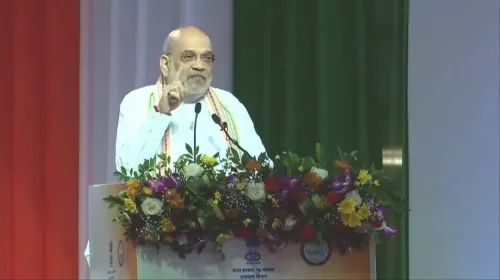
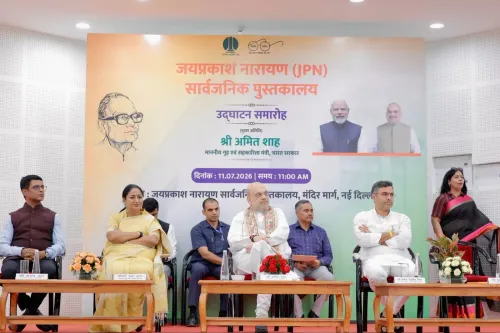
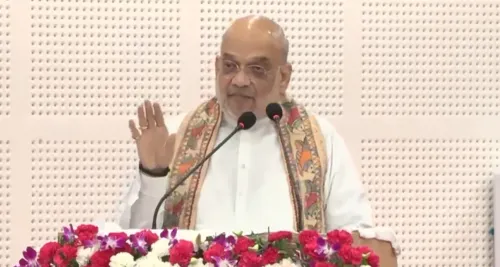
Amit Shah inaugurates reading rooms at Gandhinagar libraries
Synopsis
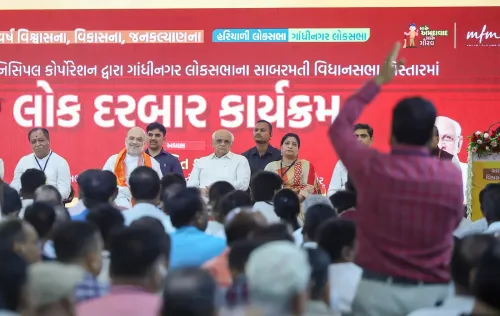
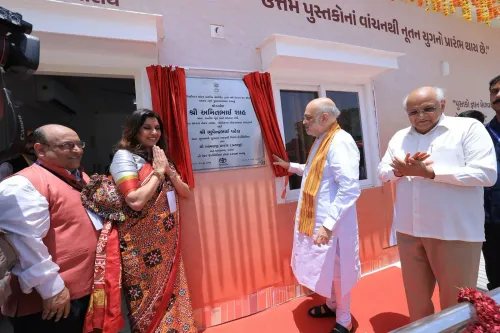
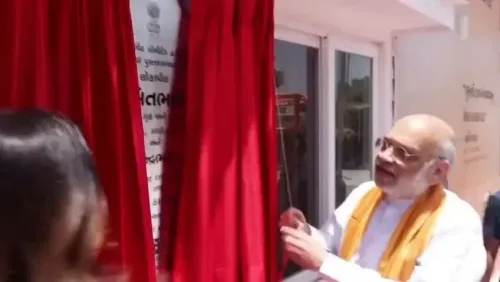
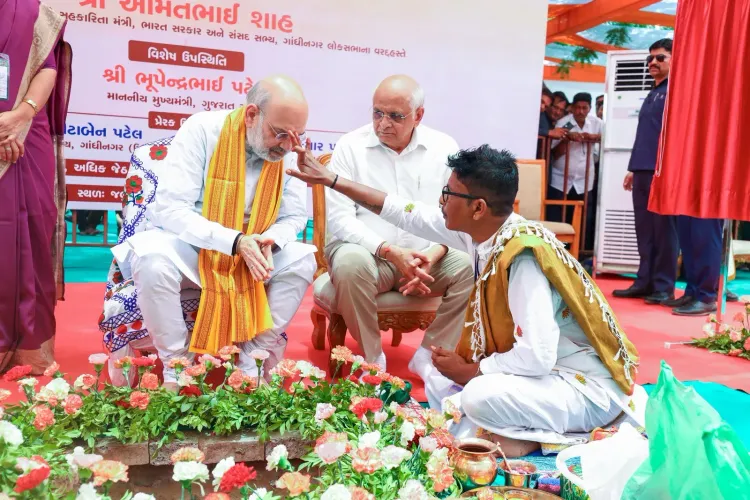
Union Home Minister Amit Shah on 28 May 2026 inaugurated newly built reading rooms at the Govardhanram Tripathi-Kavi Dalpatram Library and the Kavi Narmad Library in Gandhinagar, offering free study spaces for students and youth under the government's education-empowerment drive.
Key Takeaways
Union Home Minister Amit Shah inaugurated new reading rooms at two public libraries in Gandhinagar on 28 May 2026 .
The libraries are named after three celebrated 19th-century Gujarati literary figures: Govardhanram Tripathi , Kavi Dalpatram , and Kavi Narmad .
The reading rooms are free of charge , targeting students and youth in the Gandhinagar area.
The initiative aligns with the National Education Policy 2020 's mandate to strengthen library infrastructure nationwide.
Shah framed the inauguration as part of the government's broader goal of building an 'empowered India through education.'
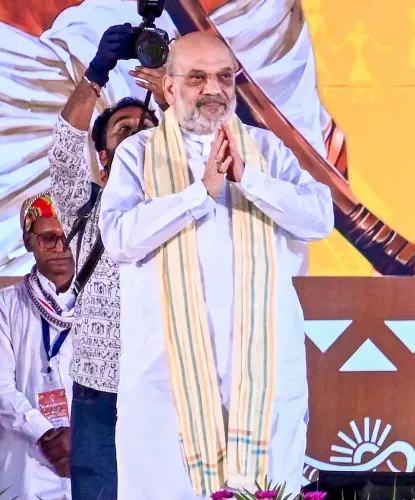
Union Home Minister Amit Shah on Thursday, 28 May 2026 inaugurated newly built reading rooms at two historic public libraries in Gandhinagar, Gujarat — the Govardhanram Tripathi and Kavi Dalpatram Library and the Kavi Narmad Library — framing the move as part of the government's sustained drive to build an empowered India through education.
Posting on X, Shah wrote in Hindi and Gujarati: 'Sarkar shiksha ke madhyam se sashakt Bharat ke nirman ke liye nirantar karya kar rahi hai' ('The government is continuously working to build an empowered India through education'). He added, in Gujarati, that the facilities would serve as a 'powerful medium for free study and knowledge acquisition, especially for the youth and students of the area.'
Context
Gandhinagar is both the capital of Gujarat and the Lok Sabha constituency represented by Amit Shah, making the inauguration a locally significant event for a minister who has long combined national-level responsibilities with active constituency outreach. The two libraries bear the names of towering figures in Gujarati literary history. Govardhanram Tripathi was a 19th-century novelist whose Saraswatichandra remains a landmark of modern Gujarati prose, while Kavi Dalpatram was a poet and social reformer who shaped early modern Gujarati literature.
Kavi Narmad — poet, essayist and lexicographer — is widely regarded as a founder of modern Gujarati literary identity. Naming public infrastructure after these three writers connects new civic investment with the region's deep cultural heritage.
Policy Backdrop
The inauguration aligns with the National Education Policy (NEP) 2020, which explicitly calls for strengthening physical and digital library infrastructure to promote reading and lifelong learning across age groups. Central and state governments have periodically upgraded district and city libraries, using the names of canonical regional writers to lend cultural legitimacy to education spending.
This pattern is visible across multiple states, where public libraries are being repositioned as nodes for vernacular knowledge, competitive-exam preparation, and community learning. Observers have noted that future steps could include integration with platforms such as the National Digital Library or the e-Vidya initiative, though no such announcement was made in the post.
Stakeholders and Impact
The primary beneficiaries are students, youth, and residents of Gandhinagar, who will gain access to free, dedicated reading spaces. The 'free of charge' emphasis in Shah's Gujarati text signals that the reading rooms are intended as inclusive public infrastructure rather than fee-based facilities.
By invoking three 19th-century Gujarati literary giants in a single inauguration, the government also reinforces the cultural and linguistic identity of the state — a recurring theme in Gujarat's approach to public institution-building.
What's Next
Attention will now turn to whether the Gujarat government expands the model to other district libraries across the state and whether the new reading rooms are eventually linked to digital learning platforms under national education programmes. Budget allocations for library modernisation in upcoming state and union budgets will be a key indicator of the initiative's scale and ambition.
Point of View
The BJP reinforces its claim to be a custodian of regional cultural identity, not merely a Hindi-belt party. The 'free of charge' emphasis in the Gujarati portion of the post is a deliberate signal to students and lower-income families who form a key electoral segment. If the model is scaled and eventually linked to digital learning platforms, it could become a replicable template for library-led education outreach in other states ahead of future electoral cycles.
NationPress
11 Oct 2026
Frequently Asked Questions
Which libraries did Amit Shah inaugurate reading rooms in?
Amit Shah inaugurated newly built reading rooms at the Govardhanram Tripathi and Kavi Dalpatram Library and the Kavi Narmad Library, both located in Gandhinagar, Gujarat.
Are the new reading rooms in Gandhinagar free to use?
Yes. Shah specifically stated in his post that the reading rooms would serve as a free medium for study and knowledge acquisition for students and youth in the area.
Who were Govardhanram Tripathi, Dalpatram, and Narmad?
All three were prominent 19th-century Gujarati literary figures. Govardhanram Tripathi authored the landmark novel Saraswatichandra; Dalpatram was a poet and social reformer; Narmad was a poet, essayist, and lexicographer considered a founder of modern Gujarati literary identity.
How does this inauguration relate to NEP 2020?
The National Education Policy 2020 explicitly calls for strengthening physical and digital library infrastructure to promote reading and lifelong learning, making the new reading rooms consistent with that national policy direction.
Why did Amit Shah inaugurate libraries in Gandhinagar?
Gandhinagar is both the capital of Gujarat and the Lok Sabha constituency that Amit Shah represents in Parliament, making local infrastructure inaugurations a regular part of his constituency engagement.