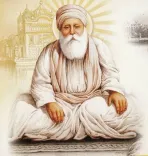
Amit Shah Pays Tribute to Ishwar Chandra Vidyasagar on Birth Anniversary

Synopsis
Union Home Minister Amit Shah marked the birth anniversary of Ishwar Chandra Vidyasagar on September 26, 2026, paying tribute in Hindi and Bengali to the 19th-century reformer's work on Bengali literacy through 'Barnaparichay', widow remarriage, and women's education.
Key Takeaways
Amit Shah posted a bilingual tribute in Hindi and Bengali on September 26, 2026 , marking Ishwar Chandra Vidyasagar's birth anniversary.
Shah highlighted Vidyasagar's authorship of 'Barnaparichay' , the primer that standardised the Bengali script and opened literacy to generations of children.
The tribute specifically recognised Vidyasagar's lifelong campaigns for widow remarriage and women's education in 19th-century India.
Vidyasagar's advocacy contributed to the landmark Hindu Widows' Remarriage Act of 1856 .
Shah described Vidyasagar's life and ideals as continuing to 'give direction to society' even today.
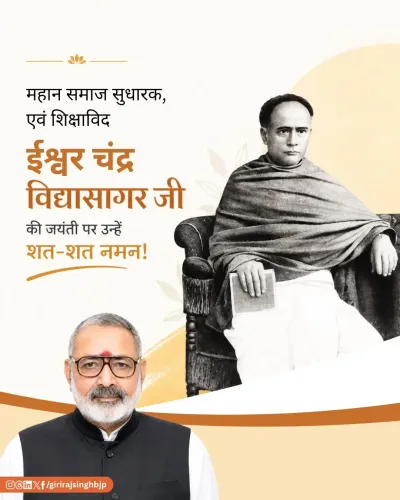
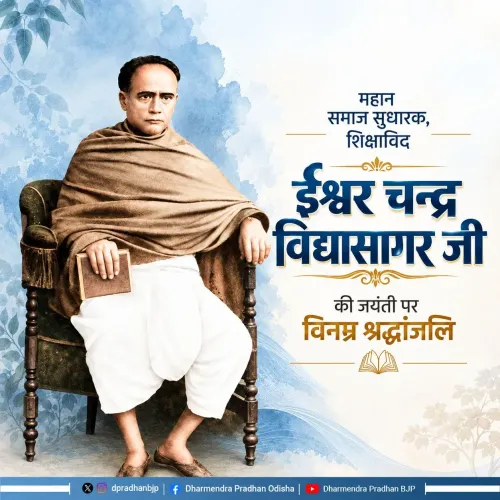
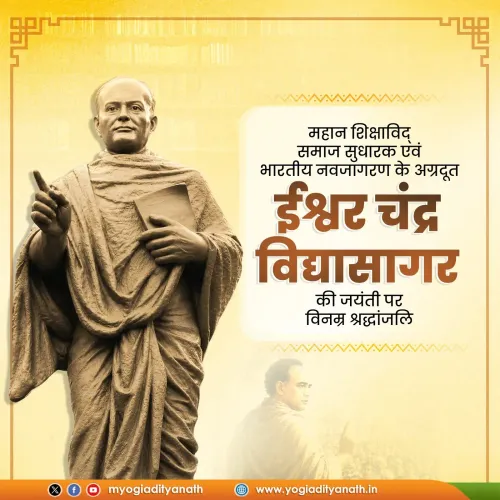
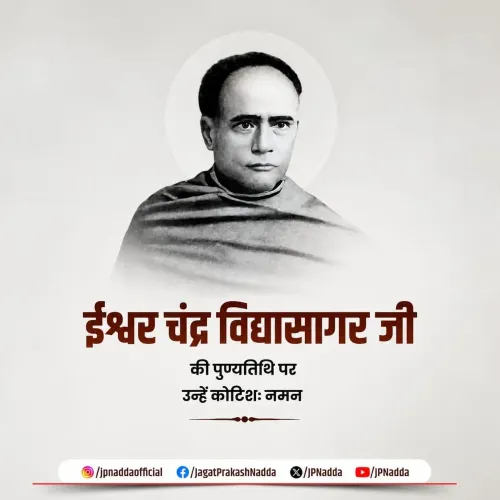
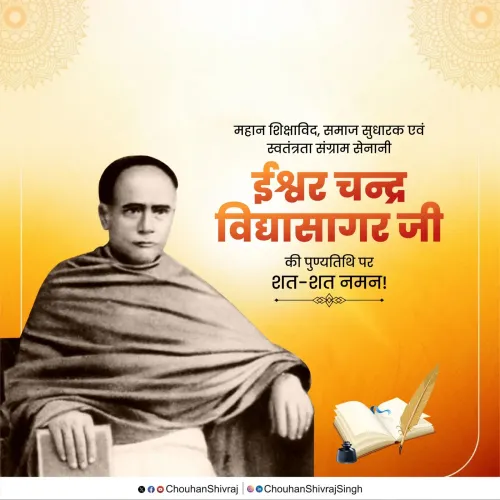
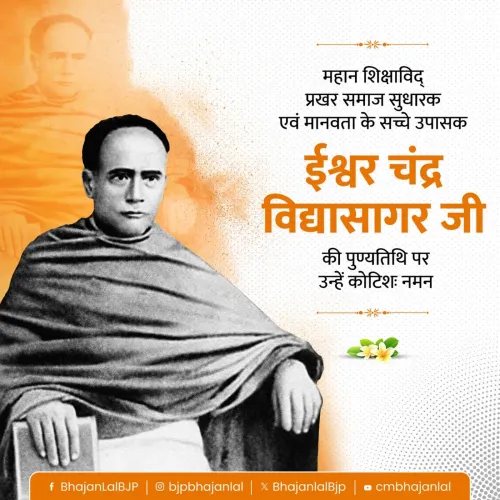
A titan of the Bengal Renaissance who rewrote the Bengali alphabet, championed the rights of widows, and threw open the doors of education to girls — Union Home Minister Amit Shah on Saturday, September 26, 2026 paid tribute to Ishwar Chandra Vidyasagar on the reformer's birth anniversary, honouring a legacy that reshaped 19th-century Indian society from its roots.
Posting in both Hindi and Bengali, Shah wrote: 'Banga punarjagaran ke mahan stambh, Ishwarchandra Vidyasagar ji ki jayanti par unka smaran kar unhe naman karta hoon' — 'On the birth anniversary of Ishwar Chandra Vidyasagar, a great pillar of the Bengal Renaissance, I bow to his memory with reverence.' The bilingual tribute underscored Vidyasagar's identity as a figure who belongs not to one state alone, but to the sweep of Indian intellectual and social history.
The Man Who Gave Bengali Its Modern Shape
Shah's post specifically invoked 'Barnaparichay' — Vidyasagar's foundational primer that standardised and simplified the Bengali script in the mid-19th century. Before that text, the alphabet was a thicket of irregular forms; after it, literacy became something a child could genuinely reach for. Generations of Bengali schoolchildren learned to read through those pages, and the primer remains one of the most consequential educational interventions in Indian linguistic history.
Shah noted that Vidyasagar 'made education the most powerful vehicle of social transformation' — a framing that places the reformer squarely in a tradition that predates India's independence by nearly a century, yet anticipates every modern debate about access, equity, and the relationship between knowledge and freedom.
A Lifelong Fight for Widows and Women
The tribute also highlighted Vidyasagar's decades-long campaign for widow remarriage and women's education — two causes that made him a figure of fierce controversy in his own time and of enduring admiration in ours. His relentless advocacy contributed directly to the Hindu Widows' Remarriage Act of 1856, one of the landmark legislative reforms of British India, achieved against formidable opposition from conservative sections of Bengali society.
Shah described his life as one that 'still gives direction to society' — a quiet acknowledgement that the structural inequalities Vidyasagar fought have not entirely dissolved, and that the reformer's moral urgency retains its edge.
Why Senior Leaders Invoke the Bengal Renaissance
Tributes to 19th-century Bengali reformers carry a particular political weight: West Bengal remains a fiercely contested state, and the legacy of the Renaissance — Ram Mohan Roy, Rabindranath Tagore, Vidyasagar — is claimed across ideological lines as part of a proud, progressive identity. A bilingual tribute from a national leader signals cultural respect for Bengal's intellectual heritage while also speaking directly to a Bengali-speaking audience far beyond state lines.
Vidyasagar's life remains a standing reminder that systemic change does not wait for comfortable consensus — it is built by individuals willing to absorb the cost of being right too early.
Point of View
A state that remains central to BJP's long-term expansion ambitions. By invoking Vidyasagar's legacy of education and social reform, national BJP leadership attempts to occupy a space traditionally claimed by the left and regional parties in Bengal's political discourse. The choice to honour a figure associated with women's rights and literacy also aligns with the ruling party's stated emphasis on women-led development under schemes targeting education and social welfare. Tributes of this kind are low-risk but high-signal: they cost nothing in policy terms while projecting ideological breadth to audiences beyond the party's traditional base.
NationPress
26 Sept 2026
Frequently Asked Questions
When is Ishwar Chandra Vidyasagar's birth anniversary?
Ishwar Chandra Vidyasagar was born on September 26, 1820 , and his birth anniversary is observed on that date each year.
What is 'Barnaparichay' and why is it significant?
'Barnaparichay' is a Bengali language primer authored by Vidyasagar in the mid-19th century that standardised and simplified the Bengali alphabet, making literacy accessible to a far wider population, especially children.
What did Ishwar Chandra Vidyasagar do for widow remarriage?
Vidyasagar campaigned persistently for the legal right of Hindu widows to remarry, which led to the passage of the Hindu Widows' Remarriage Act of 1856 — a landmark reform in British India.
Why did Amit Shah post the tribute in both Hindi and Bengali?
Shah posted in both languages to honour Vidyasagar's identity as a Bengali cultural icon while also addressing a national audience, reflecting the political and cultural significance of Bengal's Renaissance legacy.
What is the Bengal Renaissance?
The Bengal Renaissance was a 19th-century intellectual and social reform movement centred in Bengal that challenged orthodoxy and championed education, women's rights, and rational thought, with Vidyasagar as one of its foremost figures.