Nadda hails IAP at 70, backs physiotherapy workforce push
Synopsis
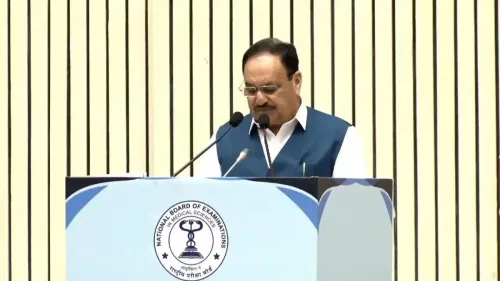
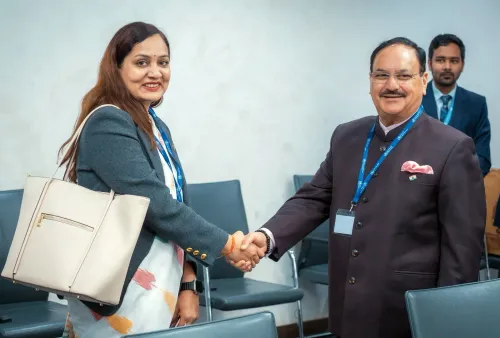
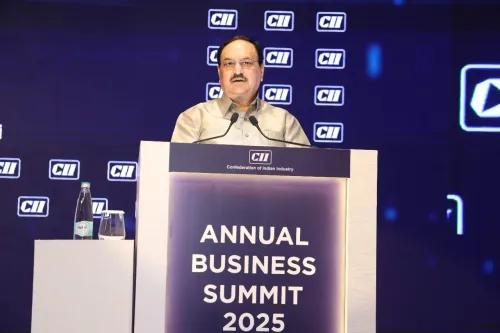
Union Health Minister J. P. Nadda greeted the Indian Association of Physiotherapists on its 70th anniversary and endorsed the government's drive to expand India's physiotherapy workforce, speaking at the Asia Western Pacific Region Conference 2026 at Yashobhoomi, New Delhi, on 26 September.
Key Takeaways
The Asia Western Pacific Region Conference 2026 opened on 26–27 September at Yashobhoomi, New Delhi , hosted by the IAP.
The Indian Association of Physiotherapists marks 70 years of existence in 2026.
Union Health Minister J.
Nadda reaffirmed the government's commitment to strengthening India's physiotherapy workforce.
National Health Policy 2017 and Ayushman Bharat (2018) earlier formalised the role of allied health professionals, including physiotherapists.
Policy watchers are tracking potential follow-up announcements on curriculum standards, recruitment under central schemes, and Ayushman Bharat Digital Mission integration.
Seventy years after physiotherapists first organised themselves into a national body, Union Health Minister J. P. Nadda used the opening of a landmark regional conference to reaffirm the government's commitment to strengthening India's allied health workforce — placing physiotherapy squarely at the centre of the country's patient-centred care agenda.
Asia's physiotherapy community converges at Yashobhoomi
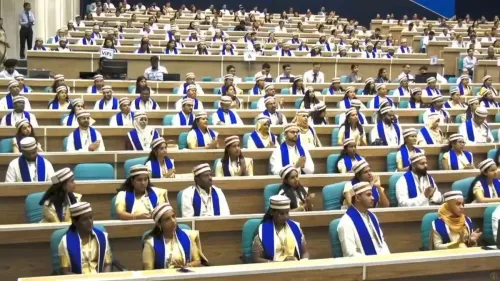
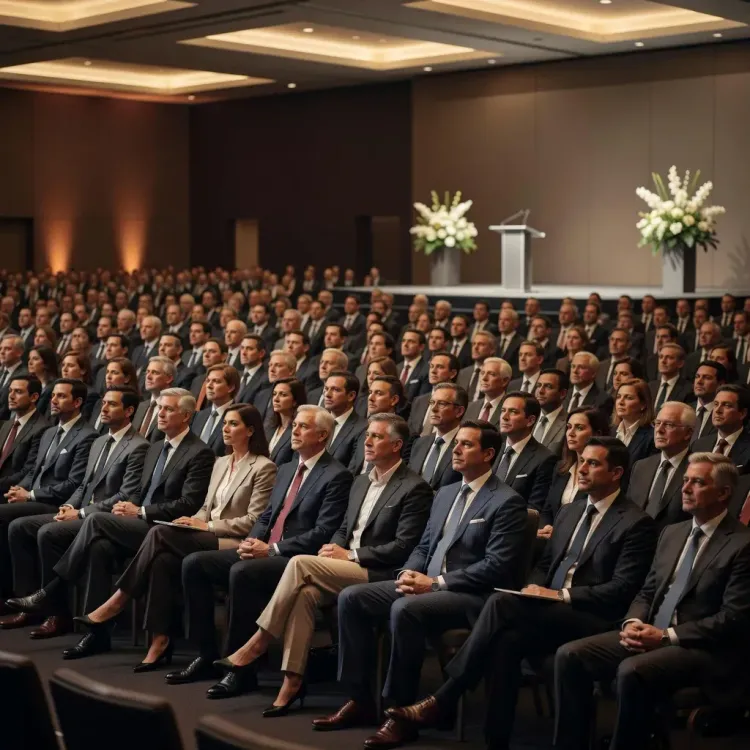
The Asia Western Pacific Region Conference 2026 opened on 26 September at Yashobhoomi, New Delhi, drawing thousands of physiotherapists, healthcare professionals, academicians, and policymakers from India and abroad. The two-day gathering, running through 27 September, is hosted by the Indian Association of Physiotherapists (IAP) — the professional body that marks its 70th year of existence this year. Conferences of this scale serve as alignment platforms between domestic standards and international bodies, and New Delhi's turn as host signals India's growing weight in the global allied-health conversation.
From margin to mainstream — 70 years of IAP
The IAP's seven-decade journey mirrors India's own evolution in healthcare thinking: from a system dominated almost entirely by curative, hospital-based medicine to one that now recognises rehabilitation and functional recovery as essential, not optional. National Health Policy 2017 formally called for the expansion and regulation of allied health professionals, and the Ayushman Bharat programme, launched in 2018, embedded rehabilitation services within health and wellness centres across the country. Each step widened the role physiotherapists play — from post-surgical recovery wards to primary care centres in tier-2 cities and beyond.
The workforce gap physiotherapy must close
India's non-communicable disease burden — from stroke and orthopaedic injuries to neurological conditions and post-COVID fatigue — has driven demand for rehabilitation services to a point where supply visibly lags. Integrating physiotherapists into public health delivery has become a structural necessity, not a policy nicety. Nadda's remarks, invoking Prime Minister Narendra Modi's 'visionary leadership,' signal that workforce expansion in this cadre is not a peripheral concern — it feeds directly into the administration's stated goal of a multi-disciplinary, inclusive health system. Watchers of the health ministry will track whether the conference produces concrete follow-through: curriculum standardisation, recruitment under central schemes, or integration with the Ayushman Bharat Digital Mission.
Seventy years in, Indian physiotherapy is no longer asking for a seat at the healthcare table — it is being asked to help build it. The question now is how fast the policy architecture catches up with the demand.
Point of View
The minister frames allied health expansion as part of the administration's larger brand — inclusive, multi-disciplinary care — rather than a standalone concession. The Asia Western Pacific platform amplifies this domestically: India is not merely reforming its own system, but positioning itself as a regional standard-setter. The real test will come in whether workforce targets, curriculum reform, or Ayushman Bharat integration follow before the next electoral cycle.
NationPress
26 Sept 2026
Frequently Asked Questions
What is the Asia Western Pacific Region Conference 2026?
It is a regional physiotherapy conference held on 26–27 September 2026 at Yashobhoomi, New Delhi , bringing together physiotherapists, healthcare professionals, academicians, and policymakers from India and across the Asia Western Pacific region.
How old is the Indian Association of Physiotherapists?
The Indian Association of Physiotherapists (IAP) marks 70 years of existence in 2026, making it one of India's oldest professional bodies in the allied health sector.
What did J. P. Nadda say about physiotherapy in India?
Nadda stated that the government is committed to strengthening the physiotherapy workforce as 'essential for a strong, inclusive and patient-centred healthcare system,' attributing the direction to Prime Minister Narendra Modi's leadership.
What is Yashobhoomi and where is it located?
Yashobhoomi is a large convention and exhibition centre in New Delhi , used for major national and international events including healthcare and policy conferences.
How does Ayushman Bharat relate to physiotherapy?
The Ayushman Bharat programme, launched in 2018 , incorporated rehabilitation services within health and wellness centres, formally integrating allied health professionals — including physiotherapists — into India's public health delivery architecture.