Nadda: Doctors Are Healthcare's Real Software
Synopsis
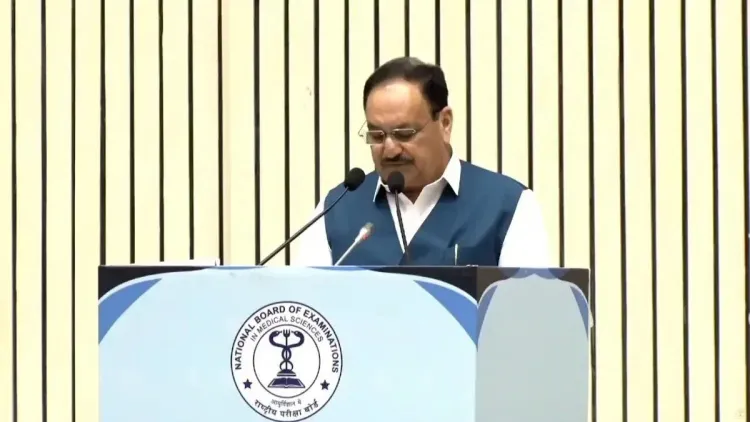
Union Health Minister J. P. Nadda on 23 May 2026 said India's healthcare strength lies in its 'software' — doctors, nurses and healthcare workers — not just hospital infrastructure, calling on health professionals to recognise the weight of their responsibility.
Key Takeaways
Union Health Minister J.
Nadda on 23 May 2026 described doctors, nurses, and healthcare workers as the 'real software' of India's health system.
He framed government-built infrastructure as 'hardware' that is incomplete without a trained, motivated health workforce.
The remarks align with the National Health Policy 2017 goal of increasing health-workforce density across India.
The National Medical Commission (NMC) , set up under the NMC Act 2019 , is the key regulatory body governing the supply and quality of doctors from Indian medical colleges.
Multiple phases of PMSSY since 2003 have expanded hospital infrastructure, but human-resource gaps — especially in rural areas — remain a persistent challenge.
Policy watchers will track NMC decisions on college approvals and any dedicated workforce outlays in the next health budget.
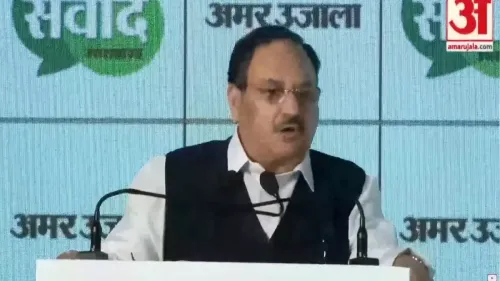
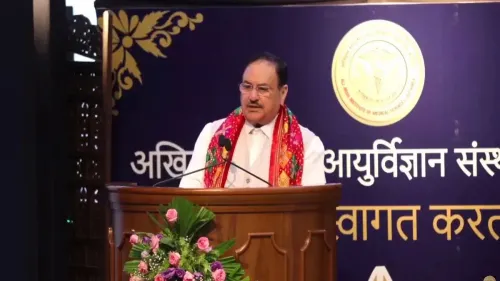
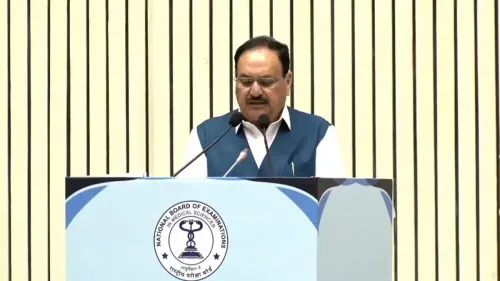
Union Health Minister J. P. Nadda on Saturday, 23 May 2026 underscored that building a robust healthcare system demands equal — if not greater — investment in training doctors, nurses, and healthcare workers as in constructing hospitals and physical infrastructure.
Context
Addressing what appears to be a gathering of medical or healthcare professionals, Nadda drew a sharp distinction between infrastructure and human capital. 'Policymakers can provide the infrastructure, but that remains only the hardware,' he said. 'The real strength of the healthcare system is its software — the doctors, nurses, and healthcare workers dedicated to making India healthier.'
The remarks signal a deliberate pivot in the government's public communication on health: from counting beds and buildings to spotlighting the workforce that operates them. The minister directly acknowledged the weight on healthcare professionals, telling them: 'Your role and the responsibility you carry are extremely important.'
Policy Backdrop
India's National Health Policy 2017 explicitly called for increasing the density of the health workforce and overhauling medical education regulation — goals that remain works in progress nearly a decade later. The National Medical Commission (NMC), established under the NMC Act 2019 to replace the Medical Council of India, was designed precisely to improve the quality and geographic distribution of doctors emerging from India's medical colleges.
On the infrastructure side, successive phases of the Pradhan Mantri Swasthya Suraksha Yojana (PMSSY) — running since 2003 — have funded new AIIMS campuses and upgraded government medical colleges, adding undergraduate and postgraduate seats alongside new hospital capacity. Nadda's 'hardware versus software' framing implicitly acknowledges a persistent gap: facilities built under these schemes can only deliver outcomes if adequately staffed by trained professionals.
The human-resource bottleneck is well documented. Rural and semi-urban facilities across states frequently report sanctioned posts lying vacant, and specialist shortages remain acute outside metro centres. Regulatory decisions by the NMC on new college approvals and seat expansion directly shape how quickly that gap can close.
Stakeholders and Impact
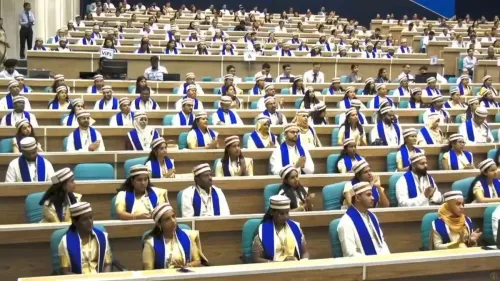
The minister's audience — medical students, practising doctors, nurses, and paramedical workers — carries a dual stake in this message. On one hand, the remarks affirm the centrality of their profession to national health outcomes. On the other, they signal that policy attention and, potentially, budgetary priority may follow toward workforce training, retention incentives, and working conditions.
For rural patients, who bear the sharpest end of the doctor-shortage crisis, the political emphasis on human capital is meaningful only if translated into concrete measures: bonded service requirements, pay parity for rural postings, or expanded community health worker programmes. Nadda's post stops short of announcing specific schemes, but frames the ideological ground on which such measures would rest.
What's Next
Observers will watch for whether the 'software' rhetoric is followed by action at the NMC — particularly on college approvals, nursing college regulation, and paramedical training standards — or in the next health budget cycle. Any dedicated outlay for workforce development or a new national nursing policy would give the minister's words institutional weight. As India continues to expand its hospital footprint under PMSSY and allied schemes, the utilisation of that infrastructure will ultimately depend on whether the human pipeline keeps pace.
Point of View
Hospital beds — toward the less photogenic but equally consequential challenge of workforce supply. Coming from a minister who also chairs the ruling party, the message carries political as well as administrative weight, signalling that human capital in health may receive greater policy attention in the current term. The framing, however, will be tested against concrete action: seat expansion decisions at the NMC, nursing college regulation, and rural service incentives are the real metrics. Until those translate into announcements, the remarks remain aspirational positioning rather than a policy shift.
NationPress
7 Oct 2026
Frequently Asked Questions
What did J. P. Nadda say about doctors and healthcare workers?
J. P. Nadda said that while policymakers can build hospitals — the 'hardware' — the real strength of the healthcare system is its 'software': the doctors, nurses, and healthcare workers dedicated to making India healthier.
What is the National Medical Commission and why does it matter?
The National Medical Commission (NMC) is the statutory regulator of medical education in India, established by the NMC Act 2019 to replace the Medical Council of India. It approves new medical colleges, sets seat limits, and frames standards that directly determine how many doctors India produces each year.
What is the Pradhan Mantri Swasthya Suraksha Yojana?
PMSSY is a central government scheme launched in 2003 to set up new AIIMS-like institutions and upgrade existing government medical colleges, aiming to increase both hospital capacity and specialist training seats across India.
Why is India facing a doctor and nurse shortage?
India's health-workforce density remains below WHO benchmarks in many states, particularly in rural and semi-urban areas. Factors include uneven distribution of medical colleges, vacancies in government posts, and insufficient incentives for rural postings — challenges that the NMC and successive health policies have sought to address.
What should we watch for after Nadda's remarks on healthcare workforce?
Key signals will include NMC decisions on new medical and nursing college approvals, any dedicated workforce-development outlay in the next Union health budget, and potential policy announcements on rural service requirements or pay parity for health workers in underserved areas.