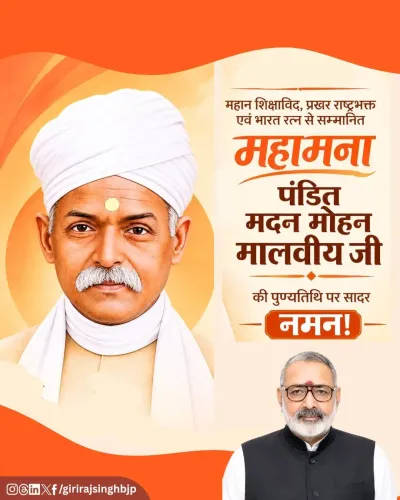
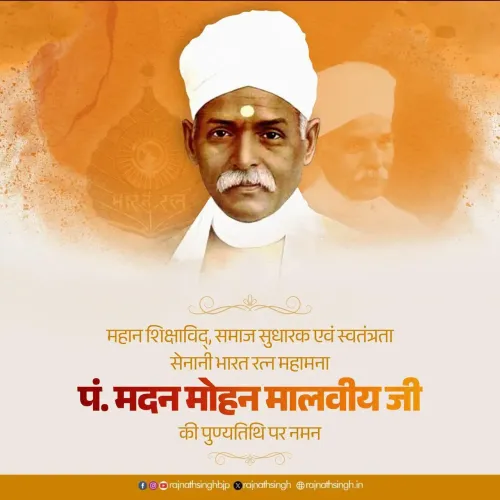
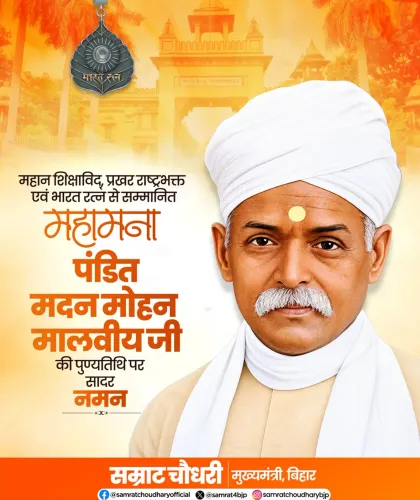
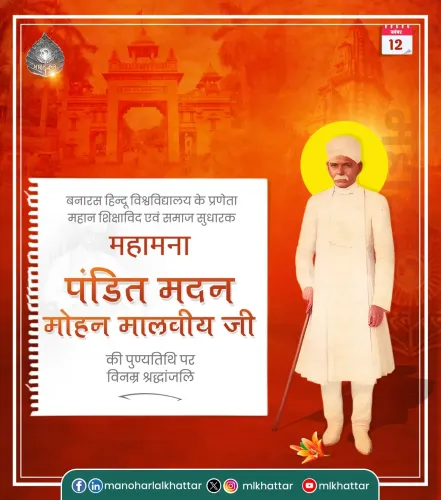
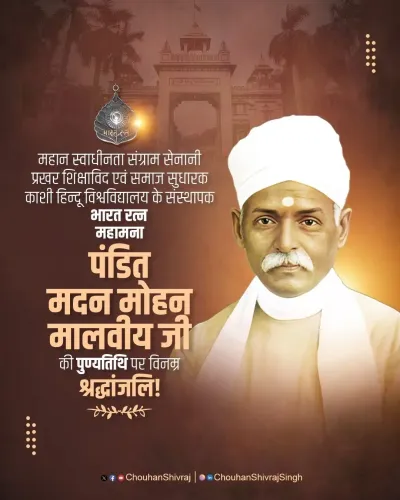
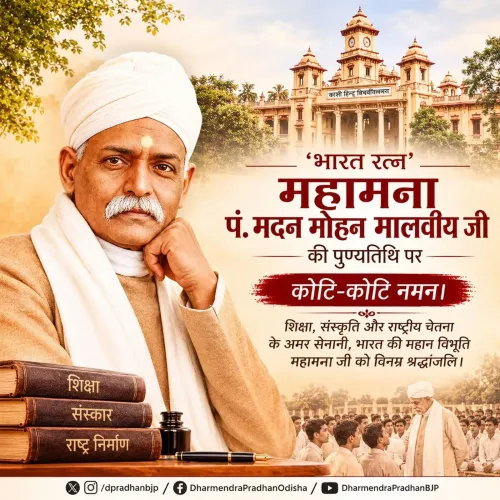
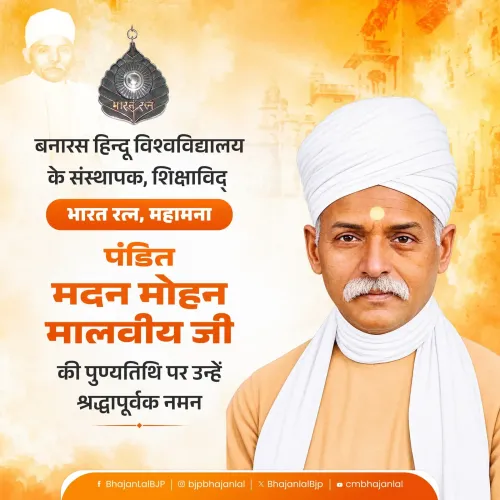
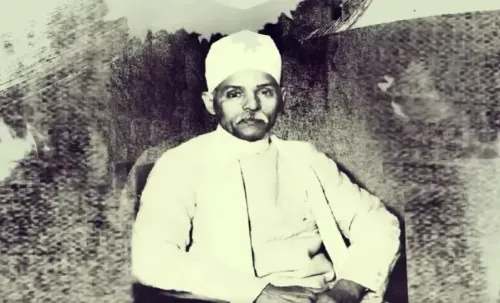
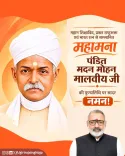
Amit Shah pays tribute to Madan Mohan Malaviya on death anniversary
Synopsis
Union Home Minister Amit Shah on 12 November 2026 honoured Bharat Ratna Pandit Madan Mohan Malaviya on his death anniversary, remembering the Banaras Hindu University founder's contributions to education, social harmony, farmers' welfare, and the dignity of the mother tongue.
Key Takeaways
Union Home Minister Amit Shah paid tribute to Pandit Madan Mohan Malaviya on his death anniversary on 12 November 2026 .
Malaviya founded Banaras Hindu University in Varanasi in 1916 , envisioning a space where Indian cultural values and modern education coexist.
Shah cited Malaviya's work on social harmony, eradication of untouchability, farmers' welfare, and mother-tongue dignity .
Malaviya was awarded the Bharat Ratna posthumously in 2015 , India's highest civilian honour.
Malaviya's educational philosophy — Bharatiya sanskar paired with modern knowledge — is frequently referenced in debates around India's National Education Policy .
A century after Pandit Madan Mohan Malaviya laid the foundations of modern Indian higher education, Union Home Minister Amit Shah on Thursday, 12 November 2026, honoured the Bharat Ratna laureate on his death anniversary — remembering him as a visionary who believed education was the bedrock of a nation's progress and society's upliftment.
Paying his respects in Hindi, Shah wrote: 'शिक्षा को राष्ट्र की उन्नति और समाज के उत्थान का आधार मानने वाले भारत रत्न महामना पंडित मदन मोहन मालवीय जी को उनकी पुण्यतिथि पर कोटिशः नमन।' ['Countless salutations on the death anniversary of Bharat Ratna Mahamana Pandit Madan Mohan Malaviya, who regarded education as the foundation of the nation's advancement and the upliftment of society.'] Shah highlighted Malaviya's founding of Banaras Hindu University (BHU) as the beginning of a tradition where Indian values and modern knowledge walked side by side.
The university that fused tradition with modernity
When Malaviya established Banaras Hindu University in Varanasi in 1916, the institution was conceived as a living answer to colonial education — a space where Sanskrit and science, the Vedas and engineering, could coexist without contradiction. That founding philosophy has shaped BHU into one of India's largest residential central universities, drawing students from across the country and the world.
Shah's tribute specifically cited the BHU foundation as a legacy-defining act, calling it a tradition that ensured 'Indian culture and modern knowledge move together.' The framing is deliberate: Malaviya's model of rooted yet forward-looking education remains a touchstone in contemporary debates over India's higher education identity.
Social reformer, farmers' advocate, language champion
Shah's post ranged beyond education. He recalled Malaviya's work on social harmony, the eradication of untouchability, the welfare of farmers, and the dignity of the mother tongue — four pillars that defined Malaviya's public life alongside his academic mission. As a freedom movement leader and Congress president in the early twentieth century, Malaviya was among the rare figures who combined institutional nation-building with grassroots social reform.
The Government of India conferred the Bharat Ratna posthumously on Malaviya in 2015, formally recognising a contribution that had long been celebrated in educational and cultural circles but had not received the republic's highest civilian honour during his lifetime. He had passed away in 1946, just a year before independence.
BJP's pattern of honouring pre-independence institution builders
Shah's tribute fits a consistent pattern among BJP leaders of marking the anniversaries of pre-independence figures associated with Hindu cultural and educational institutions. Malaviya — revered as 'Mahamana' (the great-souled one) — occupies a particularly resonant place in that canon: a man whose life's work prefigured ongoing national conversations about integrating cultural values into the framework of higher education. As India continues rolling out the National Education Policy, Malaviya's synthesis of 'Bharatiya sanskar' (Indian values) and modern knowledge is frequently invoked as historical precedent.
For the students and faculty of BHU, and for the broader constituency of educationists and social reformers who claim Malaviya's legacy, the annual observance of his death anniversary is a reminder that institutions outlast individuals — but only when the founding vision is worth carrying forward.
Point of View
Anti-untouchability work, and farmers' welfare alongside BHU's founding, Shah presents Malaviya as a comprehensive nation-builder rather than merely an educationist. The posthumous Bharat Ratna in 2015 gave Malaviya renewed political salience, and annual tributes reinforce that positioning. For the BJP, honouring such figures serves a dual purpose: acknowledging historical achievement while anchoring contemporary education and social policy to a pre-independence lineage.
NationPress
12 Nov 2026
Frequently Asked Questions
Who was Pandit Madan Mohan Malaviya?
Pandit Madan Mohan Malaviya was an educationist, independence activist, and social reformer who founded Banaras Hindu University in 1916 and was posthumously awarded the Bharat Ratna in 2015. He was revered as 'Mahamana' for his contributions to education, social harmony, and India's freedom movement.
When did Amit Shah pay tribute to Madan Mohan Malaviya in 2026?
Union Home Minister Amit Shah posted his tribute on 12 November 2026 , Malaviya's death anniversary, on X (formerly Twitter).
When was Banaras Hindu University founded and by whom?
Banaras Hindu University was founded in 1916 in Varanasi by Pandit Madan Mohan Malaviya, with the vision of combining traditional Indian learning and cultural values with modern scientific education.
When was Madan Mohan Malaviya awarded the Bharat Ratna?
Madan Mohan Malaviya was awarded the Bharat Ratna posthumously in 2015 by the Government of India, recognising his lifelong contributions to education, social reform, and the freedom movement.
Why do BJP leaders frequently honour Madan Mohan Malaviya?
BJP leaders regularly mark the anniversaries of pre-independence figures associated with Hindu cultural and educational institutions. Malaviya's founding of BHU and his vision of integrating Indian values with modern education resonate closely with themes the party emphasises, including the National Education Policy's stress on cultural roots.