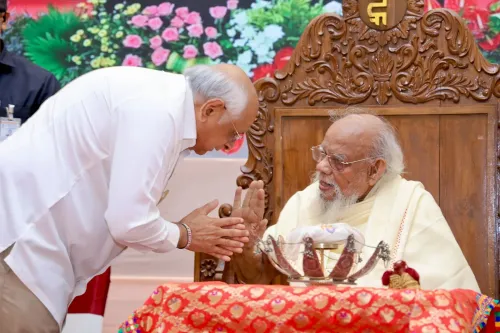
Amit Shah seeks blessings of Jain Acharya in Ahmedabad
Synopsis
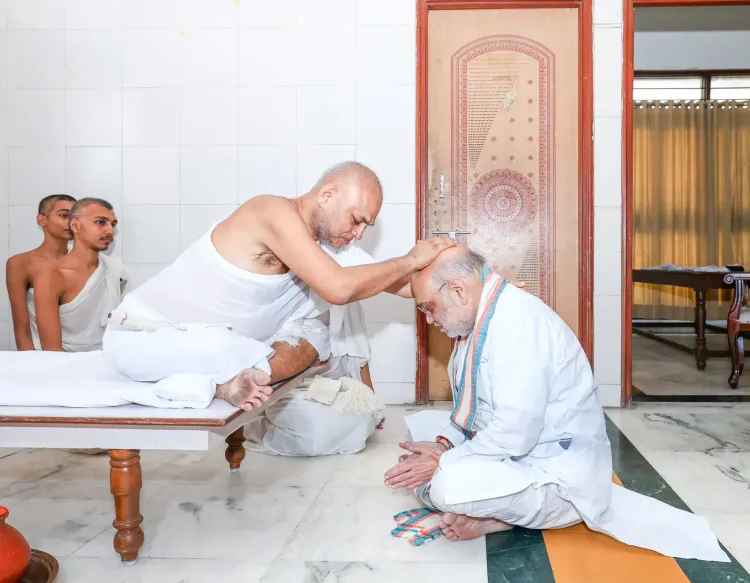
Union Home Minister Amit Shah sought the blessings of Gachhadhipati Acharya Shri Nararatna Surishwar Ji Maharaj in Ahmedabad on October 16, 2026, invoking Jain principles of ahimsa, sanyam, and aparigraha as timeless guides for Indian society.
Key Takeaways
Union Home Minister Amit Shah visited Gachhadhipati Param Pujya Acharya Shri Nararatna Surishwar Ji Maharaj in Ahmedabad on October 16, 2026 .
Shah sought the revered Jain spiritual leader's blessings and shared the visit on X in both Hindi and Gujarati .
He cited three core Jain teachings — ahimsa (non-violence), sanyam (restraint), and aparigraha (non-possession) — as centuries-old guides for Indian society.
Acharya Nararatna Surishwar Ji holds the title of Gachhadhipati , the head of a Jain monastic order, one of the highest positions in his tradition.
Ahmedabad is a historic hub of Jain community life and institutional heritage in India.
Such visits by senior political figures to Jain acharyas are a regular feature of Indian public life, reflecting the community's significant cultural influence, especially in Gujarat.
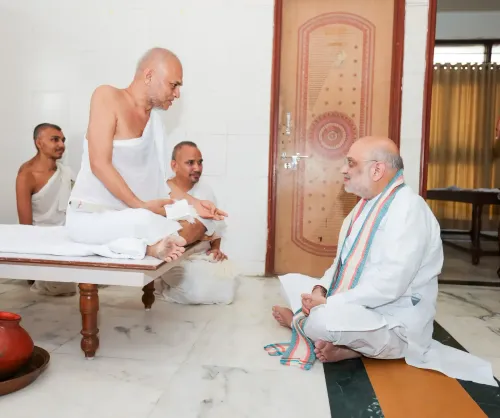
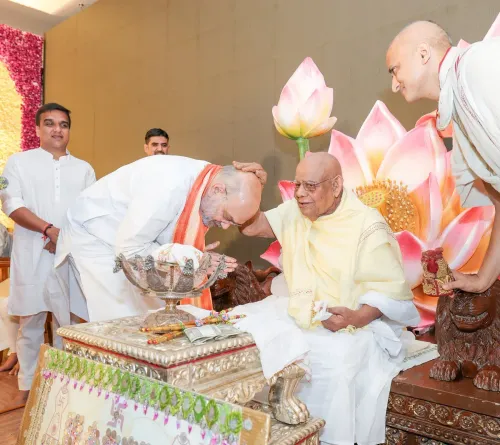
In the heart of Ahmedabad — one of India's most historic centres of Jain faith and culture — Union Home Minister Amit Shah paid his respects to Gachhadhipati Param Pujya Acharya Shri Nararatna Surishwar Ji Maharaj on Friday, October 16, 2026, seeking the revered spiritual leader's blessings.
Sharing the visit on X in both Hindi and Gujarati, Shah wrote: 'અમદાવાદમાં ગચ્છાધિપતિ પરમપૂજ્ય આચાર્ય શ્રી નરરત્ન સૂરીશ્વરજી મહારાજ સાહેબના દર્શન કરી આશીર્વાદ પ્રાપ્ત કર્યા.' [In Ahmedabad, I sought the blessings of Gachhadhipati Param Pujya Acharya Shri Nararatna Surishwar Ji Maharaj.] He added that the Jain tradition's teachings of ahimsa (non-violence), sanyam (restraint), and aparigraha (non-possession) have guided Indian society for centuries, and that the proximity of the revered Maharaj offers a living experience of this philosophy.
Acharya Nararatna Surishwar Ji and the Jain tradition in Gujarat
Acharya Shri Nararatna Surishwar Ji Maharaj holds the title of Gachhadhipati — the head of a Jain monastic order — a position of the highest spiritual authority within his tradition. Ahmedabad has long served as a living nerve-centre of Jain institutional and community life in India, home to ancient temples, charitable trusts, and seats of learning that trace their lineage back centuries.
The three pillars Shah cited — ahimsa, sanyam, and aparigraha — form the ethical bedrock of Jain thought and have found resonance well beyond the Jain community, shaping strands of India's broader moral and social imagination from the freedom movement to contemporary public discourse.
Why senior leaders visit Jain acharyas
Such visits are a steady feature of Indian political life, cutting across party lines. Gujarat, where the Jain community holds significant cultural and economic influence, makes such engagements particularly visible for leaders with roots or responsibilities in the state. For Shah — who represents Gandhinagar in Parliament and has deep ties to Gujarat — a meeting with a Gachhadhipati in Ahmedabad carries both personal and public meaning.
The gesture reinforces a long-standing convention: that acknowledging India's plural spiritual traditions is not merely ceremonial, but a way of signalling continuity with the country's civilisational depth. When a senior constitutional authority sits in the sannidhi (proximity) of a revered acharya, the moment speaks to millions who hold that tradition sacred.
India's Jain community may be small in number but its philosophical and philanthropic footprint is outsized — and leaders who engage with it publicly are reaching an audience that values the acknowledgement keenly.
Point of View
Reinforcing his identity as a leader deeply embedded in Gujarat's cultural fabric. Invoking the Jain triad of ahimsa, sanyam, and aparigraha frames the visit not as a routine courtesy call but as an alignment with a universally respected moral tradition, broadening its appeal beyond the Jain community. The choice of Ahmedabad and a Gachhadhipati of this stature reflects the continued importance of religious-community engagements in Gujarat's political ecosystem. It fits a wider pattern in which senior leaders use such meetings to signal civilisational continuity — a recurring theme in current BJP political communication.
NationPress
16 Oct 2026
Frequently Asked Questions
Who is Acharya Shri Nararatna Surishwar Ji Maharaj?
Acharya Shri Nararatna Surishwar Ji Maharaj is a senior Jain spiritual leader who holds the title of Gachhadhipati — the head of a Jain monastic order — placing him among the highest ranks of Jain religious authority.
Why did Amit Shah visit a Jain Acharya in Ahmedabad?
Amit Shah visited to seek blessings from Gachhadhipati Acharya Shri Nararatna Surishwar Ji Maharaj and to honour the Jain tradition's teachings of ahimsa, sanyam, and aparigraha, which he described as timeless guides for Indian society.
What does Gachhadhipati mean in Jain tradition?
Gachhadhipati refers to the head of a Gaccha — a Jain monastic lineage or order. It is one of the most senior titles in the Jain mendicant tradition, denoting the spiritual and administrative leader of that lineage.
What are the Jain principles of ahimsa, sanyam and aparigraha?
Ahimsa means non-violence, sanyam means restraint or self-discipline, and aparigraha means non-possession or non-attachment to material things. Together, they form the ethical foundation of Jain philosophy and have influenced Indian moral thought broadly.
Is Ahmedabad an important city for the Jain community?
Yes. Ahmedabad is one of India's most historic centres of Jain community life, home to ancient temples, monastic institutions, and charitable trusts with centuries-old roots.