Amritsar Police Bust Two Arms-Drugs Networks, Seize 4 kg Heroin
Synopsis
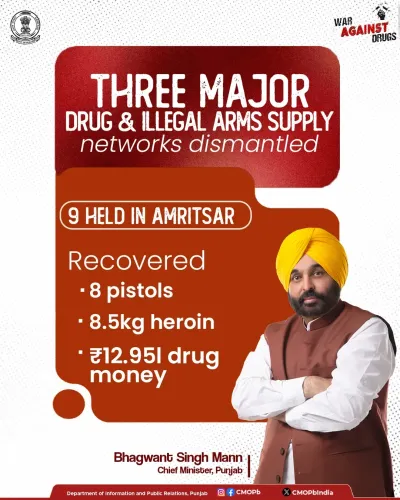
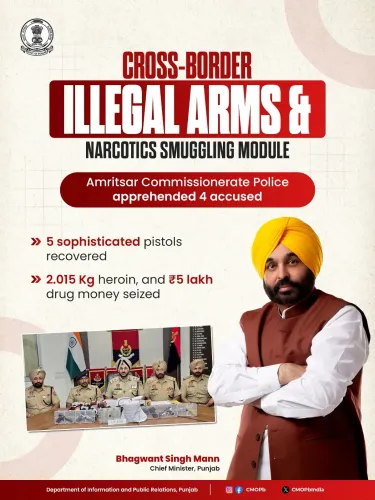
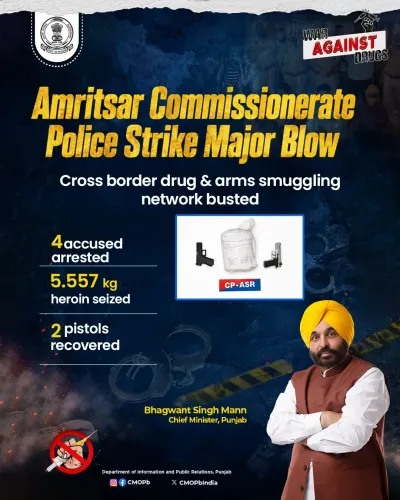
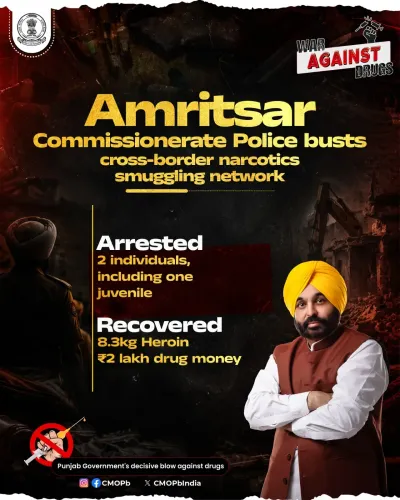
Amritsar Commissionerate Police dismantled two illegal arms and narcotics supply networks on 15 November 2026, arresting nine people — including two juveniles — and recovering five pistols, 4 kg of heroin, and nine live cartridges, in line with CM Bhagwant Mann's internal security directives.
Key Takeaways
Nine individuals arrested , including two juveniles , in a twin crackdown by Amritsar Commissionerate Police on 15 November 2026 .
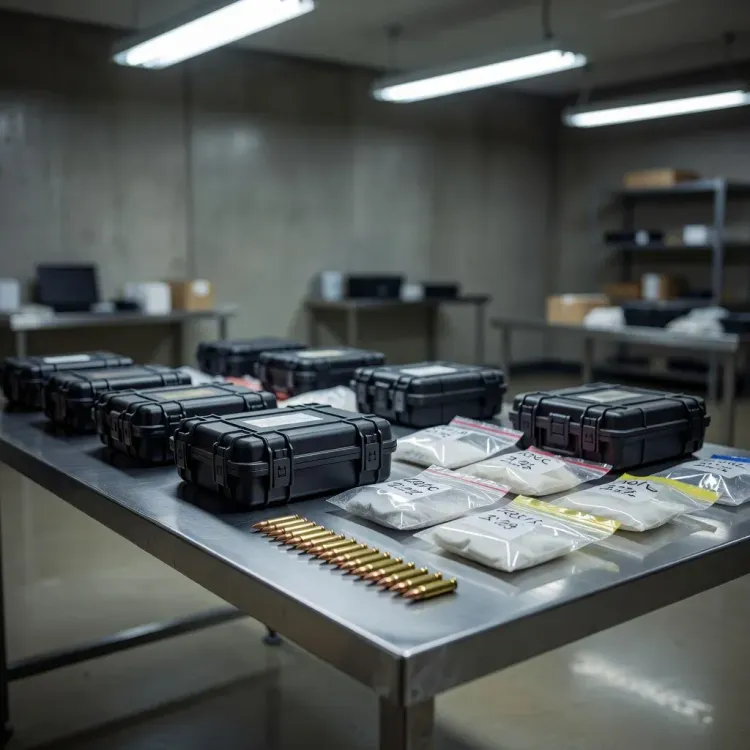
Five illegal pistols recovered: two .32 bore, one 9MM, one .30 bore, and one Glock 9MM , along with nine live cartridges .
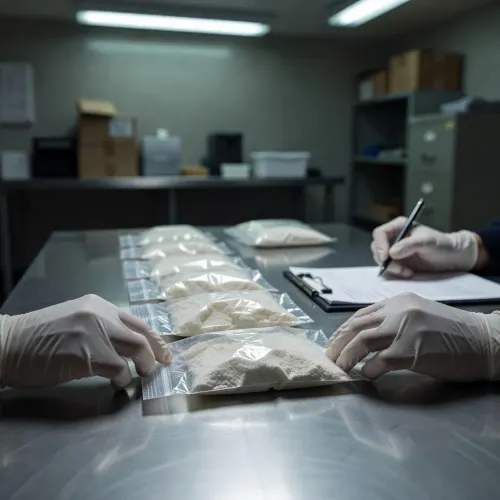
4 kilograms of heroin seized, indicating a supply pipeline rather than individual possession.
A sensational attempt-to-murder and snatching case was also solved in the same operation.
Operation falls under CM Bhagwant Singh Mann 's twin campaigns: #GangsteranTeVaar and #YudhNashianVirudh .
A Honda Activa scooter belonging to the accused was impounded as part of the evidence.
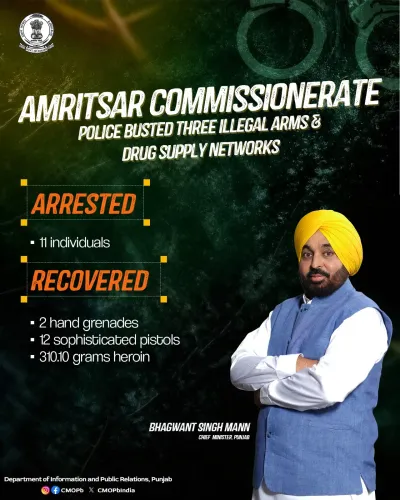
Five illegal pistols, 4 kilograms of heroin, and nine live cartridges — that is the haul Amritsar Commissionerate Police walked away with after dismantling two separate criminal supply networks operating inside Punjab. Nine individuals were arrested on Sunday, 15 November 2026, including two juveniles, in a twin operation the Chief Minister's Office of Punjab described as a major breakthrough in the state's ongoing security drive.
What was seized — and from whom
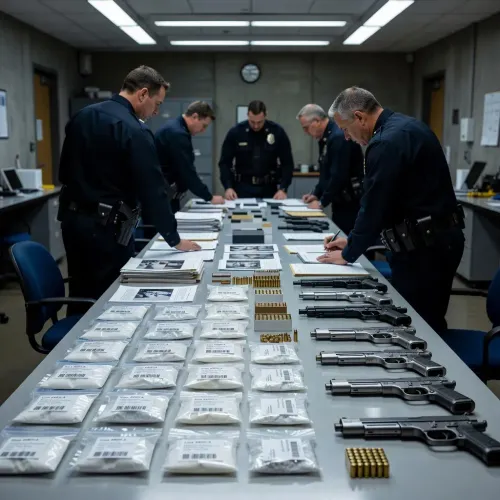
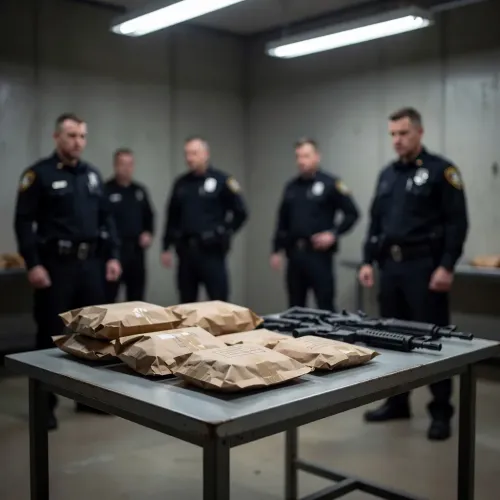
The weapons cache recovered spans a striking range: two .32 bore pistols, one 9MM pistol, one .30 bore pistol, and one Glock 9MM pistol — the last a firearm typically associated with organised criminal networks. The narcotics haul of 4 kg of heroin points to a supply pipeline, not street-level possession. Police also impounded a Honda Activa scooter used by the accused, and simultaneously cracked a sensational attempt-to-murder and snatching case in the same operational sweep.
Mann's anti-crime directive behind the crackdown
The operation sits squarely within the framework laid down by Chief Minister Bhagwant Singh Mann, who has pushed Amritsar and other commissionerates to target gangster-linked arms-and-drugs pipelines since his government took office in March 2022. The hashtags attached to the official post — #GangsteranTeVaar ('Strike on Gangsters') and #YudhNashianVirudh ('War Against Drugs') — are the twin banners under which the AAP administration has framed its security posture, particularly in border districts where cross-state and cross-border smuggling corridors converge.
Why Amritsar sits at the sharp end of this fight
Punjab's geography makes it structurally vulnerable: a long international border, dense road-and-rail connectivity, and established smuggling corridors that traffickers have exploited for decades. Amritsar, as both a border city and a commercial hub, has historically been a pressure point. Busting supply networks here — rather than intercepting individual couriers — matters because it disrupts the logistics chain that keeps weapons and narcotics flowing into the state's interior. The involvement of two juveniles in the arrested group is a sharp reminder that recruitment into these networks starts early.
The next test will be in the courts: whether prosecutions convert these arrests into convictions, and whether investigators can use the intelligence gathered to roll up the broader networks these nine individuals belonged to.
Point of View
Which has staked political credibility on making Punjab's law-and-order record a differentiator ahead of future electoral cycles. By framing operations under branded hashtag campaigns, the administration is consciously building a narrative of muscular governance — a counter to years of criticism that Punjab's drug problem was too entrenched for state-level action to dent. The recovery of a Glock pistol — a weapon associated with sophisticated criminal networks — alongside a heroin haul suggests these were not fringe actors, and the pressure on investigators to convert arrests into durable prosecutions will be significant.
NationPress
15 Nov 2026
Frequently Asked Questions
How much heroin was seized in the Amritsar police operation in November 2026?
4 kilograms of heroin were recovered by Amritsar Commissionerate Police during the crackdown on two illegal supply networks on 15 November 2026 .
How many people were arrested in the Amritsar arms and drugs bust?
Nine individuals were arrested , including two juveniles , in the operation carried out by Amritsar Commissionerate Police.
What weapons were recovered in the Amritsar police crackdown?
Police recovered five illegal pistols — two .32 bore pistols, one 9MM pistol, one .30 bore pistol, and one Glock 9MM pistol — along with nine live cartridges .
What is the Yudh Nashian Virudh campaign in Punjab?
Yudh Nashian Virudh ('War Against Drugs') is a Punjab government campaign launched in 2022 under Chief Minister Bhagwant Singh Mann to dismantle drug supply networks and related criminal activity across the state.
Which Punjab police unit conducted the November 2026 arms and narcotics bust?
Amritsar Commissionerate Police carried out the operation, dismantling two separate illegal arms and narcotics supply networks simultaneously.