Amritsar Police Busts 3 Arms-Drug Networks, Seizes Grenades
Synopsis
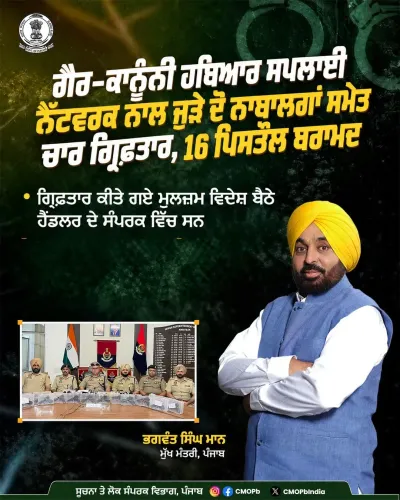
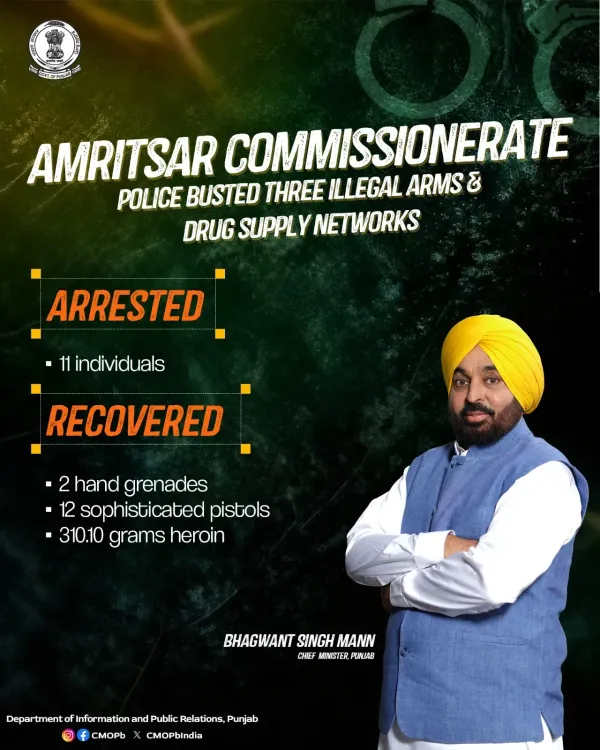
Amritsar Commissionerate Police dismantled three illegal arms and drug supply networks on November 4, 2026, arresting 11 individuals including two juveniles and recovering two hand grenades, 12 pistols, and over 310 grams of heroin — a major enforcement action under CM Bhagwant Mann's anti-drug and anti-gangster campaigns.
Key Takeaways
Three illegal arms and drug supply networks were busted simultaneously by Amritsar Commissionerate Police on November 4, 2026 .
11 individuals arrested , including two juveniles , highlighting recruitment of minors by organised crime networks.
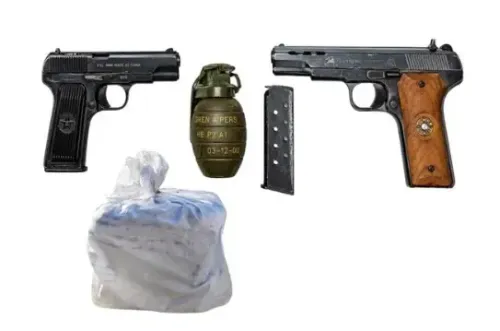
Recoveries include two hand grenades , 12 sophisticated pistols , and 310.10 grams of heroin .
Operation conducted under Chief Minister Bhagwant Mann 's directives as part of the ongoing Gangsteran Te Vaar and Yudh Nashian Virudh campaigns.
Amritsar's proximity to the Pakistan border makes it a persistent flashpoint for cross-border arms and narcotics smuggling.
Juvenile involvement triggers proceedings under the Juvenile Justice Act , adding complexity to prosecution and rehabilitation.
Two hand grenades, 12 sophisticated pistols, and 310.10 grams of heroin — that is the haul from a single coordinated sweep in Amritsar, and it signals that Punjab's crackdown on cross-border crime is drawing real blood. The Chief Minister's Office of Punjab announced on Wednesday, November 4, 2026, that Amritsar Commissionerate Police has simultaneously dismantled three illegal arms and drug supply networks, arresting 11 individuals including two juveniles.
Three networks down in one sweep
The operation targeted interconnected supply chains dealing in both narcotics and illegal weapons — a combination that has long troubled Punjab's border districts. Amritsar, abutting the Pakistan border, sits at the epicentre of a well-documented smuggling corridor for heroin and arms, and the simultaneous dismantling of three distinct networks in one action points to coordinated intelligence work rather than a routine patrol catch.
The recovery of two hand grenades is particularly significant. Grenades are not street-level paraphernalia — they signal organised gang infrastructure, and their seizure places this operation firmly in the territory of Gangsteran Te Vaar (war on gangsters), one of the flagship enforcement drives launched by the Aam Aadmi Party government after taking power in March 2022.
Bhagwant Mann's twin-front war on drugs and guns
Chief Minister Bhagwant Mann has anchored much of his administration's public identity on two parallel campaigns: Yudh Nashian Virudh — the state's dedicated anti-drug drive — and the broader anti-gangster push. Both were launched in 2022 and have generated a steady drumbeat of arrest announcements from police commissionerates across Punjab.
The involvement of two juveniles in this case adds a sharper, more uncomfortable edge to what might otherwise read as a law-enforcement win. It is a reminder that drug and arms networks in Punjab actively recruit young people, turning a security crisis into a generational one — and complicating both prosecution and rehabilitation pathways.
What the numbers tell us about Punjab's border problem
Punjab shares a roughly 553-kilometre international border with Pakistan, and the Amritsar belt has consistently been the most active zone for contraband movement. Heroin, often referred to as chitta in local parlance, has devastated communities across the state's youth demographic. The addition of sophisticated pistols and grenades to these supply chains reflects a broader pattern: narco-trafficking and organised crime have become structurally intertwined in the region.
Successive state governments have launched crackdowns, but the current administration's visible, hashtag-driven communication strategy — #GangsteranTeVaar, #YudhNashianVirudh — marks a deliberate effort to make enforcement publicly accountable and politically legible.
What comes next for the arrested 11
Court proceedings, particularly those involving the two juveniles, will now become the critical follow-up. Under Indian law, juvenile accused are processed through the Juvenile Justice Board, raising questions about rehabilitation versus deterrence that no police press release can answer. For the adult accused, charges under the Arms Act and the Narcotic Drugs and Psychotropic Substances (NDPS) Act typically carry severe penalties, especially given the quantity of heroin recovered.
Punjab Police's ability to convert arrests into convictions — and to roll up the wider networks these individuals belonged to — will ultimately determine whether this operation is a genuine structural blow or one more data point in a long, grinding war.
Point of View
Arriving as it needs to demonstrate that its twin campaigns against drugs and gangsters are producing operational results rather than just political messaging. The simultaneous dismantling of three networks — rather than a single gang — suggests improving intelligence coordination within Punjab Police. However, the presence of hand grenades points to a level of gang militarisation that routine narcotics enforcement was not originally designed to address, raising the question of whether Punjab's current legal and policing framework is calibrated for what is effectively a low-intensity organised-crime insurgency along the border. Convictions, not just arrests, will be the true measure.
NationPress
4 Nov 2026
Frequently Asked Questions
What was seized in the Amritsar Police arms and drug bust on November 4 2026?
Police recovered two hand grenades, 12 sophisticated pistols, and 310.10 grams of heroin from three dismantled illegal supply networks in Amritsar.
How many people were arrested in the Amritsar drug and arms network operation?
A total of 11 individuals were arrested, including two juveniles, in the Amritsar Commissionerate Police operation announced on November 4, 2026.
What is the Yudh Nashian Virudh campaign in Punjab?
'Yudh Nashian Virudh' — meaning 'war against drugs' — is an anti-narcotics drive launched by the Punjab government under Chief Minister Bhagwant Mann in 2022, targeting drug supply networks and rehabilitation of users.
What is Gangsteran Te Vaar operation by Punjab Police?
'Gangsteran Te Vaar' (war on gangsters) is an ongoing Punjab Police campaign, launched after the 2022 state elections, targeting organised crime syndicates involved in arms running, extortion, and drug trafficking.
Why is Amritsar a focus of Punjab's anti-drug and arms operations?
Amritsar shares a close proximity to the India-Pakistan border, which is a known corridor for heroin and illegal arms smuggling into India, making the district a persistent hotspot for organised crime activity.