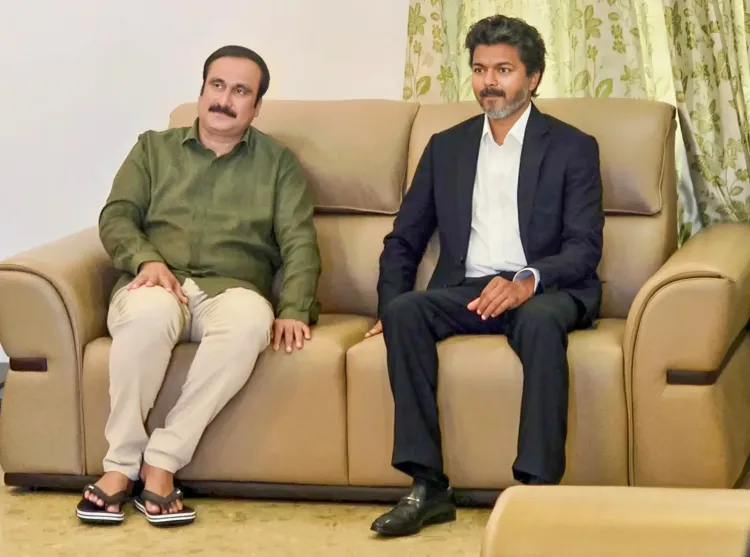
Anbumani meets CM Vijay today to push caste census, protect 69% quota
Synopsis
PMK's Anbumani Ramadoss is pressing Tamil Nadu CM Vijay for a state-level caste census — framed as a 'Social Justice Census' — to provide the empirical backbone needed to legally defend Tamil Nadu's 69% reservation policy against the Supreme Court's 50% cap precedent. The move doubles as a political lifeline for Anbumani amid a simmering PMK family feud.
Key Takeaways
PMK President Anbumani Ramadoss meets Tamil Nadu CM C.
Joseph Vijay on 9 June to demand a caste-based census.
The demand was formalised at an all-party conference in T.
Nagar, Chennai on 5 June , which passed a resolution under the Collection of Statistics Act, 2008 .
Tamil Nadu's 69% reservation for BC, MBC, SC, and ST communities is protected under the Ninth Schedule via the 76th Constitutional Amendment (1993).
The Supreme Court's Indra Sawhney judgment caps reservations at 50% , creating a recurring legal vulnerability for Tamil Nadu's policy.
The push also comes amid an internal PMK leadership dispute between founder Dr S.
Ramadoss and son Anbumani Ramadoss .
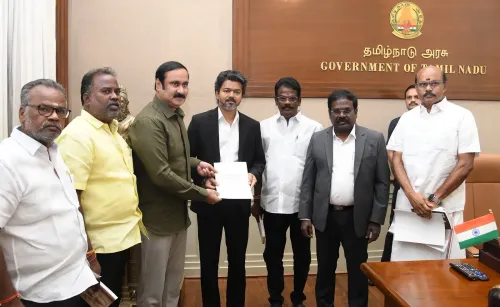
PMK President Anbumani Ramadoss is scheduled to meet Tamil Nadu Chief Minister C. Joseph Vijay on Tuesday, 9 June in Chennai, to formally present a demand for a state-conducted caste census aimed at safeguarding Tamil Nadu's 69 per cent reservation policy. The meeting is being closely tracked by political observers given the reservation issue's outsized weight in the state's electoral and legal landscape.
What Prompted the Meeting
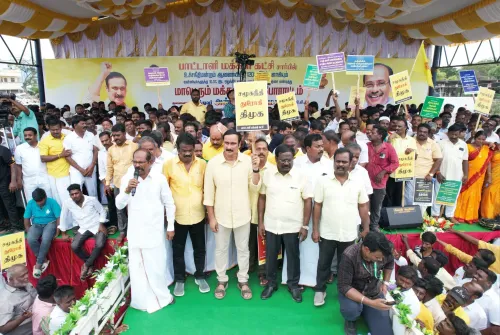
The meeting follows a conference of all-party and community leaders convened by the Pattali Makkal Katchi (PMK) at T. Nagar, Chennai on 5 June. The conference passed a resolution calling on the state government to undertake a caste-based enumeration under the Collection of Statistics Act, 2008, framing the exercise as a 'Social Justice Census' to generate updated caste-wise demographic data.
PMK leaders confirmed that Anbumani would place the conference's resolutions before the Chief Minister and urge immediate government action.
Why the 69% Quota Needs Defending
Tamil Nadu's reservation framework is among the most expansive in the country, extending 69 per cent of government jobs and educational seats to Backward Classes (BC), Most Backward Classes (MBC), Scheduled Castes (SC), and Scheduled Tribes (ST). The policy was codified through special legislation in 1993 and subsequently shielded from judicial review by its inclusion in the Ninth Schedule of the Constitution via the 76th Constitutional Amendment.
However, the policy faces a structural legal tension: the Supreme Court's landmark Indra Sawhney judgment caps reservations at 50 per cent, with exceptions only under extraordinary circumstances. Proponents of a caste census argue that empirically verified population data would provide the constitutional and legal grounding needed to defend the state's above-50 per cent quota in any future court challenge.
The Broader Political Context
The demand for caste-based enumeration has been gaining momentum across India, with multiple political parties and state governments calling for updated caste data to inform welfare and affirmative action frameworks. Tamil Nadu's push, if formalised, would add significant weight to the national conversation.
This comes amid an internal leadership dispute within the PMK between party founder Dr S. Ramadoss and his son Anbumani Ramadoss. Differences over organisational control and the party's political direction have surfaced publicly in recent months, exposing fault lines within the Vanniyar-based party. Political analysts suggest that Anbumani's renewed focus on reservation and social justice issues is a calculated effort to consolidate the PMK's traditional support base while asserting his own leadership credentials amid the internal contest.
What Happens Next
The outcome of Tuesday's meeting is expected to signal whether the Vijay-led state government is prepared to formally initiate a caste census process. Any positive signal from the Chief Minister could accelerate the demand into a legislative or administrative action, with implications for Tamil Nadu's political alignment ahead of future elections.
Point of View
Tamil Nadu's 69% reservation has always been exposed by the Indra Sawhney ceiling — updated demographic data is the most credible shield available. Politically, the move lets Anbumani project himself as the PMK's ideological anchor at a moment when the party's internal dispute threatens to split its Vanniyar base. What's missing from the demand, however, is a clear mechanism: who conducts the census, who audits it, and how the data would be used in court. Without those answers, a 'Social Justice Census' risks becoming another resolution that generates headlines but not outcomes.
NationPress
26 Oct 2026
Frequently Asked Questions
Why is Anbumani Ramadoss demanding a caste census in Tamil Nadu?
Anbumani Ramadoss argues that updated caste-wise population data is necessary to legally and constitutionally defend Tamil Nadu's 69% reservation policy, which exceeds the Supreme Court's 50% cap set in the Indra Sawhney judgment. Verified demographic figures would provide empirical backing in any future judicial challenge to the policy.
What is the significance of Tamil Nadu's 69% reservation policy?
Tamil Nadu's 69% reservation for Backward Classes, Most Backward Classes, Scheduled Castes, and Scheduled Tribes is one of the highest in India. It was enacted through special legislation in 1993 and placed in the Ninth Schedule of the Constitution via the 76th Constitutional Amendment, shielding it from routine judicial review.
What was decided at the PMK's all-party conference on 5 June?
The conference, held in T. Nagar, Chennai on 5 June, adopted a resolution urging the Tamil Nadu government to conduct a caste census under the Collection of Statistics Act, 2008. The exercise was described as a 'Social Justice Census' to generate updated caste-wise demographic data.
What is the internal PMK dispute about?
The PMK is reportedly experiencing a leadership struggle between party founder Dr S. Ramadoss and his son Anbumani Ramadoss over organisational control and the party's future political direction. The differences have surfaced publicly in recent months, creating visible divisions within the Vanniyar-based party.
What happens after Anbumani's meeting with CM Vijay?
The outcome of the meeting is expected to indicate whether the Tamil Nadu government will formally initiate a caste census process. A positive response from Chief Minister Vijay could translate the demand into legislative or administrative action, with significant implications for the state's political landscape.