CM Vijay chairs review meet on 69% quota SC cases
Synopsis
Chief Minister Joseph Vijay convened a high-level review at the Tamil Nadu Secretariat on 26 May 2026 to assess the state's legal position in Supreme Court cases challenging its 69 per cent reservation policy in education and government employment — a quota that has been in force since 1993 and exceeds the apex court's 50 per cent ceiling.
Key Takeaways
Joseph Vijay chaired a review meeting at the Tamil Nadu Secretariat on 26 May 2026 focused on pending Supreme Court cases.
The cases challenge Tamil Nadu's 69 per cent reservation in educational institutions and state government employment.
The quota, enacted in 1993 , exceeds the 50 per cent ceiling set by the Supreme Court's Indra Sawhney judgment (1992) .
The 76th Constitutional Amendment (1994) placed the Tamil Nadu reservation law in the Ninth Schedule to protect it from judicial challenge.
The meeting signals active state-level preparation of a legal strategy ahead of forthcoming Supreme Court hearings.
The outcome will directly affect lakhs of students and job aspirants from Backward Class, SC, and ST communities across Tamil Nadu.
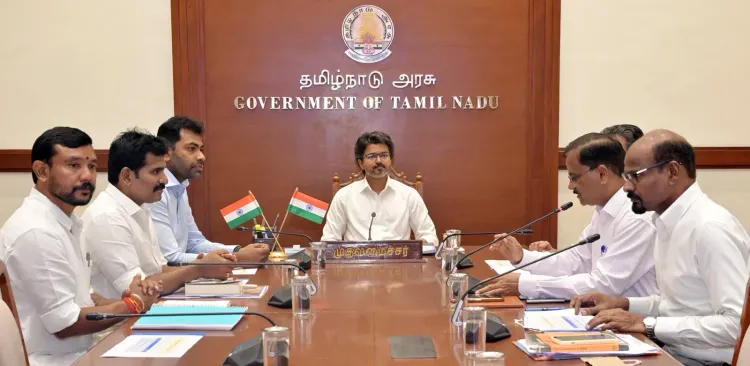
The Chief Minister's Office of Tamil Nadu announced on Tuesday, 26 May 2026 that Chief Minister C. Joseph Vijay chaired a review meeting at the Secretariat in Chennai to examine the status of Supreme Court cases challenging the state's 69 per cent reservation policy in educational institutions and government employment.
The Tamil-language post stated: 'மாண்புமிகு தமிழ்நாடு முதலமைச்சர் திரு. ச. ஜோசப் விஜய் அவர்கள் தலைமையில் இன்று தலைமைச் செயலகத்தில்... ஆய்வுக் கூட்டம் நடைபெற்றது' — meaning 'Under the chairmanship of the Honourable Chief Minister of Tamil Nadu, Mr C. Joseph Vijay, a review meeting was held today at the Secretariat regarding cases pending before the Supreme Court against the 69 per cent reservation.'
Context
Tamil Nadu's 69 per cent reservation for Backward Classes, Scheduled Castes and Scheduled Tribes in educational seats and state government posts has been in force since 1993, when the state enacted the Backward Classes, Scheduled Castes and Scheduled Tribes (Reservation of Seats in Educational Institutions and of Appointments or Posts in the Services under the State) Act. The quota far exceeds the 50 per cent ceiling set by the Supreme Court of India in the landmark Indra Sawhney judgment of 1992, which allowed exceptions only in extraordinary circumstances. That divergence has been the root of sustained legal challenges in the apex court.
Policy Backdrop
To insulate the policy from judicial review, the Government of Tamil Nadu secured the 76th Constitutional Amendment in 1994, which inserted the state's reservation law into the Ninth Schedule of the Constitution — a protective envelope designed to shield legislation from challenge under Articles 14, 15 and 16. Successive state governments, cutting across party lines, have defended the quota as a reflection of Tamil Nadu's unique social history rooted in the Dravidian movement and backed by empirical data on backwardness. Despite Ninth Schedule protection, petitions challenging the quota have continued to be filed and are currently pending before the Supreme Court.
Stakeholders and Impact
The 69 per cent reservation directly affects hundreds of thousands of students seeking seats in government and aided colleges and lakhs of aspirants competing for state government jobs each year. Backward class communities, Scheduled Caste and Scheduled Tribe applicants, and Other Backward Class (OBC) groups across Tamil Nadu regard the quota as a foundational social-justice guarantee. Any adverse Supreme Court ruling could reshape access to higher education and public employment for a significant share of the state's population, making the outcome of the pending cases a matter of acute political and social sensitivity.
What's Next
The review meeting signals that the state government is actively monitoring the litigation and may be preparing its legal strategy — including possible additional affidavits, fresh legislative steps, or political mobilisation — ahead of forthcoming Supreme Court hearings. The outcome of the apex court's deliberations on Tamil Nadu's above-50 per cent quota will have far-reaching implications not only for the state but also for the broader federal debate on how far states can go in designing affirmative-action policies beyond judicially set limits.
Point of View
Not merely a legal technicality. It fits a long pattern in Tamil Nadu politics where defending the above-50-per cent quota has served as a marker of Dravidian social-justice identity, regardless of which party holds power. The timing also suggests the state may be anticipating significant Supreme Court activity on the pending petitions and wants to be seen as proactive. Whether this meeting translates into fresh legal filings or legislative action will determine if it is substantive policy management or principally a political message to the state's dominant backward-class electorate.
NationPress
24 Sept 2026
Frequently Asked Questions
What is Tamil Nadu's 69 per cent reservation and why is it in the Supreme Court?
Tamil Nadu reserves 69 per cent of seats in government educational institutions and state government jobs for Backward Classes, Scheduled Castes and Scheduled Tribes under a 1993 state law. Because this exceeds the 50 per cent ceiling set by the Supreme Court in the 1992 Indra Sawhney judgment, petitions have been filed in the apex court challenging its constitutional validity.
What did CM Joseph Vijay's review meeting on 26 May 2026 decide?
The Chief Minister's Office announced that CM Joseph Vijay chaired a review meeting at the Secretariat to examine the status of Supreme Court cases against the 69 per cent quota; no specific decisions or outcomes were publicly disclosed beyond the holding of the meeting.
How does the Ninth Schedule protect Tamil Nadu's reservation law?
The 76th Constitutional Amendment of 1994 inserted Tamil Nadu's reservation law into the Ninth Schedule of the Constitution, which was designed to shield legislation from challenge under fundamental rights provisions such as Articles 14, 15 and 16. However, a 2007 Supreme Court ruling held that Ninth Schedule laws can still be reviewed if they violate basic structure principles.
What happens if the Supreme Court strikes down Tamil Nadu's 69% quota?
If the Supreme Court rules against the quota, it could reduce reservations to the 50 per cent ceiling, directly affecting admissions to government colleges and recruitment to state government posts for lakhs of Backward Class, SC, and ST candidates each year.
Which communities benefit from Tamil Nadu's 69 per cent reservation?
The quota covers Most Backward Classes and Denotified Communities (20%), Backward Classes (26%), Scheduled Castes (18%), and Scheduled Tribes (1%), together totalling 69 per cent of seats in educational institutions and state government employment.