CM Vijay Chairs Welfare Review Meet for BC, MBC and Minorities
Synopsis
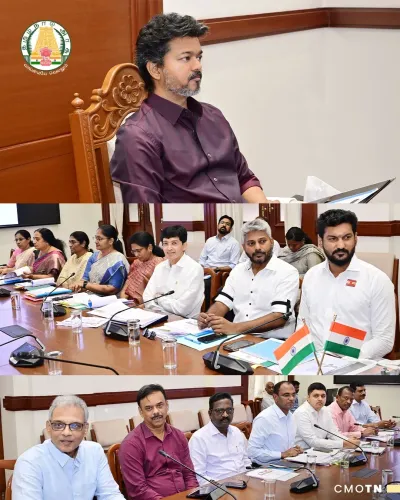
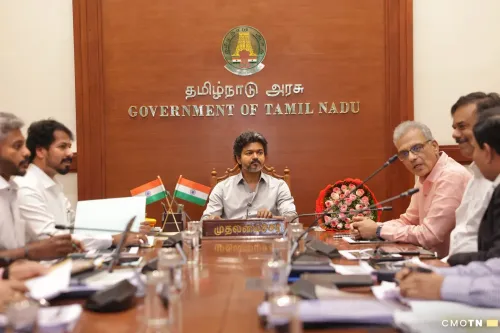
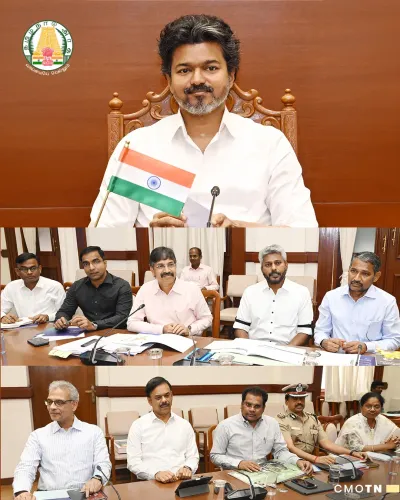
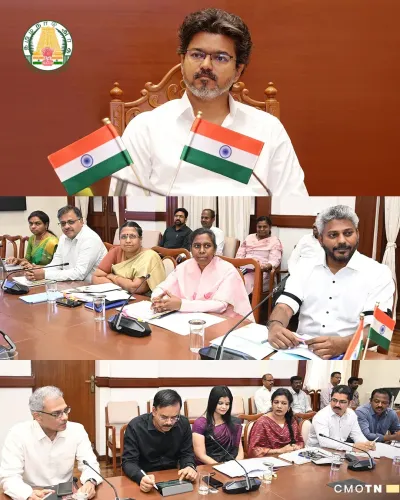
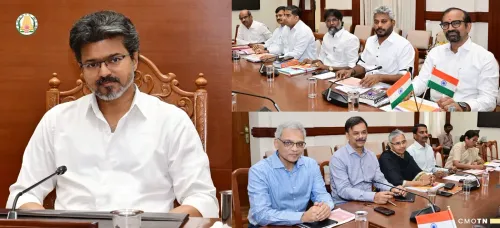
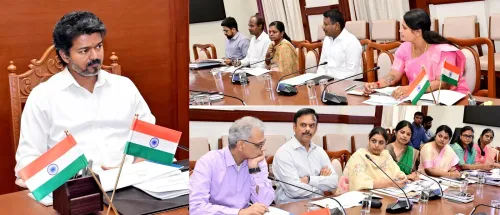
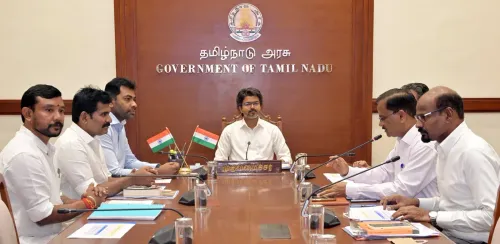
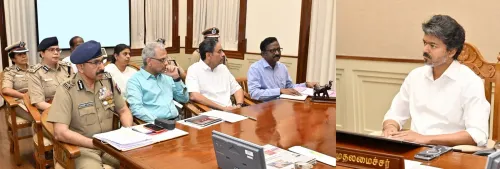
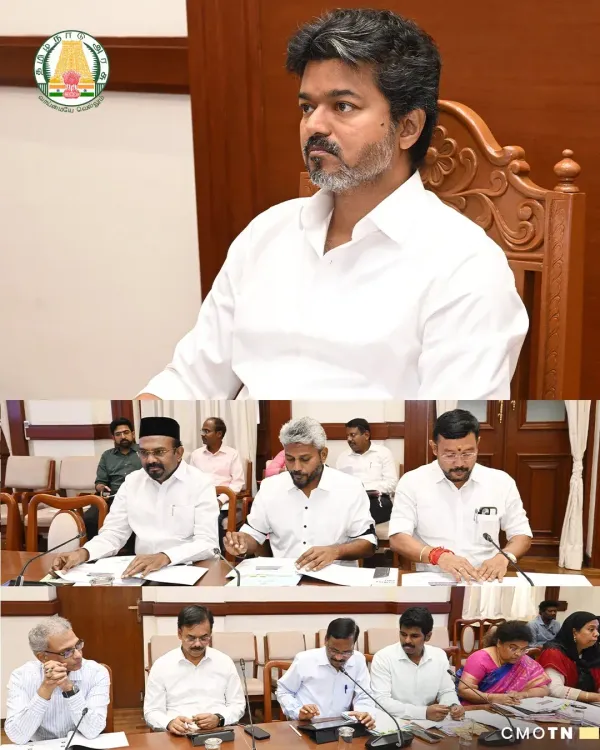
Chief Minister C. Joseph Vijay chaired a review meeting at the Tamil Nadu Secretariat on 8 July 2026, assessing schemes and activities of the Backward Classes, Most Backward Classes and Minorities Welfare Department — a key pillar of the state's Dravidian welfare model.
Key Takeaways
Joseph Vijay chaired the review meeting at the Tamil Nadu Secretariat on 8 July 2026 .
The meeting reviewed the functioning and schemes of the Backward Classes, Most Backward Classes and Minorities Welfare Department .
Tamil Nadu's 69% reservation policy , enacted in 1993 , underpins the state's affirmative action framework for BC and MBC communities.
The department administers post-matric scholarships, government hostels, skill training and economic support for eligible communities.
Review meetings of this nature are part of Tamil Nadu's established pattern of monitoring welfare scheme implementation under the Dravidian governance model.
Follow-up announcements on scheme allocations and budget provisions are expected in the coming weeks.
The Chief Minister's Office of Tamil Nadu announced on Wednesday, 8 July 2026 that Chief Minister C. Joseph Vijay chaired a departmental review meeting at the Secretariat in Chennai, examining the functioning and schemes of the Backward Classes, Most Backward Classes and Minorities Welfare Department.
Context
The meeting, held at the state's chief secretariat, brought together officials to assess the implementation of welfare programmes targeting some of Tamil Nadu's most historically underserved communities. The CMO's post, in Tamil, noted the review covered both ongoing activities (செயல்பாடுகள்) and specific schemes (திட்டங்கள்) under the department's mandate.
The Backward Classes and Most Backward Classes together constitute a significant share of Tamil Nadu's population and are the primary beneficiaries of the state's landmark 69% reservation policy, enacted through legislation in 1993. Minority communities — including Muslims and Christians — are also covered under the department's ambit.
Policy Backdrop
Tamil Nadu's Backward Classes, Most Backward Classes and Minorities Welfare Department administers a wide portfolio: post-matric scholarships, government-run hostels, skill development programmes, and direct economic support schemes for eligible beneficiaries. These programmes have been a cornerstone of Dravidian governance since the 1990s, reflecting the state's distinct emphasis on caste-based affirmative action.
The 69% reservation framework — which allocates quotas in education and public employment for backward and most backward classes among others — remains one of the highest such reservations of any Indian state and has been a subject of sustained political and legal attention. Departmental review meetings of this kind are a routine but important mechanism through which the state monitors whether scheme benefits are reaching intended recipients.
Stakeholders and Impact
The communities covered by this department — backward classes, most backward classes, and religious minorities — number in the crores across Tamil Nadu. Scholarship and hostel schemes under the department directly determine educational access for students from these groups, making review meetings consequential for ground-level delivery.
CM Vijay, who entered electoral politics drawing on a mass base with strong support among working-class and socially marginalised communities, has positioned welfare delivery as a governance priority. A focused review at the secretariat level signals administrative attention to the pace and quality of scheme implementation.
What's Next
Officials and welfare advocates will watch for follow-up directives emerging from the review — including possible course corrections in scheme delivery, enhanced allocations in the next state budget, or announcements tied to scholarship disbursal timelines. Any legislative or administrative changes to reservation norms or eligibility criteria for minority welfare programmes would also be closely tracked in the weeks ahead.
Point of View
MBC and minority welfare sits at the intersection of the state's Dravidian ideological identity and its ground-level electoral arithmetic, making departmental performance reviews more than routine administration. By personally chairing the session, CM Vijay reinforces a governance posture centred on direct accountability — a pattern consistent with Tamil Nadu's tradition of chief ministers closely monitoring social welfare delivery. How efficiently scheme benefits reach beneficiaries in the coming months will be an early test of his government's administrative credibility.
NationPress
7 Oct 2026
Frequently Asked Questions
What was the welfare review meeting chaired by CM Vijay about?
CM C. Joseph Vijay chaired a review meeting on 8 July 2026 at the Tamil Nadu Secretariat to assess the schemes and activities of the Backward Classes, Most Backward Classes and Minorities Welfare Department, which oversees scholarships, hostels and economic support for these communities.
What is the 69% reservation policy in Tamil Nadu?
Tamil Nadu's 69% reservation policy, enacted through state legislation in 1993, provides quotas in education and public employment for backward classes, most backward classes and other groups, and is one of the highest reservation percentages among Indian states.
What schemes does the Tamil Nadu BC MBC Minorities Welfare Department run?
The department administers post-matric scholarships, government-run hostels, skill development programmes and direct economic assistance for backward classes, most backward classes and minority communities such as Muslims and Christians.
Who is CM C. Joseph Vijay?
C. Joseph Vijay is the Chief Minister of Tamil Nadu who entered electoral politics after a prominent career as a Tamil film actor, with a political focus on social justice and welfare for marginalised communities.
What can we expect after this welfare review meeting in Tamil Nadu?
Observers expect follow-up directives on scheme delivery, possible enhanced allocations in the next state budget, and updates on scholarship disbursal timelines for BC, MBC and minority students across Tamil Nadu.