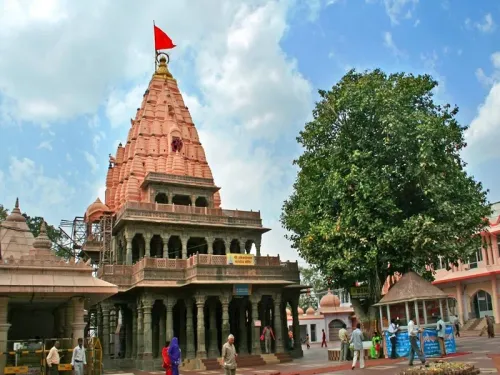
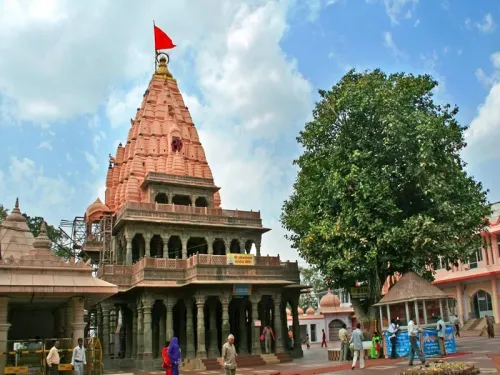
Ancient Shivaling unearthed near Mahakaleshwar Temple in Ujjain
Synopsis
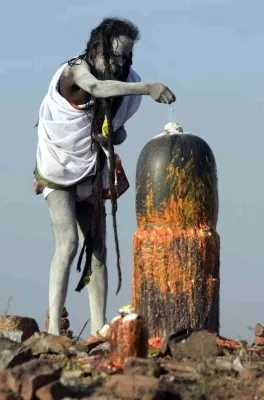
A centuries-old Shivaling has emerged from the earth just metres from Ujjain's sacred Mahakaleshwar Temple — not in a planned excavation, but during routine tunnel digging for a pilgrim facility project. The ASI has been called in, construction is halted, and the site has already become a pilgrimage point, raising questions about what else may lie beneath one of India's oldest Vedic cities.
Key Takeaways
An ancient Shivaling was unearthed during tunnel excavation near Mahakaleshwar Temple in Ujjain on 1 May 2025 .
The stone structure was found several metres below the surface, reportedly largely intact, and is believed to date back several hundred years.
The Archaeological Survey of India (ASI) has been formally notified to lead a detailed investigation into the find.
Construction work on the pilgrim facility infrastructure project has been halted pending expert evaluation.
The site has drawn large crowds of devotees and has been cordoned off by local authorities to protect its integrity.
Ujjain is one of India's twelve Jyotirlinga sites and a historically dense centre of Vedic civilisation, raising the likelihood of further archaeological finds in the area.
An ancient Shivaling was unearthed during tunnel excavation work near the iconic Mahakaleshwar Temple in Ujjain on Friday, 1 May, triggering a halt in construction activities and drawing large crowds of devotees to the site. The discovery, made several metres below the surface during an infrastructure project aimed at improving pilgrim facilities around the temple complex, has prompted immediate attention from local authorities and archaeological experts.
How the Discovery Was Made
Workers engaged in subterranean digging as part of the ongoing infrastructure project struck the stone structure as heavy machinery cleared a layer of ancient soil. The Shivaling emerged largely intact, bearing what preliminary observers describe as the distinct characteristics of traditional temple architecture. Officials from the Mahakaleshwar Temple Management Committee reached the site shortly after the news broke, and the area has since been cordoned off to protect the integrity of the find.
Expert Evaluation Under Way
Officials from the Archaeological Survey of India (ASI) have been formally notified and are expected to lead a detailed investigation. Experts will examine the stone quality, carving style, and surrounding geological strata to determine whether the Shivaling belonged to an ancient temple that was buried or destroyed during historical upheavals. Preliminary observations suggest the artifact could date back several hundred years, though an official timeline is yet to be established, according to sources at the site.
Significance for Ujjain's Heritage
Ujjain, widely regarded as the 'Land of Mahakal', has served as a primary seat of Shaivism for millennia and is one of the twelve Jyotirlinga sites in India. Given the city's dense archaeological history as a centre of Vedic civilisation, experts note that the potential for further remains in the surrounding area is high. The discovery is particularly resonant for local devotees, who view it as a divine manifestation in a city where spiritual heritage and modern development frequently intersect.
Site Turned Makeshift Pilgrimage Point
With the excavation currently halted, the construction zone has effectively transformed into a makeshift point of pilgrimage, as residents and visitors gather to offer prayers at the site of the emergence. Authorities are managing the crowds while ensuring the archaeological integrity of the site is not compromised. The Mahakaleshwar Temple Management Committee is coordinating with local administration on next steps.
What Happens Next
Construction work is expected to remain suspended pending the outcome of the ASI assessment. Depending on the findings, the site could be classified as a protected archaeological area, which would significantly alter the scope of the original infrastructure project. The discovery adds a new and significant chapter to Ujjain's already storied legacy, reinforcing that much of India's ancient spiritual heritage may still lie undiscovered beneath its modern landscape.
Point of View
Yet pre-construction archaeological surveys remain inconsistently enforced. The ASI's response here will be telling: a thorough, transparent assessment could set a precedent for how pilgrim-city development projects handle such discoveries. The risk is that commercial and religious pressures accelerate clearance over careful documentation.
NationPress
24 Sept 2026
Frequently Asked Questions
What was found near Mahakaleshwar Temple in Ujjain?
An ancient Shivaling was unearthed during tunnel excavation work near the Mahakaleshwar Temple in Ujjain on 1 May 2025. The stone structure emerged largely intact several metres below the surface during an infrastructure project aimed at improving pilgrim facilities.
How old is the Shivaling found in Ujjain?
Preliminary observations suggest the Shivaling could date back several hundred years, bearing characteristics of traditional temple architecture. However, an official timeline has not yet been established, as the Archaeological Survey of India is yet to complete its formal assessment.
Has construction near Mahakaleshwar Temple been stopped?
Yes, excavation and construction activities have been halted following the discovery. The site has been cordoned off by local authorities and the Mahakaleshwar Temple Management Committee to protect the archaeological integrity of the find pending expert evaluation.
Which agency is investigating the Ujjain Shivaling discovery?
The Archaeological Survey of India (ASI) has been formally notified and is expected to lead the investigation. Experts will examine the stone quality, carving style, and surrounding strata to determine the origin and age of the Shivaling.
Why is this discovery significant for Ujjain?
Ujjain is one of India's twelve Jyotirlinga sites and has been a centre of Shaivism and Vedic civilisation for millennia. The discovery reinforces the city's dense archaeological heritage and raises the possibility that further ancient remains may lie beneath its modern infrastructure.