Did an Andhra Man Really Win Rs 1.53 Crore in a Cockfight?
Click to start listening
Synopsis
A staggering Rs 1.53 crore was won by Rajahmundry Ramesh in a cockfight during Sankranti celebrations in Andhra Pradesh. Despite legal prohibitions, the event drew significant crowds and highlighted the cultural significance of cockfighting in the region. The story raises questions about tradition versus legality in modern India.
Key Takeaways
- Rajahmundry Ramesh won a staggering Rs 1.53 crore in a cockfight.
- Cockfighting remains a part of Sankranti celebrations despite legal bans.
- Organizers claim these events are integral to local traditions.
- Animal rights groups highlight the cruelty in such practices.
- The legal status of cockfighting continues to spark debate.
Amaravati, Jan 15 (NationPress) In what is being termed a remarkable achievement, a local man has reportedly clinched an astonishing Rs 1.53 crore during a cockfight that took place in Andhra Pradesh's West Godavari district on Thursday, coinciding with the Sankranti festivities.
The individual, recognized as Rajahmundry Ramesh, emerged victorious in a high-stakes bet in Tadepalligudem town.
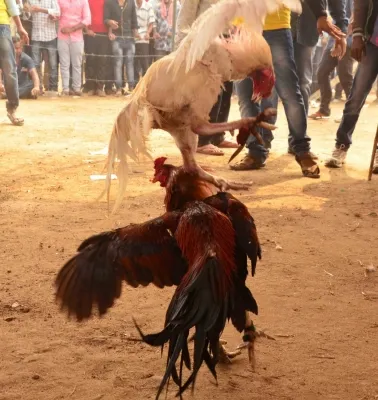
Ramesh, along with Gudivada Prabhakar, wagered a significant sum on their roosters, which had knives affixed to their feet. Ramesh's rooster triumphed, securing him the hefty payout.
This win is reportedly the highest stake made during the current Sankranti season. Local television broadcasts captured the jubilant celebrations of Ramesh and his friends following their triumphant bet.
Filled with excitement, Ramesh expressed his joy, noting that he had nurtured his specially-bred rooster with dry fruits for six months to ensure it was in peak condition for the bout.
On the same day, numerous cockfights were organized across various locations in Andhra Pradesh, continuing the tradition for the second consecutive day.
Despite a court-imposed ban and stern warnings from authorities, significant amounts of money exchanged hands during the cockfights, which many regard as a crucial element of Sankranti celebrations.
Backed by political figures, organizers established dedicated venues for the cockfights and other festivities in districts including East Godavari, West Godavari, Dr B. R. Ambedkar Konaseema, Eluru, Polavaram, and Krishna.
The events commenced with Bhogi on the first day and continued into Wednesday night, illuminated by floodlights at several locations. Similar scenes unfolded on Thursday night.
Notable personalities from Andhra Pradesh, Telangana, and neighboring states were present among the hundreds of spectators and bettors, including politicians, business leaders, and celebrities.
Despite police and district authorities issuing warnings against organizing cockfights and gambling, public representatives showed their support for the organizers by attending the events themselves.
Organizers have made plans to extend the cockfighting events into a third day on Friday.
Amid cheers from the audience, well-trained roosters fought with small knives attached to their legs, often resulting in the death of one of the birds.
Cockfighting and related gambling activities are outlawed under both the Prevention of Cruelty to Animals Act and the Andhra Pradesh Gaming Act.
Animal rights organizations argue that provoking animal fights is illegal as outlined in Section 11(1)(m)(ii) of the Prevention of Cruelty to Animals Act, 1960.
The act of organizing, managing, or providing a location for such fights also constitutes a cognizable offense under Section 11(1)(n).
Some organizers have defended their actions, claiming that the cockfights were conducted without betting, and emphasized that these events are integral to Sankranti traditions.
They also noted that courts have only prohibited cockfights involving roosters with knives attached.
Point of View
I recognize the complexity surrounding the issue of cockfighting in India. While it is seen as a cultural tradition by many, it raises significant ethical and legal dilemmas. The excitement of winning large sums can overshadow the serious concerns regarding animal welfare and legality. Our coverage aims to provide a balanced view of this ongoing debate.
NationPress
15/01/2026
Frequently Asked Questions
What is the significance of Sankranti in Andhra Pradesh?
Sankranti is a major festival celebrated in Andhra Pradesh, marking the harvest season and is associated with various cultural traditions, including cockfighting.
Are cockfights legal in India?
Cockfighting is illegal under the Prevention of Cruelty to Animals Act and the Andhra Pradesh Gaming Act, which prohibit animal fights and associated gambling.
How did Ramesh prepare his rooster for the fight?
Ramesh reportedly fed his specially-bred rooster a diet of dry fruits for six months to ensure it was fit and strong for the competition.
What are the penalties for organizing cockfights?
Organizing cockfights can lead to legal action under the Prevention of Cruelty to Animals Act, which outlines penalties for inciting animal fights.
Why do people participate in cockfighting despite the risks?
Many view cockfighting as a traditional practice and a form of entertainment, often overlooking the legal and ethical implications involved.