Anganwadi Initiatives Impacting 89 Million Lives: Union Minister Highlights
Synopsis
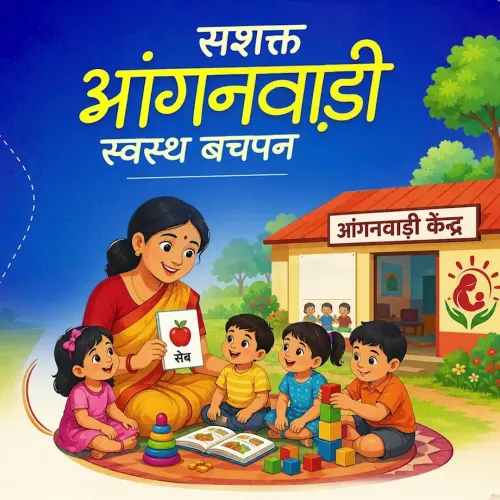
In a recent address, Union Minister Annpurna Devi revealed that over 1.4 million Anganwadi centres are transforming lives by serving nearly 89 million beneficiaries. This initiative emphasizes the importance of nutrition and holistic child development across India.
Key Takeaways
1.4 million Anganwadi centres are operational in India.
Nearly 89 million beneficiaries are being served. 'Poshan Maah' and 'Poshan Pakhwada' are significant national movements.
Over 85% of brain development happens in early childhood.
Community involvement is essential for holistic child development.
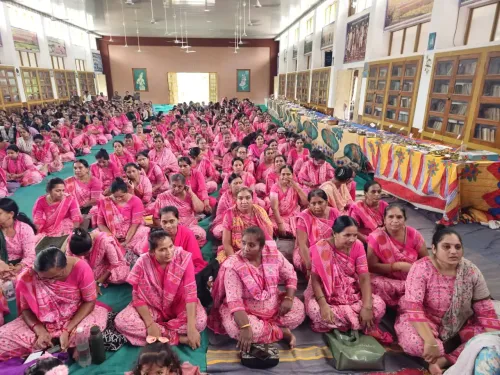
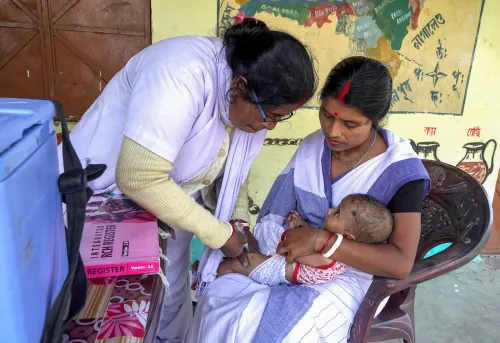
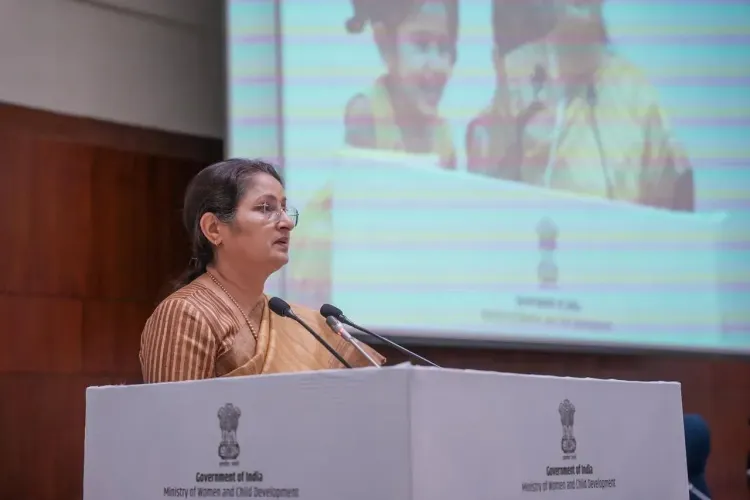
New Delhi, April 10 (NationPress) With more than 1.4 million Anganwadi centres, Anganwadi Didis are providing essential services to pregnant women, lactating mothers, adolescent girls, and children, benefiting nearly 89 million individuals, as stated by Union Minister for Women and Child Development Annpurna Devi.
She highlighted that the initiatives 'Poshan Maah' and 'Poshan Pakhwada' have evolved into a genuine 'Jan Andolan', with millions of activities happening nationwide.
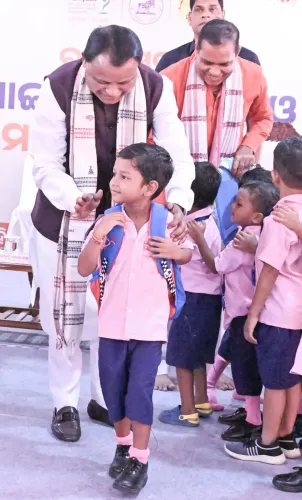
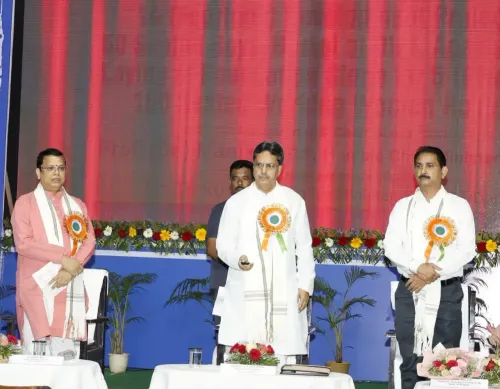
“Our Anganwadi workers, helpers, and ASHA Didis are earnestly implementing the Prime Minister’s initiatives and objectives to every household, working collectively to achieve these goals. The Ministry of Women and Child Development has a vast mandate, and we are reaching out to every household and child across the nation,” she mentioned during an event.
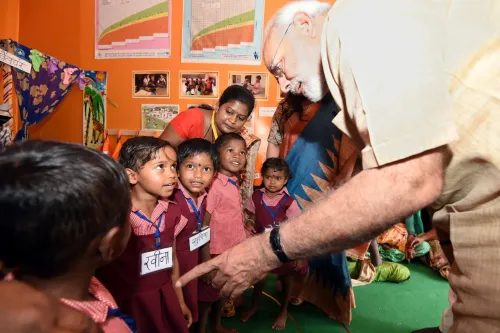
“The children are the future of our country and will carry forward the vision of a Viksit Bharat. It is our collective duty to ensure they receive better nutrition, and this must be a shared effort as a Jan Andolan,” she added, encouraging states to exchange knowledge, adopt effective practices, and enhance performance within districts, particularly in aspirational areas.
The Minister also stressed that 'Poshan' is an ongoing initiative and called for increased time, attention, and community involvement to foster the overall and mental growth of children.
Continuing this national movement, the Ministry of Women and Child Development has launched the 8th edition of 'Poshan Pakhwada', initiating a nationwide campaign from April 9 to April 23.
Minister of State Savitri Thakur stated that under Prime Minister Narendra Modi’s leadership, eight Poshan Maahs and seven Poshan Pakhwadas have been organized since 2018.
Focusing on the theme of Poshan Pakhwada 2026, “Maximizing Brain Development in the First Six Years of Life,” she underscored the significance of this period, as over 85% of brain development occurs during early years, with the first 1,000 days being particularly crucial.
She pointed out the necessity to look beyond nutrition alone and to equally prioritize responsive caregiving and early learning to guarantee holistic child development.
Point of View
Highlighting their critical role in supporting maternal and child health across India. This initiative not only addresses immediate nutritional needs but also emphasizes the importance of early childhood development, showcasing a national commitment to enhancing the well-being of future generations.
NationPress
15 Oct 2026
Frequently Asked Questions
What are Anganwadi centres?
Anganwadi centres are community-based health and nutrition support services in India, focusing on pregnant women, nursing mothers, and children.
How many beneficiaries do Anganwadi centres serve?
Anganwadi centres serve nearly 89 million beneficiaries across India.
What is 'Poshan Pakhwada'?
'Poshan Pakhwada' is a nationwide campaign aimed at promoting nutrition and health among children and mothers.
What is the significance of the first 1,000 days?
The first 1,000 days of a child's life are crucial for brain development and overall growth.
Who leads the Anganwadi initiatives?
The Anganwadi initiatives are led by the Ministry of Women and Child Development under the Government of India.