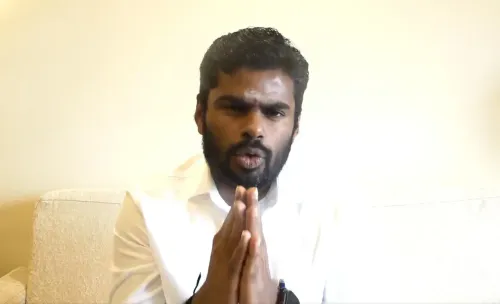
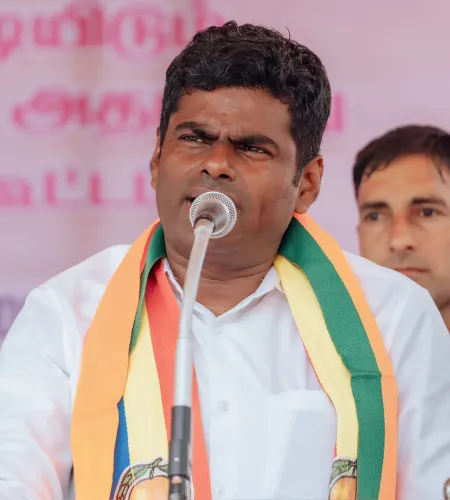
Annamalai quits BJP, rebrands as 'common man in search of good politics'
Synopsis
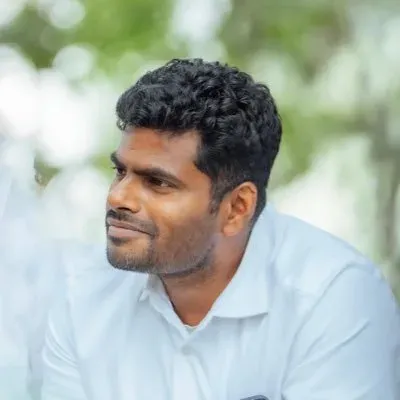
Minutes after quitting the BJP, K. Annamalai rewrote his X profile as 'a common man in search of good politics' — a calculated rebrand that signals he is going solo against Tamil Nadu's five-decade Dravidian order, with no party machinery and everything riding on personal appeal.
Key Takeaways
Annamalai formally resigned from the Bharatiya Janata Party (BJP) on 5 June .
He updated his X profile to read: 'A common man in search of good politics!' In his resignation letter, he stated his goal was to prove politics is not reserved for 'the elite and a select few'.
Annamalai plans to lead an independent, people-backed movement challenging Dravidian ideology 's five-decade grip on Tamil Nadu .
He served six years with the BJP, becoming the party's most prominent face in the state ahead of Assembly elections.
His path forward without an organised party structure or machinery remains uncertain, according to political observers.
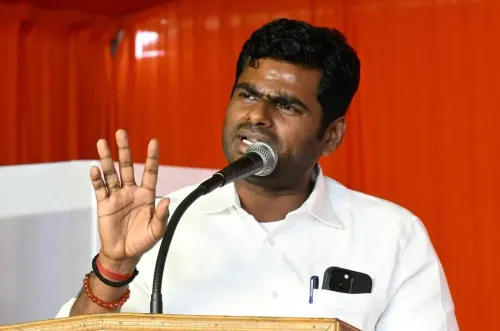
K. Annamalai formally resigned from the Bharatiya Janata Party (BJP) on 5 June, and within moments updated his profile on X to describe himself as: 'A common man in search of good politics!' — a pointed signal that the former Tamil Nadu BJP chief intends to chart an independent political course outside the Dravidian establishment.
The Resignation and What It Said
In his resignation letter to the BJP high command, Annamalai framed his departure around a core conviction: that politics must not remain the exclusive preserve of the elite. 'I wanted to change the notion that politics is a path only for the elite and a select few, not for the common man. I'm extremely thankful to the BJP leadership for trusting a very young and raw me with great responsibility and leadership positions,' he wrote.
He also noted that the people of Tamil Nadu had grown weary of the prevailing political discourse over several decades and were hungry for change. 'Some positive change happened in the past decade, but they couldn't hold their ground,' he added.
The 'Common Man' Rebranding
Annamalai's pivot to a 'common man' identity is deliberate and calculated. The cop-turned-politician earned the nickname 'Singham' during his policing career for his assertive style, and he reportedly hopes to replicate that brand of decisive action on the political stage — this time without a party structure behind him.
His stated aim is to lead a people-backed movement that cuts through caste-entrenched politics and challenges the Dravidian ideology that has dominated Tamil Nadu for over five decades. This is a significant departure from conventional party politics, and one that carries both promise and structural risk.
Six Years with BJP: What He Built and Left Behind
During his six-year tenure with the BJP, Annamalai undertook aggressive grassroots campaigns to expand the party's footprint in a state where Dravidian parties have historically held near-total dominance. He emerged as the most recognisable BJP face in the state ahead of Assembly elections, building a personal following that often outpaced the party's own organisational reach.
That personal brand — rather than any ideological shift — appears to be the asset he is now taking independent. Notably, this is not the first time a politician in India has attempted a 'common man' pitch against an entrenched regional order; the outcomes of such experiments have been mixed.
What Comes Next
Annamalai's path forward without an organised party structure or established machinery remains uncertain. His 'common man' pitch may resonate with voters fatigued by decades of Dravidian two-party dominance, but translating personal popularity into electoral infrastructure is a formidable challenge. Political observers will be watching closely to see whether his movement gains institutional form or remains a campaign of individual appeal.
Point of View
And none of those challengers lacked passion. What Annamalai lacks is what they all lacked: a second tier of organisation below the leader. Personal brand without institutional depth has a ceiling, and in Tamil Nadu, that ceiling tends to arrive at the ballot box.
NationPress
20 Oct 2026
Frequently Asked Questions
Why did K. Annamalai resign from the BJP?
Annamalai resigned from the BJP on 5 June, stating in his letter that he wanted to prove politics is not a path reserved only for the elite. He said he intends to lead a people-backed movement for transformational change in Tamil Nadu's political landscape.
What did Annamalai write on his X profile after quitting?
Immediately after his resignation, Annamalai updated his X profile to describe himself as 'A common man in search of good politics!' — signalling his intent to operate outside conventional party structures.
What is Annamalai's plan after leaving the BJP?
Annamalai has said he will lead an independent, people-powered movement aimed at challenging caste-entrenched politics and the Dravidian ideology that has dominated Tamil Nadu for over five decades. He has not announced a formal party or organisational structure yet.
Who is K. Annamalai and what was his role in the BJP?
K. Annamalai is a former Indian Police Service officer who earned the nickname 'Singham' for his policing style. He served as the Tamil Nadu BJP president for six years and became the party's most prominent face in the state ahead of Assembly elections.
Has the 'common man' political pitch worked in India before?
The 'common man' political pitch has been attempted in other Indian states with mixed results. While it has occasionally disrupted established parties, translating personal popularity into sustained electoral success without organised party machinery has proven difficult, according to political observers.