ANRF CEO pushes translational science at CSIR-NIIST Thiruvananthapuram
Synopsis
ANRF CEO Shivkumar Kalyanaraman's visit to CSIR–NIIST in Thiruvananthapuram signals a fundamental reset in how India funds science — shifting from publications to provable real-world impact. With RDI programmes being operationalised and a Designer Rice initiative on the table, India's newest research body is betting that translational science, not academic output, is the country's next competitive edge.
Key Takeaways
ANRF CEO Shivkumar Kalyanaraman visited CSIR–NIIST, Thiruvananthapuram on 2 May , stressing outcome-oriented, translational research.
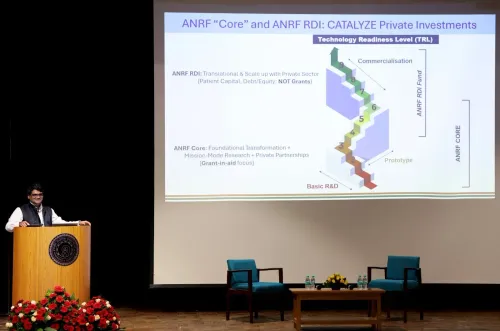
ANRF is actively funding projects that scale from laboratories to field-level implementation under its Research, Development and Innovation (RDI) initiative.
Kalyanaraman reviewed the Designer Rice programme , CCUS research, and sustainable food processing technologies at the institute.
CSIR–NIIST Director C.
Anandharamakrishnan said the visit opened avenues for collaborative, mission-oriented work.
ANRF, a newly established statutory body, is operationalising large-scale funding programmes aimed at bridging lab innovation and real-world application.
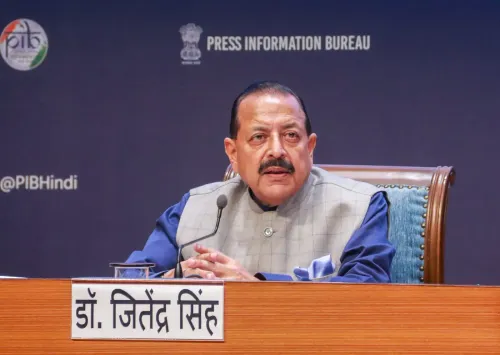
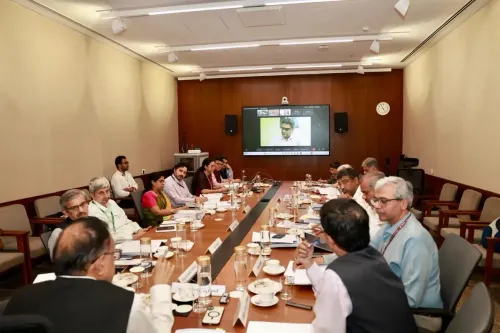
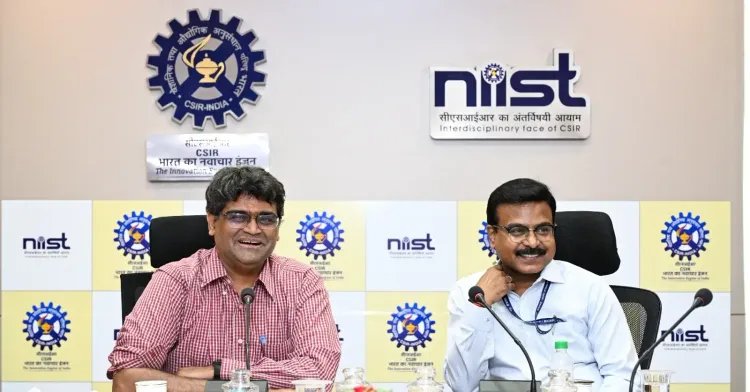
Shivkumar Kalyanaraman, Chief Executive Officer of the Anusandhan National Research Foundation (ANRF), on 2 May underscored a decisive shift towards outcome-oriented scientific research during his visit to the CSIR National Institute for Interdisciplinary Science and Technology (CSIR–NIIST) in Thiruvananthapuram. Interacting with scientists at the institute, Kalyanaraman stressed that India's evolving research ecosystem must prioritise measurable societal and national impact over purely academic outcomes.
A Clear Pivot Towards Translational Science
Kalyanaraman signalled that ANRF is actively seeking to fund projects capable of scaling beyond laboratories into field-level implementation. He encouraged researchers to pursue ambitious, mission-driven proposals, asserting that funding constraints would not be a barrier for projects demonstrating tangible impact. This marks a notable departure from conventional grant frameworks that have historically rewarded publication metrics over real-world outcomes.
With a career spanning global technology and research institutions — including leadership roles at Microsoft, GE Power, and IBM Research — Kalyanaraman emphasised the importance of integrating industry, academia, and government efforts into a cohesive innovation pipeline.
Key Research Programmes Reviewed at CSIR–NIIST
During the visit, Kalyanaraman reviewed a range of interdisciplinary research programmes at the Thiruvananthapuram-based institute. These included work in Carbon Capture, Utilisation and Storage (CCUS), focused on carbon management and climate mitigation, as well as advancements in sustainable food processing technologies.
He also visited the institute's Designer Rice programme, which is developing nutritionally enhanced rice varieties with improved glycaemic response — an initiative aligned with addressing public health and food security challenges. Notably, such applied research directly mirrors ANRF's stated priority of bridging laboratory innovation with societal need.
What the Government and Institute Said
C. Anandharamakrishnan, Director of CSIR–NIIST, said the interaction provided critical insights into national research priorities and opened avenues for collaborative, interdisciplinary work aligned with mission-oriented goals. The visit comes at a crucial juncture as ANRF, a newly established statutory body, begins operationalising large-scale funding programmes, including Research, Development and Innovation (RDI) initiatives.
Broader Policy Context
The visit reflects a wider policy direction in India's science administration — one that seeks to bridge the gap between laboratory innovation and real-world application, positioning research as a key driver of economic growth and societal transformation. This comes amid growing pressure on publicly funded research institutions to demonstrate returns on investment beyond academic citations. ANRF's push for translational science aligns with global trends seen in research funding bodies in the United States, European Union, and China, where impact metrics are increasingly tied to disbursements.
With ANRF's funding architecture still taking shape, the outcome of engagements like this one will likely determine how India's next generation of researchers frames and pitches their work.
Point of View
But the proof will be in the metrics it chooses to measure impact. Kalyanaraman's industry pedigree at Microsoft and IBM Research suggests a results-driven framework is coming, yet publicly funded science in India has repeatedly struggled to enforce accountability without stifling basic research. The Designer Rice and CCUS programmes at CSIR–NIIST are credible test cases, but scaling them nationally will require more than funding — it demands procurement linkages, regulatory fast-tracking, and industry co-investment that no single foundation can mandate alone.
NationPress
2 Oct 2026
Frequently Asked Questions
What is the Anusandhan National Research Foundation (ANRF)?
The Anusandhan National Research Foundation (ANRF) is a newly established statutory body in India tasked with funding and catalysing research, development, and innovation across sectors. It aims to bridge the gap between academic research and real-world application by prioritising projects with measurable societal and national impact.
Why did ANRF CEO Shivkumar Kalyanaraman visit CSIR–NIIST?
Kalyanaraman visited CSIR–NIIST in Thiruvananthapuram on 2 May to interact with scientists, review ongoing research programmes, and signal ANRF's shift towards translational, outcome-oriented science funding. The visit was part of broader efforts to align institutional research with ANRF's mission-driven priorities.
What research programmes did Kalyanaraman review at CSIR–NIIST?
He reviewed the Designer Rice programme developing nutritionally enhanced rice with improved glycaemic response, Carbon Capture Utilisation and Storage (CCUS) research for climate mitigation, and sustainable food processing technologies — all aligned with public health, food security, and climate goals.
What is the ANRF's Research, Development and Innovation (RDI) programme?
The RDI initiative is one of ANRF's large-scale funding programmes currently being operationalised. It is designed to support projects that demonstrate tangible, scalable impact, moving beyond traditional academic grant structures to fund work that can transition from laboratory to field-level implementation.
How does ANRF's approach differ from conventional research funding in India?
Unlike conventional frameworks that reward publication metrics, ANRF is prioritising measurable societal impact and real-world scalability. Kalyanaraman has stated that funding will not be a barrier for projects demonstrating tangible outcomes, signalling a shift towards industry-academia-government collaboration.