RDI Fund conflict-of-interest safeguards robust, no IC member conflicted: Govt
Synopsis
The government has gone on record to defend the RDI Fund's governance, asserting that no Investment Committee member is conflicted and that a reinforced COI policy bars IC members from allowing their own companies to submit proposals. With 22 deep-science ETEs in the portfolio, the public clarification suggests rising scrutiny of how India's flagship research fund picks its winners.
Key Takeaways
The RDI Fund is administered by DST , TDB , and ANRF under a merit-based, transparency-first framework, the government stated on 7 August .
TDB's COI policy bars IC members who are CEO, Founder, or Shareholder of an ETE from allowing that ETE to submit proposals while they serve on the committee.
Project approvals are taken collectively by an Investment Committee of independent external experts from technology, industry, and investment domains.
RDI Fund support is for specific research projects, not general corporate financial assistance.
All 22 funded companies are described as deep-science enterprises building sovereign technologies, many of them first-of-their-kind in India.
Prior VC or angel investments in ETEs, made before proposal submission, have no bearing on the government's funding decisions, officials clarified.
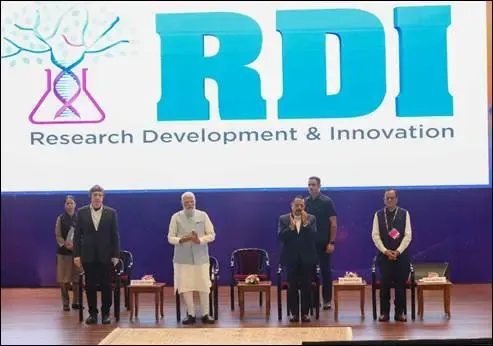
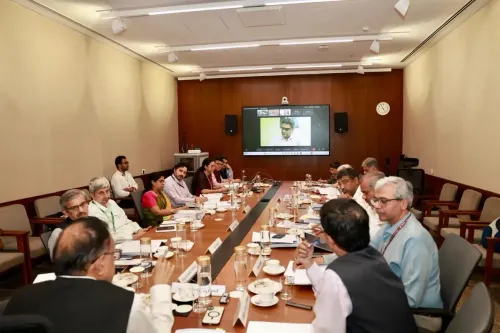
The Research, Development and Innovation (RDI) Fund is being administered through a rigorous institutional framework built on transparency, merit-based evaluation, and stringent conflict-of-interest (COI) safeguards, the government stated on Friday, 7 August. Senior officials from the Department of Science and Technology (DST), the Technology Development Board (TDB), and the Anusandhan National Research Foundation (ANRF) affirmed that every funding decision is made strictly in accordance with approved implementation guidelines and established due process.
What the Government Said
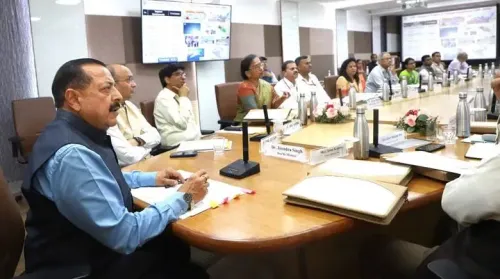
Professor Umesh V Waghmare, Secretary, Department of Science and Technology and Chairperson, TDB, reaffirmed the government's commitment to transparency, fairness, and ethical governance in the RDI Fund's implementation. He expressed complete confidence in the integrity of the expert committee members and underscored that DST, TDB, and ANRF remain bound to ensuring accountability across all RDI Fund operations.
Rajesh Kumar Pathak, Secretary, Technology Development Board, and Dr. Shivkumar Kalyanaraman, Chief Executive Officer, Anusandhan National Research Foundation, also addressed concerns raised about the fund's governance structure.
Key COI Safeguards in Place
TDB has instituted a reinforced COI policy under which, if an Investment Committee (IC) member owns or leads an Emerging Technology Enterprise (ETE) — whether as CEO, Founder, or Shareholder — it becomes that member's direct responsibility to ensure no project proposal from those ETEs is submitted to TDB for the duration of their IC membership.
Project approvals are taken collectively by an Investment Committee comprising independent external experts drawn from technology, industry, and investment domains — not by any single official or affiliated party.
Nature of RDI Fund Assistance
Officials clarified that RDI Fund support through TDB is extended for specific research and technology development projects, and not as general financial assistance to companies as corporate entities. This distinction, they noted, is central to the fund's design and governance logic.
On questions regarding prior investments by venture capital funds or angel investor networks, officials stated that such investments — where made before a proposal was submitted — have no bearing on the government's funding decision.
Profile of the 22 Funded Companies
'Each of the 22 companies are deep-science based companies building sovereign technologies and solving critical problems. Many of the technologies being built are first time in India and one of the very few in the world,' officials said.
They added that many of the 22 ETEs had also received funding from co-investors and VC funds or family offices where no IC member held a conflicting interest — a fact officials said further validates the integrity of the RDI Fund's investment decisions.
What Comes Next
The government's public defence of the RDI Fund's governance architecture signals that scrutiny of the programme is intensifying, even as officials insist that all institutional safeguards are functioning as designed. Observers will watch whether further disclosures on individual project evaluations are made available to reinforce public confidence in the process.
Point of View
Not on an independent auditor, which leaves room for interpretation. For a fund backing sovereign deep-tech, the credibility gap will only close with proactive third-party audits and public disclosure of recusal records — not press statements alone.
NationPress
21 Sept 2026
Frequently Asked Questions
What is the RDI Fund and who manages it?
The Research, Development and Innovation (RDI) Fund is a government initiative to support deep-science and technology development projects in India. It is managed jointly by the Department of Science and Technology (DST), the Technology Development Board (TDB), and the Anusandhan National Research Foundation (ANRF).
What conflict-of-interest safeguards does the RDI Fund have?
TDB has instituted a COI policy under which any IC member who is a CEO, Founder, or Shareholder of an ETE must ensure that company submits no proposals to TDB for the duration of their membership. Project approvals are taken collectively by an Investment Committee of independent external experts.
How many companies have received RDI Fund support?
22 companies have received support under the RDI Fund. Officials describe them as deep-science enterprises building sovereign technologies, many of which are first-of-their-kind in India and among very few globally.
Does prior VC investment in a company affect its RDI Fund eligibility?
No. Officials clarified that prior investments by venture capital funds or angel investor networks, where made before a proposal is submitted, have no bearing on the government's funding decision under the RDI Fund.
Why did the government issue this clarification on 7 August?
Senior officials from DST, TDB, and ANRF addressed concerns about the fund's governance and conflict-of-interest practices, reaffirming that all funding decisions follow approved guidelines and that no IC member is currently conflicted in relation to any funded company.