Anurag Thakur Wishes India's Athletes at 2026 Commonwealth Games
Synopsis
BJP MP Anurag Thakur has extended wishes to Indian athletes at the 2026 Commonwealth Games in Glasgow, calling on them to deliver historic performances and make the nation proud over 11 days of competition.
Key Takeaways
BJP MP Anurag Thakur posted his wishes to Indian athletes at the 2026 Commonwealth Games on 24 July 2026 .
The Games are being held in Glasgow, Scotland , which previously hosted the 2014 Commonwealth Games .
Thakur urged athletes to make every one of the 11 days of the Games 'belong to India.' India's sporting push is backed by the Khelo India programme (launched 2017 ) and the Target Olympic Podium Scheme (expanded 2018 ).
Glasgow stepped in as host after Victoria, Australia withdrew from the originally awarded hosting rights.
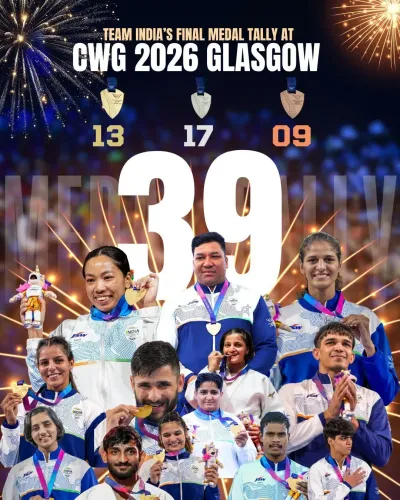
India's final medal tally could influence future Sports Ministry funding and programme reviews.
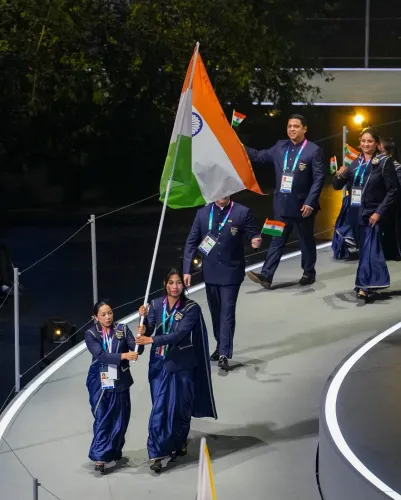
BJP MP and former Sports Minister Anurag Thakur on Friday, 24 July 2026 extended his best wishes to Indian athletes competing at the 2026 Commonwealth Games in Glasgow, urging them to make every day of the Games belong to India through their performances.
Context
Thakur, who previously served as Union Minister for Youth Affairs and Sports, posted his message as the multi-sport event gets under way in Glasgow, Scotland. In his post, he wrote: 'My best wishes to all the sportspersons participating in the 2026 Commonwealth Games in Glasgow. The nation awaits your historic performance, hoping that you will not just bring home medals but also make the nation proud.'
He called on athletes to deliver 'incredible performances' over the next 11 days of the Games, framing the competition as an opportunity to bring collective national pride alongside a strong medal haul.
Policy Backdrop
India's ambitions at the Commonwealth Games are underpinned by two flagship government programmes. The Khelo India initiative, launched in 2017, was designed to build a grassroots sports ecosystem and identify talent at the school and district level. The Target Olympic Podium Scheme (TOPS), expanded in 2018, provides focused financial and technical support to elite athletes in priority disciplines including wrestling, badminton, shooting, and athletics.
India's last experience as a Commonwealth Games host was the 2010 Delhi Games, after which successive Sports Ministry reviews called for sustained investment in training infrastructure and long-term athlete development. Budgetary allocations for sports have risen steadily in the years since, with international medal tallies increasingly cited as a measure of that investment's returns.
Glasgow previously hosted the 2014 Commonwealth Games and was confirmed as the 2026 host after Victoria, Australia withdrew from its original hosting commitment.
Stakeholders and Impact
The primary stakeholders are the Indian athletes themselves, representing the country across disciplines where India has historically been competitive — wrestling, badminton, shooting, boxing, and track-and-field events. A strong medal tally would provide political and policy validation for the Khelo India and TOPS frameworks that have channelled significant public funding into elite sport over the past decade.
For Thakur specifically, the Games carry personal significance. During his tenure as Sports Minister, he was closely associated with expanding the Khelo India programme and advocating for increased athlete welfare. His public message ahead of the Games aligns with the established pattern of senior political figures linking international sporting success to national prestige and soft power.
What's Next
Attention will now turn to India's performance across the 11 days of competition in Glasgow. The final medal tally will be closely watched by the Sports Ministry and could influence future funding decisions, training programme reviews, and the scope of schemes like Khelo India and TOPS. Any standout performances — particularly in disciplines where India has set podium targets — are likely to prompt follow-up statements from government and sports bodies on the path toward the next major multi-sport event.
Point of View
And a strong Indian medal haul at Glasgow would serve as a public endorsement of that decade-long approach. The post fits a broader pattern in which political figures treat Commonwealth Games performance as a soft-power metric and a barometer of governance effectiveness in sport. How India actually performs across the 11 days will determine whether this pre-Games messaging is remembered as prescient encouragement or routine political ritual.
NationPress
22 Oct 2026
Frequently Asked Questions
When are the 2026 Commonwealth Games being held?
The 2026 Commonwealth Games are being held in Glasgow, Scotland. BJP MP Anurag Thakur's 24 July 2026 post references 11 days of competition, though the precise opening and closing dates are subject to the official Games schedule.
Why is Glasgow hosting the 2026 Commonwealth Games?
Glasgow was confirmed as the host of the 2026 Commonwealth Games after Victoria, Australia withdrew from its original hosting commitment. Glasgow previously hosted the Games in 2014.
What is Anurag Thakur's connection to Indian sports?
Anurag Thakur served as Union Minister for Youth Affairs and Sports and was closely associated with expanding the Khelo India programme and the Target Olympic Podium Scheme (TOPS) for elite athlete support.
What is the Khelo India programme?
Khelo India is a government initiative launched in 2017 to build a grassroots sports ecosystem in India, identify talent at the school and district level, and create a pipeline for elite athletes.
Which sports is India expected to perform well in at the 2026 Commonwealth Games?
India has historically been competitive in wrestling, badminton, shooting, boxing, and athletics at the Commonwealth Games, and these disciplines are among the priority areas under the Target Olympic Podium Scheme.