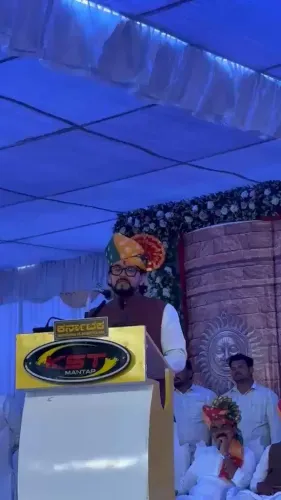
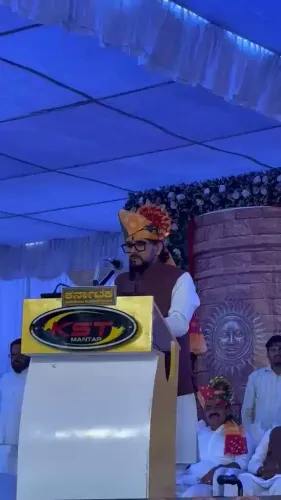
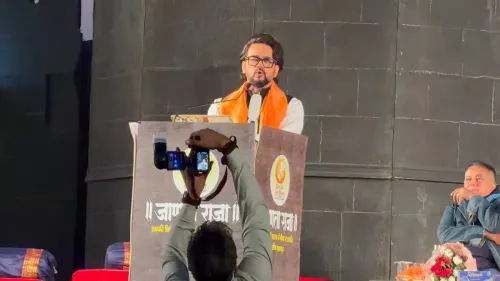
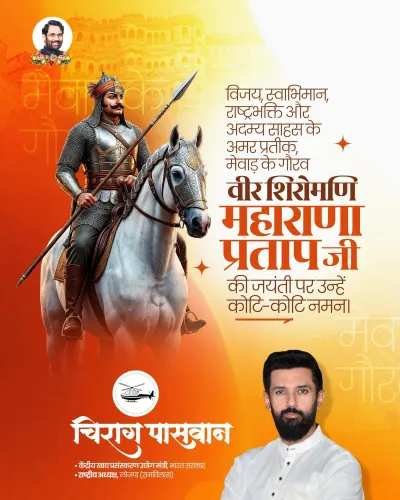
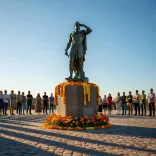
Anurag Thakur Invokes Maharana Pratap's Legacy
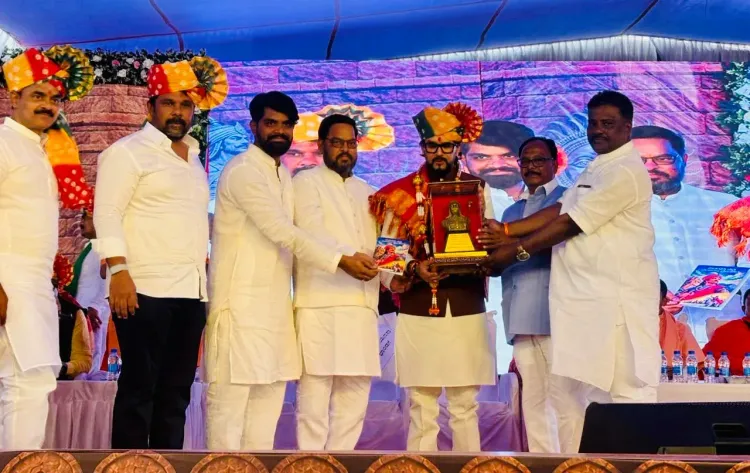
Synopsis
BJP MP Anurag Thakur paid tribute to Maharana Pratap on 15 November 2026, criticising the glorification of aggressors, asserting Rajput identity as a duty toward nation and Sanatan Dharma, and calling Pratap an eternal inspiration for patriotism.
Key Takeaways
Anurag Thakur , BJP Lok Sabha MP from Hamirpur, Himachal Pradesh , posted a tribute to Maharana Pratap on 15 November 2026 .
Thakur criticised what he called the 'glorification of aggressors' and the sidelining of Indian rulers' valour in historical narratives.
He framed Rajput identity not as a social label but as a responsibility toward community service, national defence, and Sanatan Dharma .
Maharana Pratap resisted Mughal Emperor Akbar 's authority and fought the Battle of Haldighati in 1576 — a moment that remains contested in academic and political discourse.
The post reflects a broader BJP pattern of elevating medieval Rajput resistance as a pillar of indigenous civilisational pride.
As former Union Minister of Information & Broadcasting , Thakur's framing carries institutional weight on questions of cultural narrative and historical education.
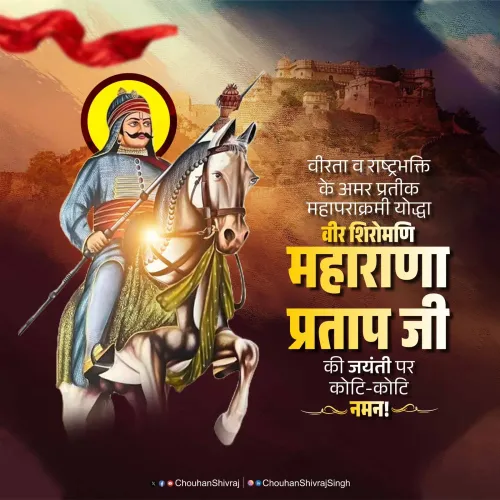
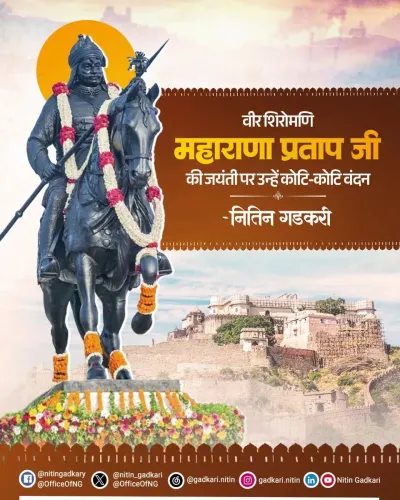
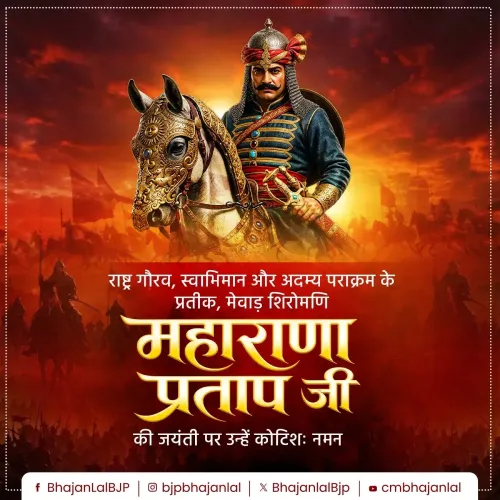
When a sitting MP invokes a 16th-century warrior-king to challenge how India writes its history, the conversation moves well beyond a social media tribute. BJP MP Anurag Thakur, posting on X on Sunday, 15 November 2026, held up Maharana Pratap as an eternal symbol of dharma, motherland, and self-respect — and used the moment to level a pointed critique at what he called the 'glorification of aggressors' at the expense of Indian rulers' valour.
Translating his post from Hindi: 'Maharana Pratap ka jeevan dharm, mathrubhoomi aur swabhimaan ki raksha ke liye kiye gaye advitiya sangharsh, tyaag aur shaurya ki amar gaatha hai' — 'The life of Maharana Pratap is an immortal saga of unparalleled struggle, sacrifice, and valour for the protection of faith, motherland, and self-respect.' He added that 'glorifying aggressors and ignoring the valour of Indian rulers is unfortunate.'
Mewar's Warrior and the Battle That History Still Debates
Maharana Pratap, the 16th-century ruler of Mewar in Rajasthan, is best remembered for refusing to submit to Mughal Emperor Akbar's authority — a defiance that culminated in the Battle of Haldighati in 1576. The battle's outcome has itself been a point of historical contest: nationalist accounts frame Pratap as undefeated in spirit, while academic historians debate the military specifics at length. That contested legacy is precisely what Thakur is wading into.
Thakur went further than a birthday tribute, weaving in a statement about Rajput identity: being Rajput, he wrote, is not merely a social label but a responsibility — toward community service, national defence, and the preservation of Sanatan Dharma. The phrasing is deliberate. It transforms a cultural commemoration into a call to active duty rooted in civilisational identity.
A Familiar BJP Narrative — and Why It Still Lands Hard
Thakur's post fits a pattern that BJP leaders have consistently amplified: reclaiming medieval Rajput resistance to Mughal expansion as a cornerstone of indigenous martial tradition and Hindu civilisational pride. The argument runs that mainstream historical education — shaped over decades — has underweighted the contributions of rulers like Pratap while giving disproportionate space to Mughal courts and their cultural achievements.
The debate is not merely academic. Textbook revisions, naming of public infrastructure, and the framing of museum exhibits have all become live political battlegrounds in recent years. Thakur, as a former Union Minister of Information & Broadcasting, has had direct institutional influence over cultural messaging — giving his words on this topic a policy resonance that outlasts any single post.
What the Rajput Community and Historians Will Watch
For the Rajput community, Thakur's message is both affirmation and mobilisation — an acknowledgment from a senior BJP figure that their ancestral narratives deserve a more prominent place in the national story. For historians and educators, it reopens questions about balance: how much weight should resistance heroes receive relative to the administrative, artistic, and economic record of the Mughal era?
Maharana Pratap's legacy, Thakur concluded, 'will continue to inspire coming generations toward patriotism and firm resolve.' That closing line is less a tribute than a promise — a signal that this particular chapter of India's historical reckoning is far from closed.
Point of View
Challenge an established historiographical consensus, and signal a BJP cultural agenda. The critique of 'glorifying aggressors' is a coded but unmistakable reference to what many on the Hindu right see as Mughal-centric school history. Coming from a former Information & Broadcasting Minister, it carries credibility beyond a backbench tribute. As India's curriculum debates intensify, posts like this function as soft-power signals to the Rajput community ahead of election cycles — combining identity assertion with a demand for narrative justice that resonates far beyond Hamirpur.
NationPress
15 Nov 2026
Frequently Asked Questions
Who was Maharana Pratap and why is he important in Indian history?
Maharana Pratap was the 16th-century ruler of Mewar in Rajasthan who refused to submit to Mughal Emperor Akbar and fought the Battle of Haldighati in 1576 . He is celebrated as a symbol of resistance, self-respect, and unwavering devotion to his motherland.
What did Anurag Thakur say about Maharana Pratap?
Thakur described Pratap's life as an 'immortal saga of unparalleled struggle, sacrifice, and valour,' and criticised the glorification of aggressors while ignoring Indian rulers' bravery. He also said Rajput identity carries a duty of community service, national defence, and preservation of Sanatan Dharma.
Why do BJP leaders frequently invoke Maharana Pratap?
BJP leaders regularly highlight medieval Rajput resistance to Mughal expansion as part of a broader emphasis on indigenous martial traditions and Hindu civilisational heritage, often in the context of debates over how Indian history is taught in schools and commemorated publicly.
What was the Battle of Haldighati?
The Battle of Haldighati was fought in 1576 between forces loyal to Maharana Pratap of Mewar and the Mughal army under Emperor Akbar . It remains one of the most debated battles in Indian history, with nationalist accounts emphasising Pratap's indomitable spirit of resistance.
What is Anurag Thakur's background and political role?
Anurag Thakur is a BJP Lok Sabha MP from Hamirpur, Himachal Pradesh and a former Union Minister who held the portfolios of Information & Broadcasting and Youth Affairs & Sports , giving him significant influence over India's cultural and media landscape.