India, Egypt to explore FTA or preferential trade pact: Piyush Goyal
Synopsis
India and Egypt are moving toward a formal trade pact — either a Preferential Trade Agreement or a full FTA — with Commerce Minister Piyush Goyal announcing in Cairo that both sides will now define Terms of Reference. With 700-plus Indian companies already in Egypt and ₹1,200 crore in fresh investment confirmed just the day before, the bilateral relationship is shifting from goodwill to hard architecture.
Key Takeaways
Commerce Minister Piyush Goyal announced in Cairo on 15 November 2026 that India and Egypt will work on a Preferential Trade Agreement (PTA) or Free Trade Agreement (FTA) .
Over 700 registered Indian companies currently operate in Egypt, reflecting deep bilateral business ties.
More than 300 companies from both nations participated in the India-Egypt Business Forum Meeting .
An Indian company confirmed an investment of approximately ₹1,200 crore in an international seed company with Egypt manufacturing operations.
Goyal met Egypt's Dr.
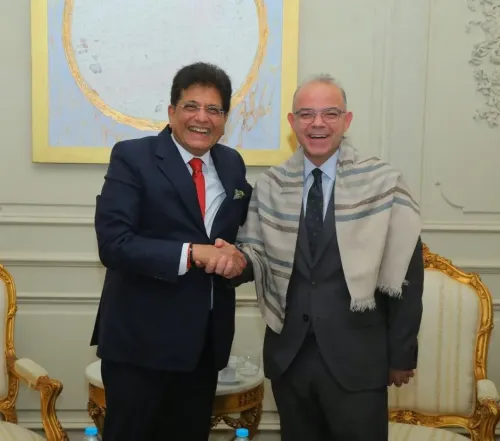
Mohamed Farid Saleh , Minister of Investment and Foreign Trade, to discuss expanding trade and investment cooperation.
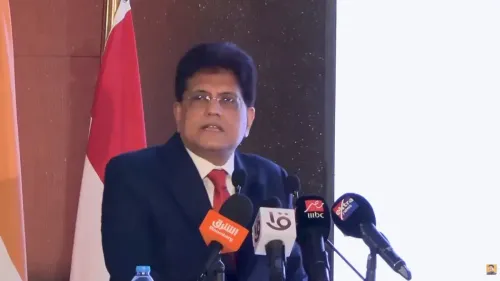
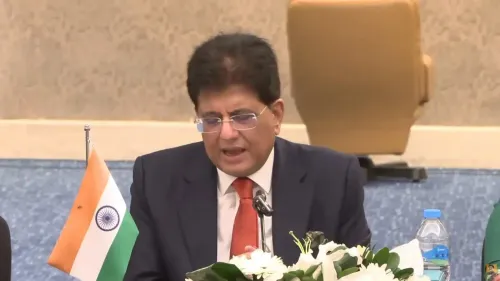
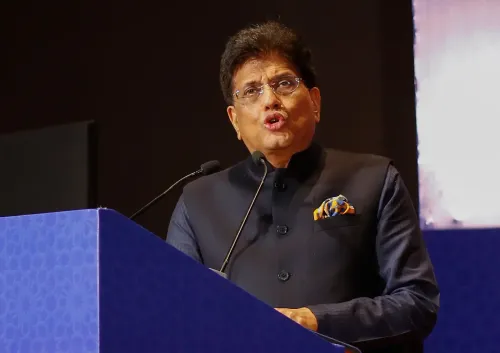
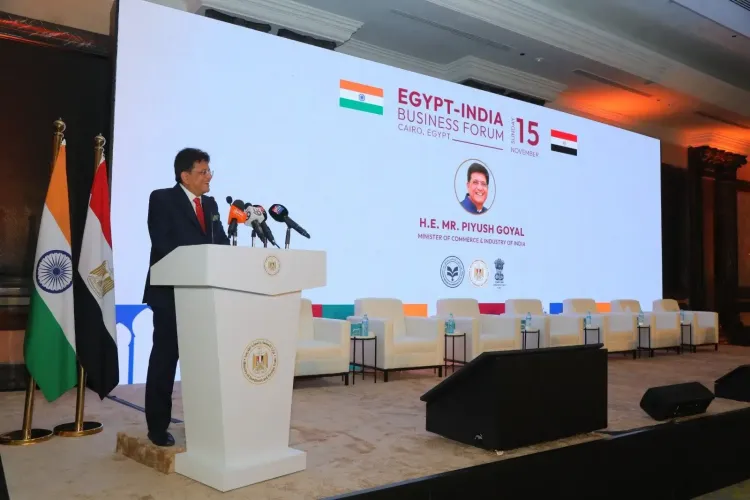
Commerce and Industry Minister Piyush Goyal on Sunday, 15 November 2026, announced that India and Egypt will work on a Terms of Reference to examine the potential of either a Preferential Trade Agreement (PTA) or a full Free Trade Agreement (FTA), signalling a significant step forward in bilateral economic ties. The announcement came from Cairo, on the sidelines of the India-Egypt Business Forum Meeting.
Key Developments
Goyal highlighted that over 700 registered Indian companies currently operate in Egypt, underscoring the growing depth of business engagement between the two nations. More than 300 companies from India and Egypt, spanning multiple sectors, converged under one roof at the Business Forum, which Goyal described as a reflection of 'the enthusiasm for the possibilities and the potential that our partnership can unlock.'
The minister also noted that an Indian company had, just a day earlier, confirmed an investment of approximately ₹1,200 crore into an international seed company with manufacturing operations in Egypt — a concrete example of the bilateral investment momentum already underway.
What the Ministers Discussed
Goyal held discussions with Dr. Mohamed Farid Saleh, Egypt's Minister of Investment and Foreign Trade, covering the expansion of bilateral trade, boosting investments, and identifying new avenues of cooperation. The two ministers also jointly addressed the India-Egypt Joint Business Council Meeting.
Goyal emphasised 'the strong complementarities between our two economies and the significant potential for greater private sector participation,' calling upon businesses from both sides to deepen existing partnerships and explore new collaboration in manufacturing, pharmaceuticals, engineering, textiles, and technology solutions.
Why This Partnership Matters
India's large-scale consumer market and manufacturing capacity are seen as natural complements to Egypt's strategic geographic location — a gateway bridging Africa, the Middle East, and Europe. Goyal noted that both civilisations share millennia-old histories, and that alongside cultural proximity, trade and industrial ties are now being actively strengthened.
This comes amid India's broader push to diversify and deepen its trade architecture with non-traditional partners across Africa and West Asia, as it seeks to reduce dependence on any single trading bloc.
What Happens Next
The two sides will now proceed to define the Terms of Reference, which will determine the scope and depth of a prospective trade agreement. Whether it takes the form of a lighter PTA — covering select goods with tariff preferences — or a comprehensive FTA will depend on the feasibility study. Sectors including immense opportunities in trade and investment are expected to come into focus over the next five years, according to Goyal.
Point of View
US, and China — but the devil is in the sequencing. A PTA is far easier to close than a full FTA, and the choice between the two will reveal how ambitious both sides genuinely are. With 700-plus Indian companies already in Egypt, the business case is established; what has lagged is formal trade architecture to protect and scale those investments. Notably, India's FTA track record in recent years has been mixed — agreements with the UAE and Australia moved quickly, while others stalled for years. The Terms of Reference phase will be the first real test of political will on both sides.
NationPress
15 Nov 2026
Frequently Asked Questions
What trade agreement are India and Egypt exploring?
India and Egypt are examining either a Preferential Trade Agreement (PTA) or a full Free Trade Agreement (FTA). Commerce Minister Piyush Goyal announced in Cairo on 15 November 2026 that both sides will first work on Terms of Reference to determine the scope and feasibility of such a pact.
Why is an India-Egypt trade agreement significant?
India and Egypt bring complementary strengths — India's large consumer market and manufacturing scale, and Egypt's strategic location bridging Africa, the Middle East, and Europe. With over 700 Indian companies already operating in Egypt, a formal trade pact could significantly scale bilateral commerce across sectors like pharmaceuticals, engineering, and textiles.
What is the current state of Indian investment in Egypt?
Over 700 registered Indian companies operate in Egypt across multiple sectors. Just ahead of the Business Forum, an Indian firm confirmed an investment of approximately ₹1,200 crore in an international seed company with manufacturing in Egypt, illustrating the growing investment momentum.
Who did Piyush Goyal meet in Cairo?
Goyal met Dr. Mohamed Farid Saleh, Egypt's Minister of Investment and Foreign Trade, to discuss expanding bilateral trade, boosting investments, and identifying new cooperation avenues. The two ministers also jointly addressed the India-Egypt Joint Business Council Meeting.
What sectors could benefit from an India-Egypt trade deal?
Goyal specifically highlighted manufacturing, pharmaceuticals, engineering, textiles, education, healthcare, and technology solutions as key areas of potential collaboration. India's consumer market scale and Egypt's geographic positioning are seen as mutually reinforcing advantages across these sectors.