India to get preferential US market access under trade pact: Piyush Goyal
Synopsis
Commerce Minister Piyush Goyal confirmed from Cairo that India has secured a leadership-level assurance of preferential US market access — lower duties than rival exporters — under the proposed bilateral trade agreement. With the first tranche deadline set for this financial year-end and the US Supreme Court having struck down Trump's reciprocal tariffs, the legal ground is shifting just as India needs it to hold firm.
Key Takeaways
Commerce Minister Piyush Goyal confirmed on 15 November 2026 that India will receive preferential US market access under the proposed bilateral trade agreement (BTA) .
The assurance — lower duties for Indian goods than for competitor countries — was reportedly agreed at the Modi-Trump leadership level.
The first phase framework was finalised in February ; signing has been delayed amid ongoing negotiations.
Both sides are targeting conclusion of the first tranche by the end of the current financial year.
The US Supreme Court struck down Trump's reciprocal tariffs, complicating the legal basis for earlier discussions and prompting the US to explore new tariff mechanisms under the Trade Act .
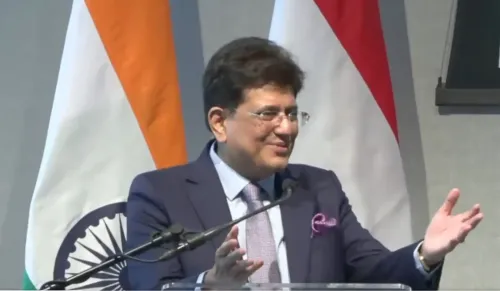
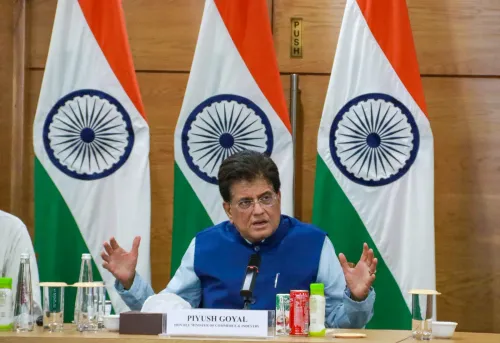
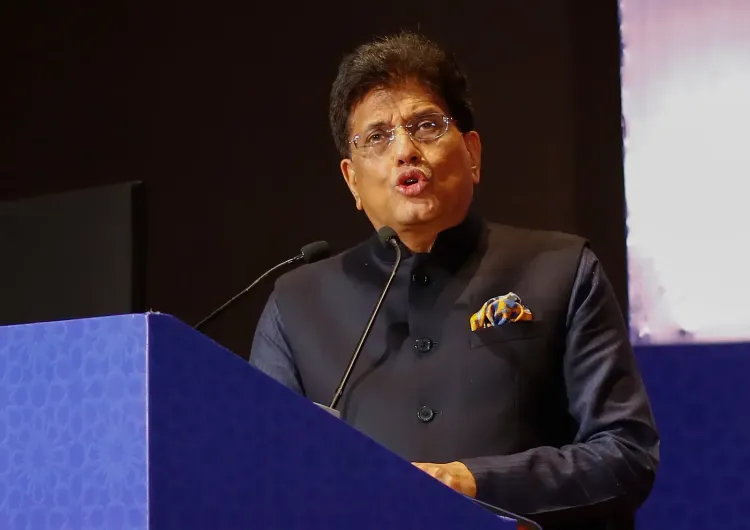
Commerce and Industry Minister Piyush Goyal on Sunday, 15 November 2026 said India has secured a firm assurance from the United States that Indian goods will receive preferential market access in the American market — with lower duties than competing nations — under the proposed bilateral trade agreement (BTA). Goyal made the remarks while speaking to reporters during a two-day visit to Cairo, Egypt, where he is engaged in separate trade and investment discussions.
What Goyal Said
The minister confirmed that the understanding on preferential access was reached at the highest political level. 'This was already agreed between the leaders — President Trump and Prime Minister Narendra Modi when they announced that we have both come to a broad framework agreement a few months ago, and it has been acknowledged that India will get preferential trade access in the US with lower duties than our competitor countries,' Goyal said.
The remarks follow a senior government official's statement earlier this week in which Washington reportedly assured New Delhi of a comparative tariff advantage over rival exporters under the proposed pact.
State of the Negotiations
India and the US finalised the framework for the first phase of the bilateral trade agreement in February, with both sides targeting deeper economic engagement and expanded market access. However, the signing of the initial tranche has been delayed as negotiations continue amid a shifting US tariff landscape.
The two sides are currently working to conclude the first tranche of the pact by the end of the current financial year. According to official statements, discussions are progressing on both the first tranche and the broader BTA, though the final extent of tariff concessions will depend on the framework eventually agreed upon.
US Supreme Court Ruling Complicates Talks
Negotiations have grown more complex after the US Supreme Court struck down the Trump administration's reciprocal tariffs, which had formed the basis of earlier trade discussions. Following the ruling, Washington has been exploring alternative mechanisms under provisions of the Trade Act to construct a new tariff architecture — a development that has added uncertainty to the timeline for concluding the BTA.
Notably, this restructuring means the preferential access India was counting on may need to be re-anchored within a new legal framework, making the final terms harder to lock in quickly.
India's Broader Trade Push
Goyal's Cairo visit is part of India's wider diplomatic trade offensive, with the country simultaneously pursuing agreements with several key partners beyond the US. India-Egypt bilateral trade and investment ties are on the minister's agenda during the visit.
With the financial year deadline now firmly in view, the pace of India-US negotiations is expected to accelerate, even as the legal and policy ground in Washington continues to shift.
Point of View
But it rests on a framework whose legal scaffolding has since been knocked down by the US Supreme Court. The reciprocal tariff architecture that underpinned the original Modi-Trump understanding no longer exists as written law, meaning any preferential margin for India must now be rebuilt within a new, untested mechanism under the Trade Act. That is a significant variable. Meanwhile, 'lower duties than competitor countries' is a relative promise — its worth depends entirely on what those competitors are charged, a number that is not yet set. Calling this a done deal overstates where things stand; calling it meaningless understates real diplomatic progress. The honest read is: directionally positive, legally unresolved.
NationPress
15 Nov 2026
Frequently Asked Questions
What preferential access has India secured in the US market?
India has received an assurance that Indian goods will attract lower import duties in the US than those levied on goods from competing countries under the proposed bilateral trade agreement. Commerce Minister Piyush Goyal confirmed this on 15 November 2026, citing an understanding reached between Prime Minister Narendra Modi and US President Donald Trump.
What is the current status of the India-US bilateral trade agreement?
The two countries finalised the framework for the first phase of the BTA in February 2026 but have not yet signed it. Negotiations are ongoing, with both sides targeting completion of the first tranche by the end of the current financial year.
Why have India-US trade negotiations been delayed?
Signing of the initial tranche has been delayed by continuing negotiations and a shifting US tariff environment. Complicating matters further, the US Supreme Court struck down the Trump administration's reciprocal tariffs, forcing Washington to seek alternative mechanisms under the Trade Act.
How does the US Supreme Court ruling affect India?
The court's decision to strike down the reciprocal tariff framework removes the legal basis on which earlier India-US trade discussions were structured. The US is now working on a new tariff architecture, which could alter the specific terms and timeline of any preferential access India receives.
Why is Piyush Goyal in Egypt?
Goyal is on a two-day visit to Cairo to hold discussions aimed at enhancing India-Egypt bilateral trade and investment ties. The visit is part of India's broader diplomatic push to advance trade negotiations with multiple partners simultaneously.