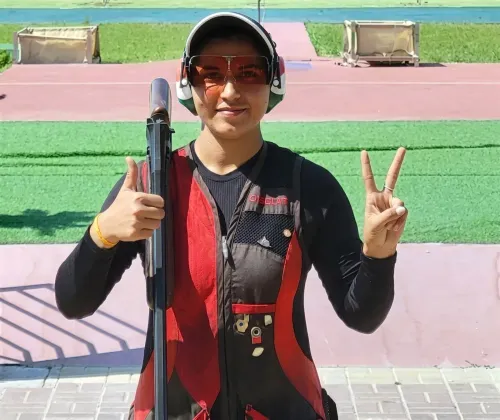
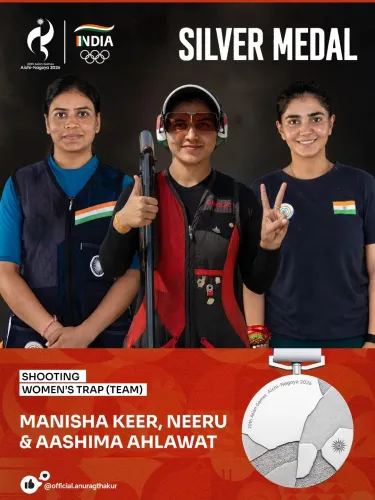
Anurag Thakur Meets Army Shooter Neeru Dhanda, Hails 3 Asian Games Medals
Synopsis
BJP MP Anurag Thakur personally met Indian Army Naib Subedar Neeru Dhanda on October 16, 2026, congratulating her on a historic three-medal haul — including two gold — in trap shooting at Asian Games 2026 in Aichi-Nagoya, Japan.
Key Takeaways
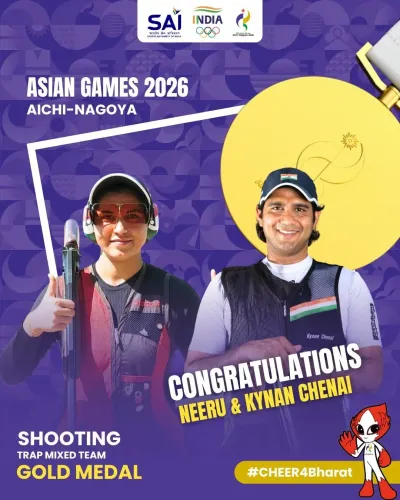
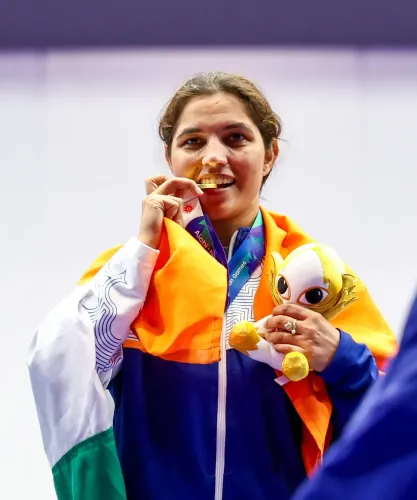
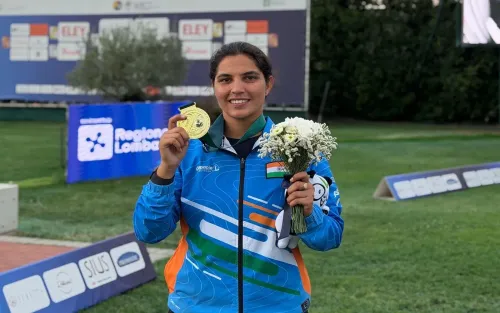
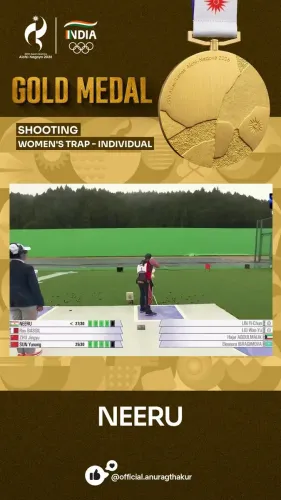
Neeru Dhanda , a Naib Subedar in the Indian Army , won three medals including two gold in trap shooting at Asian Games 2026 in Aichi-Nagoya, Japan .
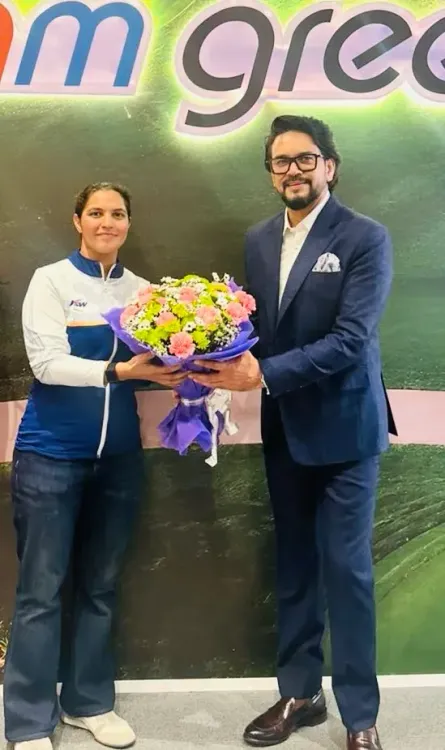
BJP MP Anurag Thakur met Dhanda in person on October 16, 2026 , and shared photographs of the meeting on X.
Thakur described her journey as 'overcoming challenges to rewriting history' and called her achievement a source of national pride.
Thakur previously served as Union Minister of Youth Affairs and Sports from 2021 , giving him a close professional association with elite athlete development.
Indian Army personnel have historically been among India's most decorated shooting athletes at international multi-sport events.
Three medals. Two gold. One soldier. Neeru Dhanda, a Naib Subedar in the Indian Army, returned from the Asian Games 2026 in Aichi-Nagoya, Japan, with a historic haul in trap shooting — and on Friday, October 16, BJP MP Anurag Thakur met her in person to offer his congratulations, calling her achievement one that has 'filled the entire nation with pride.'
Two Golds and a Historic Trap Shooting Performance
Dhanda's three-medal tally — including two gold medals in trap shooting — marks a landmark moment for Indian shooting sports at the Asian Games. Trap shooting demands extraordinary composure: a shooter tracking and hitting clay targets launched at high speed across unpredictable angles. To win twice at that level, on an Asian stage, wearing an Indian Army uniform, is the kind of performance that redefines what is possible.
The Indian Army has long been a nursery for elite shooters, providing discipline, infrastructure, and competitive exposure that few civilian programmes can match. Dhanda's rise through the ranks — as a Naib Subedar, a junior commissioned officer — adds a layer of institutional pride to a deeply personal sporting achievement.
Thakur's Personal Meeting — and Why It Matters
Thakur did not merely post a congratulatory tweet — he met Dhanda face to face, posting photographs of the encounter. As a former Union Minister of Youth Affairs and Sports (2021 onwards), Thakur spent years overseeing athlete support schemes and building the ecosystem for Olympic and Asian Games preparation. His engagement with Dhanda reflects a continued personal investment in elite sport even after leaving the ministry.
Calling her journey one of 'overcoming challenges to rewriting history,' Thakur framed her achievement within the larger story of Indian athletes who fight structural and logistical odds to reach the podium. He closed with a pointed exhortation: 'Keep making India proud.'
Shooting, the Army, and India's Podium Ambitions
India's shooting contingent has consistently punched above its weight at major multi-sport events, and armed forces athletes have been a reliable source of medals. The spotlight now shifts to whether Dhanda's success translates into increased institutional support — better training grants, foreign exposure camps, or elite coaching tie-ups — for trap and skeet shooters who remain less visible than their rifle and pistol counterparts.
One soldier, three medals, and a post that landed on a Friday evening. The question now is what follows the applause.
Point of View
A narrative the BJP has consistently cultivated. As a former sports minister, Thakur's personal engagement also signals ongoing proximity to the athlete-support ecosystem even out of office. Dhanda's two gold medals in trap shooting, a discipline with limited mainstream visibility, may now attract the policy attention and funding that rifle and pistol shooting have long commanded. The broader arc here is India's push to diversify its shooting medal base ahead of the next Olympic cycle.
NationPress
16 Oct 2026
Frequently Asked Questions
Who is Neeru Dhanda?
Neeru Dhanda is a Naib Subedar in the Indian Army and a competitive trap shooter who won three medals, including two gold , at the Asian Games 2026 in Aichi-Nagoya, Japan.
What did Neeru Dhanda win at Asian Games 2026?
According to BJP MP Anurag Thakur's post, Neeru Dhanda won three medals including two gold medals in trap shooting at the Asian Games 2026 held in Aichi-Nagoya, Japan.
Why did Anurag Thakur meet Neeru Dhanda?
Anurag Thakur met Neeru Dhanda to personally congratulate her on her historic three-medal performance at Asian Games 2026, sharing photographs of the meeting on X on October 16, 2026.
What is trap shooting?
Trap shooting is an Olympic and Asian Games discipline where competitors use a shotgun to hit clay targets launched at high speed from a trap machine at varying angles, requiring exceptional reflexes and composure.
What is Anurag Thakur's connection to Indian sports?
Anurag Thakur served as Union Minister of Youth Affairs and Sports from 2021 , overseeing athlete support schemes and India's preparations for major international competitions including the Asian Games and Olympics.