Anurag Thakur Pays Tribute to Guru Ravidas, Cites BJP's Equality Pledge
Synopsis
BJP MP Anurag Thakur marked Guru Ravidas's legacy on 2 August 2026, quoting the 15th-century Bhakti saint's verse on equality and framing the BJP's social justice agenda as a continuation of that centuries-old vision of dignity and harmony for all.
Key Takeaways
BJP MP Anurag Thakur posted a tribute to Guru Ravidas Ji on 2 August 2026 , opening with a verse by the saint.
Guru Ravidas was a 15th–16th century Bhakti movement saint-poet from the Chamar community who advocated social equality and rejection of caste hierarchy.
Thakur cited the saint's four core values: equality, social harmony, service, and humanity as 'relevant for all of us even today.' He explicitly linked BJP's ideology to Ravidas's vision, calling it 'a resolve to advance the broader welfare of society' — not merely symbolic words.
Article 17 of the Constitution (1950) abolished untouchability, providing a constitutional parallel to Ravidas's spiritual message of dignity for all.
BJP leaders have consistently invoked Bhakti saints in outreach to Scheduled Caste and Dalit communities since at least the 2010s.
A verse composed six centuries ago — 'ऐसा चाहूं राज मैं, जहां मिले सबन को अन्न' ('I desire a kingdom where all receive food, where the small and great live as equals') — opened a tribute post by BJP MP Anurag Thakur on Sunday, 2 August 2026, marking the enduring relevance of Sant Shiromani Guru Ravidas Ji and linking the Bhakti saint's vision to his party's social agenda.
Ravidas's Vision: Equality Before the Constitution
Guru Ravidas, the 15th–16th century saint-poet born into the Chamar community, built a body of verse that cut through the caste hierarchies of his era with a simple, radical demand: dignity and equal opportunity for every person, regardless of birth. His compositions, part of the Bhakti movement's broader democratising impulse, were addressed not to kings or priests but to ordinary people locked out of social standing.
Thakur's post quoted him directly — 'छोट-बड़ो सब सम बसे, रविदास रहे प्रसन्न' ('Where the small and great live as equals, Ravidas remains pleased') — before invoking the saint's lifelong effort to build a society free of caste discrimination and social hierarchy. The message of samata (equality), samrasta (social harmony), seva (service), and manavata (humanity), Thakur wrote, 'remains relevant for all of us even today.'
BJP's Recurring Outreach to Bhakti Saint Legacy
This is not a one-off gesture. Senior BJP figures have consistently invoked Guru Ravidas and other Bhakti-era saints as ideological touchstones since at least the 2010s — framing the party's social harmony agenda as a continuation of a centuries-old tradition rather than a modern political construct. The approach positions the BJP against what it characterises as caste-centric mobilisation by rival groups, instead anchoring equality in a shared spiritual heritage.
Thakur made the linkage explicit: 'For the BJP, the thoughts of Sant Ravidas Ji and respect for him are not merely words, but a resolve to advance the broader welfare of society.' He added that the BJP government honours that legacy by carrying forward 'the resolve of equality, goodwill, and social justice.'
Constitutional Roots of the Pledge
The ideals Thakur invoked have a constitutional anchor: Article 17 of the Constitution of India, effective 26 January 1950, abolished untouchability and mandated equality before the law — a legal codification of precisely the social vision Guru Ravidas articulated through verse half a millennium earlier. The overlap between Bhakti philosophy and constitutional values is a recurring theme in BJP outreach to Scheduled Caste and Dalit communities.
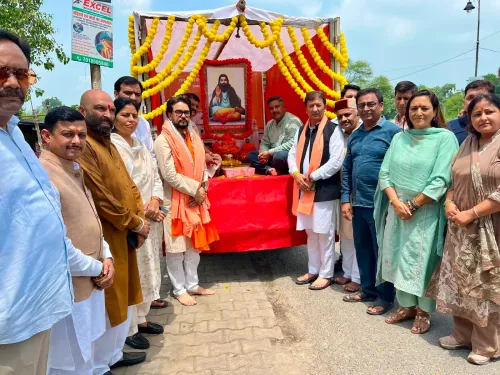
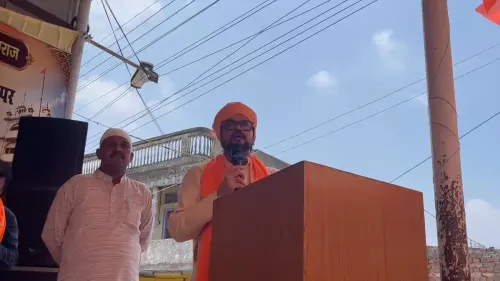
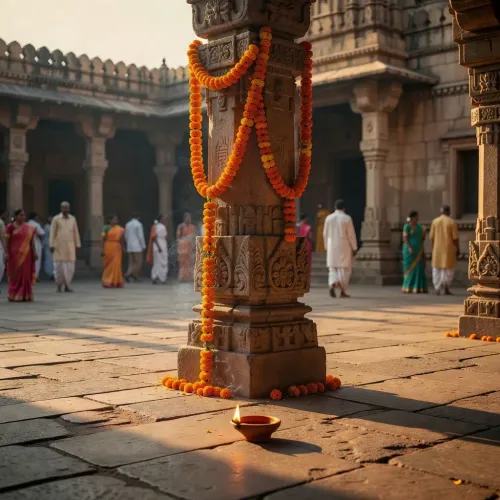
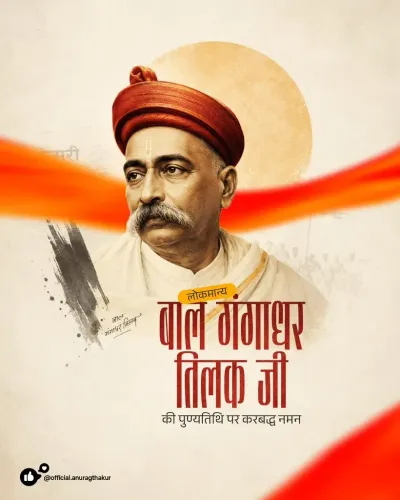
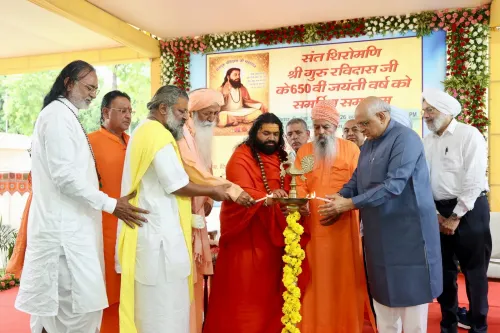
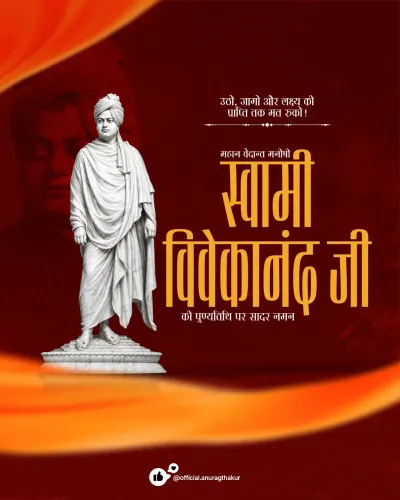
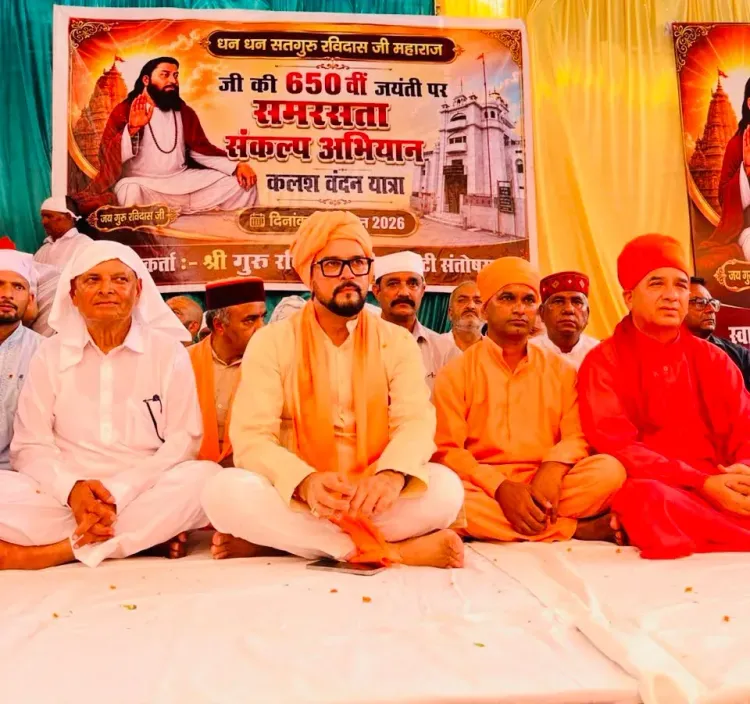
The tribute was accompanied by four images, reinforcing the ceremonial and devotional register of the post.
Guru Ravidas desired a world where no one goes hungry and no one is ranked above another. That aspiration — saint-sung in the 15th century, constitutionally guaranteed in the 20th — is the standard against which every government's social record is ultimately measured.
Point of View
The message carries devotional authenticity that a policy statement alone cannot. The explicit assertion that Ravidas's ideals are 'not merely words' but a 'resolve' signals awareness of the credibility gap between tribute rhetoric and on-the-ground outcomes — and is itself a political bet that the framing lands with Scheduled Caste voters. Watch whether such statements are accompanied by scheme announcements or community-facing events, which would indicate whether the outreach is purely symbolic or operationally backed.
NationPress
2 Aug 2026
Frequently Asked Questions
Who was Guru Ravidas and why is he important?
Guru Ravidas was a 15th–16th century Bhakti movement saint-poet born into the Chamar community who composed verses rejecting caste hierarchy and advocating social equality, dignity, and devotion. He is revered especially by Dalit and Scheduled Caste communities across India.
What did Anurag Thakur post about Guru Ravidas?
BJP MP Anurag Thakur posted a tribute on 2 August 2026 quoting Guru Ravidas's verse on equality, calling the saint's teachings of equality, harmony, service, and humanity relevant today, and linking the BJP's social justice agenda to Ravidas's vision.
What is the verse Anurag Thakur quoted from Guru Ravidas?
Thakur quoted: 'Aisa chahun raj main, jahan mile saban ko ann. Chhot-bado sab sam base, Ravidas rahe prasann' — meaning 'I desire a kingdom where all receive food, where the small and great live as equals, and Ravidas remains pleased.'
Why does the BJP invoke Guru Ravidas in its messaging?
BJP leaders have consistently cited Bhakti saints like Guru Ravidas since at least the 2010s to frame the party's social harmony agenda as rooted in a centuries-old spiritual tradition, particularly as outreach to Scheduled Caste and Dalit communities.
What does the Indian Constitution say about caste equality?
Article 17 of the Constitution of India, effective 26 January 1950, abolished untouchability and guaranteed equality before the law — a legal codification of the social equality that Guru Ravidas advocated through his poetry five centuries earlier.