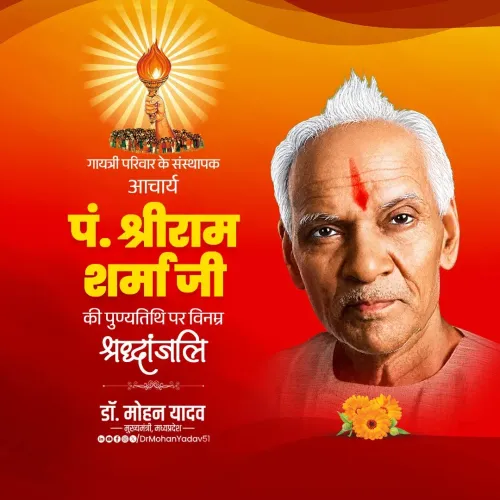
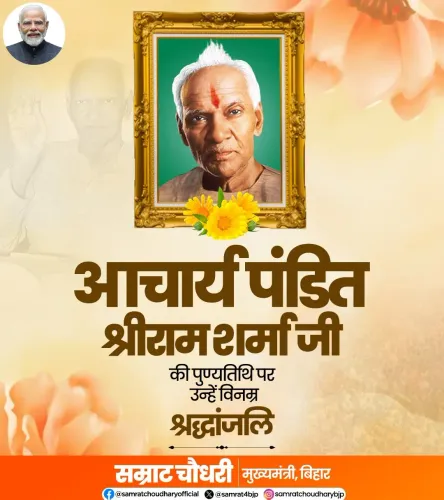
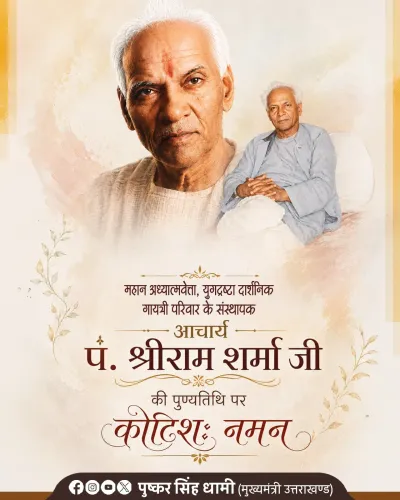
Anurag Thakur pays tribute to Pandit Shri Ram Sharma Acharya
Synopsis
BJP MP Anurag Thakur honours Pandit Shri Ram Sharma Acharya and Mata Bhagwati Devi Sharma, founders of the All World Gayatri Pariwar, praising their lifelong mission of spreading the Gayatri Mantra and eradicating social evils of caste and gender discrimination.
Key Takeaways
BJP MP Anurag Thakur posted a tribute on November 2, 2026 to Gayatri Pariwar founders Pandit Shri Ram Sharma Acharya and Mata Bhagwati Devi Sharma.
He opened with the full Sanskrit verse of the Gayatri Mantra and described both figures with honorifics including Yugarishi and Vedamurti .
Thakur highlighted their mission of spreading the Gayatri Mantra to 'lakhs of homes' across India.
He specifically quoted the movement's core slogan: 'Hum Badlenge, Yug Badlega' — 'We will change, the age will change.' The tribute praised their work against caste discrimination, gender bias, and other social evils under the banner of Sanatan service.
The Gayatri Pariwar, founded by Sharma Acharya, is one of India's largest spiritual and social-reform organisations with a global following.
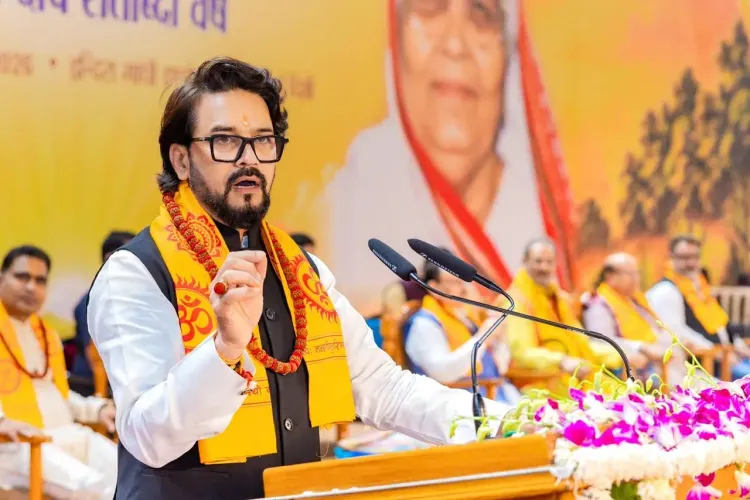
A message of the Gayatri Mantra that reached millions of homes, a mission that challenged caste and gender discrimination — BJP MP Anurag Thakur on Monday, November 2, 2026, invoked both in a heartfelt tribute to Pandit Shri Ram Sharma Acharya and Mata Bhagwati Devi Sharma, the revered spiritual pair whose lives defined sacrifice, austerity, and service to society.
Opening with the full verse of the Gayatri Mantra — 'ॐ भूर्भुवः स्वः… धियो यो नः प्रचोदयात्' — Thakur described the two spiritual figures as Gayatri Sadhak (seeker of Gayatri), freedom fighter, social reformer, Yugarishi (sage of the age), and Vedamurti (embodiment of the Vedas). He called their lives 'an inspiring example of renunciation, penance, service, and the spirit of public welfare.'
The founders of a movement that reshaped Sanatan discourse
Pandit Shri Ram Sharma Acharya was the founder of the All World Gayatri Pariwar, one of India's most expansive spiritual and social-reform organisations. Born in 1911 in Anwalkheda, Uttar Pradesh, he dedicated his life to demystifying and democratising the Gayatri Mantra — a prayer long restricted by caste norms — and making it accessible to every household regardless of birth or gender.
Mata Bhagwati Devi Sharma, his lifelong companion and collaborator, was revered as Gurumata across the movement. Her emphasis on practical service and social upliftment gave the Gayatri Pariwar its grounded, community-facing identity. Together, they built an institution that blended Vedic spirituality with a clear-eyed critique of social inequality.
'Hum Badlenge, Yug Badlega' — the mantra that outlived its author
Thakur's post specifically quoted the foundational slogan of the movement: 'हम बदलेंगे, युग बदलेगा, हम सुधरेंगे, युग सुधरेगा' — meaning, 'We will change, the age will change; we will reform, the age will reform.' The phrase encapsulates the Acharya's core belief that societal transformation begins with individual discipline, not institutional decree.
Thakur noted that the couple's contribution to Sanatan — spreading the Gayatri Mantra's message to 'lakhs of homes' while actively working to erase the 'social evils of caste, gender discrimination and more' — is 'eternal and immortal.'
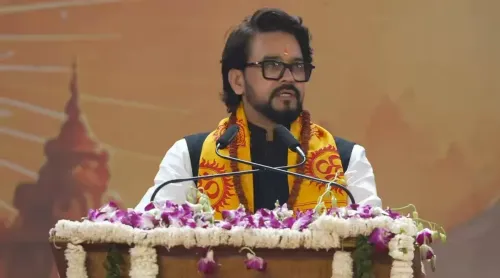
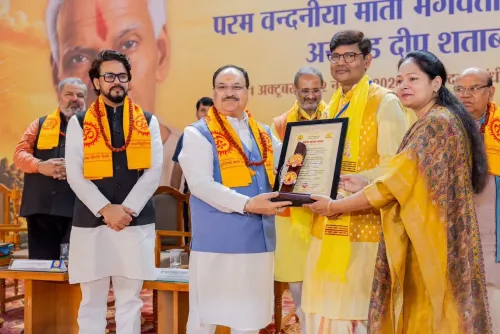
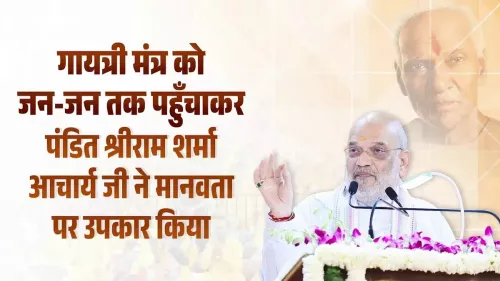
Indian political figures routinely pay homage to 20th-century spiritual reformers who straddled religious revivalism and social progress — a figure like Sharma Acharya, who participated in the freedom movement and simultaneously challenged Brahminical gatekeeping of Vedic knowledge, occupies a particularly resonant space in that tradition. Thakur's tribute, posted with four images, places him squarely within that acknowledgement.
For tens of millions affiliated with the Gayatri Pariwar across India and the diaspora, the legacy of Gurudev and Gurumata is not history — it is daily practice.
Point of View
The MP signals a strand of BJP outreach that seeks to claim the reformist legacy of 20th-century spiritual movements as continuous with its own cultural agenda. The explicit invocation of the Gayatri Mantra and the Gayatri Pariwar's mass following — spread across rural and urban India alike — suggests the tribute is as much about cultural alignment as personal reverence. Public figures across party lines pay homage to the Acharya, making this a broadly safe but strategically useful gesture in Thakur's constituency politics.
NationPress
2 Nov 2026
Frequently Asked Questions
Who is Pandit Shri Ram Sharma Acharya?
Pandit Shri Ram Sharma Acharya was a spiritual leader, freedom fighter, and social reformer born in 1911, best known as the founder of the All World Gayatri Pariwar. He dedicated his life to popularising the Gayatri Mantra across all castes and genders and advocating the eradication of social evils.
What is the All World Gayatri Pariwar?
The All World Gayatri Pariwar is one of India's largest spiritual and social-reform organisations, founded by Pandit Shri Ram Sharma Acharya. It promotes the Gayatri Mantra, Vedic values, and social upliftment, and has millions of followers in India and abroad.
Who is Mata Bhagwati Devi Sharma?
Mata Bhagwati Devi Sharma, also known as Gurumata, was the wife and spiritual collaborator of Pandit Shri Ram Sharma Acharya. She played a central role in the Gayatri Pariwar movement, focusing on service, social upliftment, and community welfare.
What does 'Hum Badlenge Yug Badlega' mean?
'Hum Badlenge, Yug Badlega, Hum Sudhreinge, Yug Sudhrega' translates to 'We will change, the age will change; we will reform, the age will reform.' It is the foundational slogan of the Gayatri Pariwar, reflecting the belief that societal transformation starts with individual self-improvement.
Why did Anurag Thakur post about Gayatri Pariwar founders?
BJP MP Anurag Thakur posted the tribute on November 2, 2026, honouring the legacy of Pandit Shri Ram Sharma Acharya and Mata Bhagwati Devi Sharma for their contributions to spreading the Gayatri Mantra and fighting caste and gender discrimination. The specific occasion was not officially confirmed.