Anurag Thakur Takes a Step Towards Swachhata
Synopsis
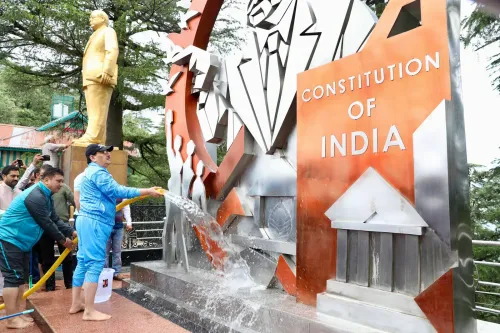
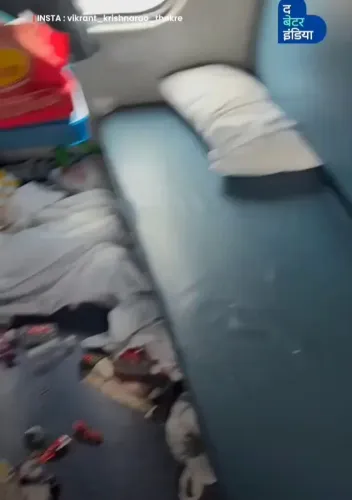
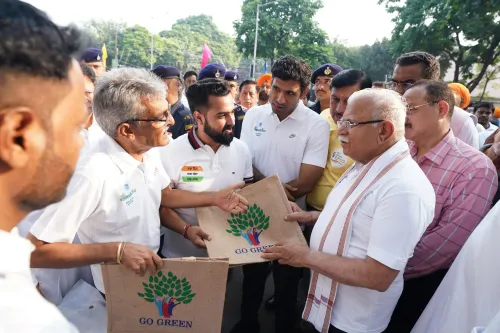
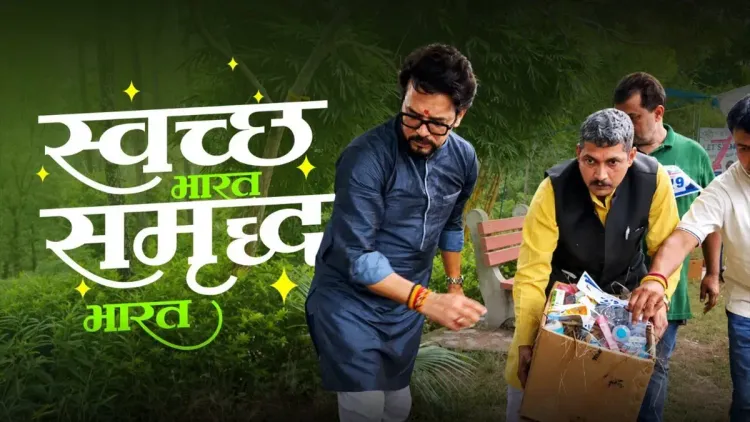
BJP MP Anurag Thakur posted a video on 2 July 2026 captioned 'One step towards cleanliness,' signalling active participation in the Swachh Bharat Mission and reinforcing the NDA government's decade-long sanitation narrative at the constituency level.
Key Takeaways
BJP MP Anurag Thakur shared a video on 2 July 2026 on X captioned 'Ek qadam swachhata ki aur…' ('One step towards cleanliness…').
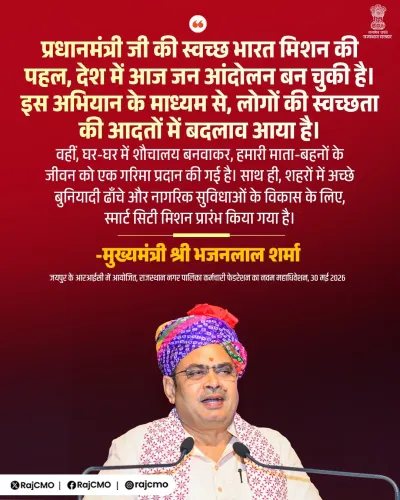
The post aligns with the Swachh Bharat Mission , launched on 2 October 2014 by the NDA government.
Thakur is a former Union Minister who held the Information and Broadcasting and Youth Affairs and Sports portfolios.
Swachh Bharat Mission-Urban 2.0 focuses on solid waste processing and city-level cleanliness rankings via the annual Swachh Survekshan .
Urban local bodies and rural households remain the primary stakeholders of the national sanitation programme.
The annual Swachh Survekshan results and any parliamentary updates on mission funding are the next key milestones to watch.
BJP MP Anurag Thakur, representing Hamirpur, Himachal Pradesh, on Thursday, 2 July 2026, shared a video on X underlining his personal participation in cleanliness efforts, captioning it 'Ek qadam swachhata ki aur…' ('One step towards cleanliness…').
Context
The post, brief in text but accompanied by a video, signals Thakur's active alignment with the Swachh Bharat Mission, the flagship national sanitation programme that has remained central to the BJP-led NDA government's governance identity since its launch on 2 October 2014. The phrase 'one step towards cleanliness' echoes the participatory language that has defined the mission's public communication for over a decade.
Thakur, a former Union Minister who has held portfolios including Information and Broadcasting and Youth Affairs and Sports, continues to engage with flagship government schemes as a sitting Lok Sabha MP, using social media to signal constituency-level and national outreach.
Policy Backdrop
The Swachh Bharat Abhiyan was launched on 2 October 2014 — the birth anniversary of Mahatma Gandhi — with the twin goals of achieving universal sanitation coverage and driving a behavioural shift around cleanliness across urban and rural India. Since then, the mission has expanded into subsequent phases, with Swachh Bharat Mission-Urban 2.0 placing renewed emphasis on solid waste processing, wastewater management, and city-level cleanliness rankings through the annual Swachh Survekshan.
Posts of this nature from senior BJP leaders reflect the party's sustained effort to keep the Swachh Bharat narrative alive at the grassroots, reinforcing the idea that sanitation is not merely a government programme but a civic responsibility embraced at every level of public life.
Stakeholders and Impact
Urban local bodies and rural households remain the primary stakeholders of the Swachh Bharat ecosystem, with city rankings under the Swachh Survekshan creating competitive incentives for municipalities to improve waste management and open spaces. When elected representatives publicly associate themselves with cleanliness drives, it is intended to reinforce community participation and sustain momentum between formal programme cycles.
For Hamirpur and Himachal Pradesh more broadly, visible engagement by a sitting MP with the cleanliness mission can translate into heightened local awareness and, potentially, stronger performance in state-level sanitation assessments.
What's Next
Attention will now turn to the release of the annual Swachh Survekshan results, which rank cities on cleanliness and sanitation parameters and serve as a key accountability benchmark for urban local bodies. Any parliamentary updates on funding allocations or revised targets under Swachh Bharat Mission-Urban 2.0 will also be closely watched by civic administrators and policy observers as the mission continues into its next phase.
Point of View
Especially between formal government announcements. As a former cabinet minister now operating as a Lok Sabha MP, his continued association with flagship schemes signals an effort to maintain political relevance on governance themes. The post also arrives at a moment when Swachh Bharat Mission-Urban 2.0 is in an active implementation phase, making such outreach useful for sustaining public engagement. Cumulatively, these individual acts of visible participation by senior leaders serve to reinforce the mission's identity as a mass movement rather than a bureaucratic programme.
NationPress
1 Oct 2026
Frequently Asked Questions
What did Anurag Thakur post on 2 July 2026?
Anurag Thakur posted a video on X on 2 July 2026 with the caption 'Ek qadam swachhata ki aur…' meaning 'One step towards cleanliness,' indicating his participation in a sanitation or cleanliness activity linked to the Swachh Bharat Mission.
What is the Swachh Bharat Mission?
The Swachh Bharat Mission is a national sanitation and cleanliness programme launched by the Government of India on 2 October 2014, covering both urban and rural areas with goals including solid waste management, open defecation free status, and behavioural change around hygiene.
Who is Anurag Thakur?
Anurag Thakur is a BJP Lok Sabha MP from Hamirpur, Himachal Pradesh. He previously served as Union Minister of Information and Broadcasting and Union Minister of Youth Affairs and Sports under the NDA government.
What is Swachh Survekshan?
Swachh Survekshan is an annual survey conducted by the central government to rank Indian cities on cleanliness and sanitation parameters, creating a competitive framework that incentivises urban local bodies to improve waste management and public hygiene.
What is Swachh Bharat Mission-Urban 2.0?
Swachh Bharat Mission-Urban 2.0 is the second phase of the urban cleanliness programme, focusing on complete liquid and solid waste management, making cities 'garbage free,' and sustaining open defecation free status across all urban local bodies.