CM Bhajanlal backs Swachh Bharat as a people's movement
Synopsis
The Chief Minister's Office of Rajasthan praised PM Modi's Swachh Bharat Mission on 1 June 2026, calling it a nationwide people's movement that has durably changed citizens' sanitation habits, under the hashtag 'Our Leading Rajasthan'.
Key Takeaways
The Chief Minister's Office of Rajasthan posted on 1 June 2026 praising Swachh Bharat Mission as a mass public movement.
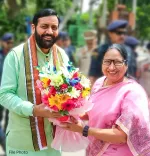
Chief Minister Bhajanlal Sharma was tagged in the post, signalling his personal endorsement of the central scheme.
Swachh Bharat Mission was launched by PM Narendra Modi on 2 October 2014 to eliminate open defecation and improve sanitation nationwide.
The post emphasised behaviour change in citizens' cleanliness habits as a key outcome of the mission.
The hashtag #आपणो_अग्रणी_राजस्थान ('Our Leading Rajasthan') frames the state's participation within a broader brand of progressive governance.
Rajasthan is aligning its urban and rural bodies with Swachh Bharat Mission Phase 2 targets on ODF status and solid waste management.
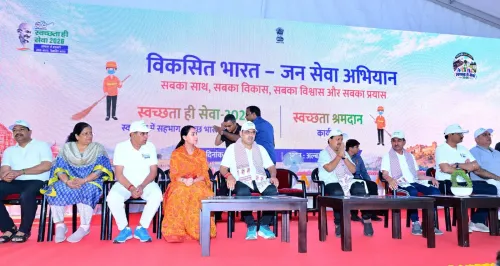
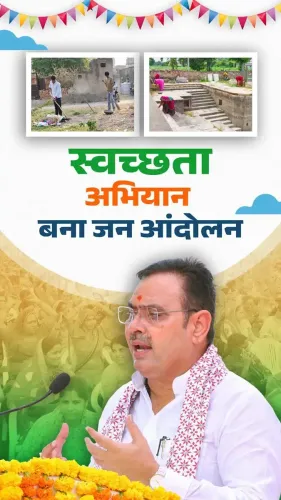
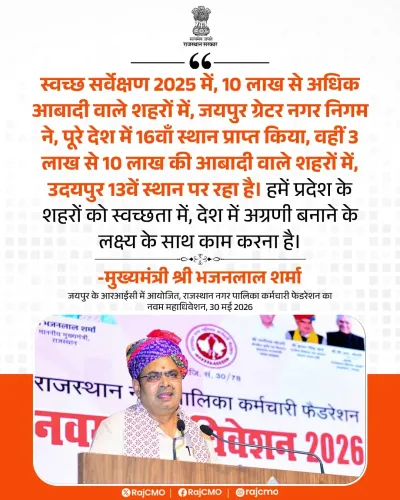
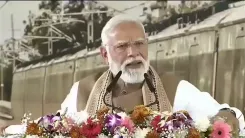
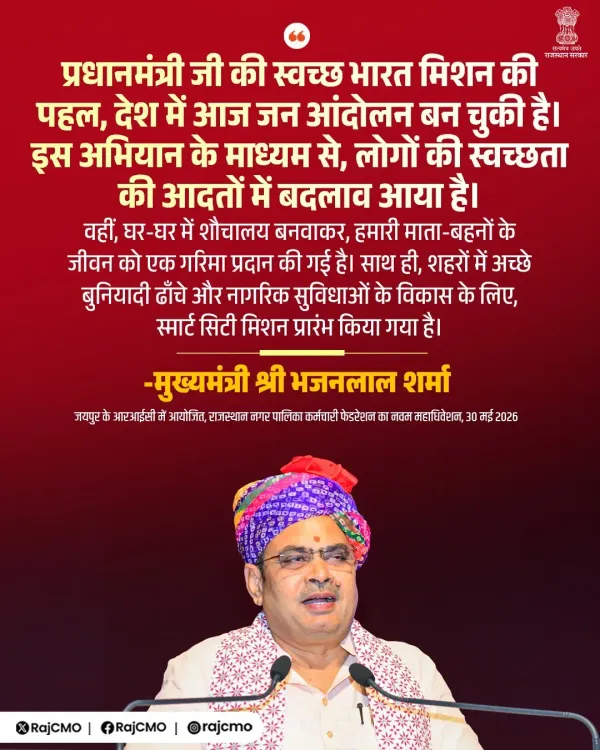
The Chief Minister's Office of Rajasthan on Sunday, 1 June 2026 credited Prime Minister Narendra Modi's Swachh Bharat Mission with transforming cleanliness from a government programme into a mass public movement, citing visible shifts in the sanitation habits of citizens across the country.
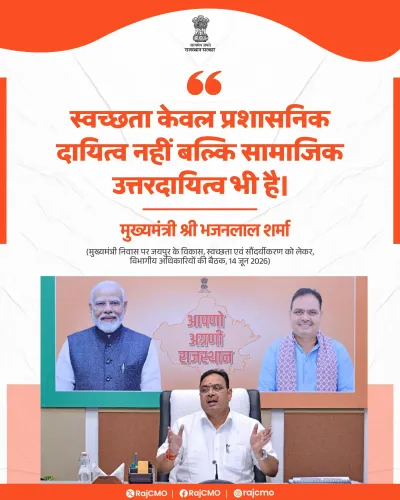
Posting on behalf of Chief Minister Bhajanlal Sharma, the official handle wrote in Hindi: 'प्रधानमंत्री जी की स्वच्छ भारत मिशन की पहल, देश में आज जन आंदोलन बन चुकी है' ('Prime Minister's Swachh Bharat Mission initiative has today become a people's movement in the country'). The post added that the campaign has brought about a change in people's cleanliness habits, tagging it under the hashtag #आपणो_अग्रणी_राजस्थान ('Our Leading Rajasthan').
Context
Swachh Bharat Mission was launched by Prime Minister Modi on 2 October 2014 — the 150th birth anniversary of Mahatma Gandhi — with the stated goal of achieving universal sanitation coverage by 2019. The programme targeted the elimination of open defecation, construction of household toilets, and improvement of solid waste management in both rural and urban areas. Over the years, the mission has been officially described as one of the largest behaviour-change campaigns in public health history. The Rajasthan government's post aligns with this framing, emphasising that the shift is no longer merely infrastructural but has taken root as a social norm among ordinary citizens.Policy Backdrop
Swachh Bharat Mission Phase 2, covering the period from 2020 to 2025, expanded the programme's focus beyond toilet construction to sustained Open Defecation Free (ODF) status, solid waste processing, and grey-water management. States are required to report progress to the central government on metrics including ODF-Plus village status and waste processing capacity. Rajasthan, a large western state with a significant rural population, has aligned its urban local bodies and gram panchayats with these national targets. The state administration has periodically highlighted local participation in official communications, consistent with the broader central government messaging on citizen-led sanitation drives.Stakeholders and Impact
The primary beneficiaries of Swachh Bharat Mission are rural households and urban local bodies, which have received funding, infrastructure support, and awareness programming under the scheme. Behaviour change communication has been a central pillar — targeting open defecation practices, waste segregation at source, and community-level cleanliness drives. For Rajasthan, a state with both dense urban centres such as Jaipur and large rural stretches, the implementation challenge has involved coordinating across district administrations and municipal corporations. The Chief Minister's Office amplifying this message signals continued political commitment at the state level to the mission's goals.What's Next
With Swachh Bharat Mission Phase 2 targets under active review by the Government of India, state governments including Rajasthan are expected to submit updated progress reports on sustained ODF status and solid waste processing capacity. The Rajasthan administration's public endorsement of the mission suggests it will continue to position the state as an active participant in national cleanliness benchmarks. How the state translates this political messaging into measurable on-ground outcomes — particularly in smaller towns and rural blocks — will determine its standing in future national sanitation rankings.Point of View
The post echoes the communication strategy the central government has consistently deployed since 2014 to embed the programme in the language of citizen ownership. For CM Bhajanlal Sharma, amplifying this message through the official CMO handle serves a dual purpose: it signals ideological alignment with the BJP-led central government and bolsters Rajasthan's image as a proactive implementer ahead of any national sanitation ranking cycles. The post is light on state-specific data, which is consistent with the research flag that recent achievement figures remain unverified — suggesting the communication is aspirational and political rather than a data-driven progress report.
NationPress
16 Oct 2026
Frequently Asked Questions
What is Swachh Bharat Mission and when was it launched?
Swachh Bharat Mission is a central government flagship sanitation programme launched by Prime Minister Narendra Modi on 2 October 2014 to eliminate open defecation and promote cleanliness across India.
What did the Rajasthan CMO post about Swachh Bharat Mission?
The Chief Minister's Office of Rajasthan posted on 1 June 2026 stating that PM Modi's Swachh Bharat Mission has become a mass people's movement in the country and has changed citizens' cleanliness habits.
Who is Bhajanlal Sharma and what is his role in Rajasthan?
Bhajanlal Sharma is the Chief Minister of Rajasthan . He was tagged in the CMO's post endorsing Swachh Bharat Mission as a successful national initiative.
What is Swachh Bharat Mission Phase 2?
Swachh Bharat Mission Phase 2 runs from 2020 to 2025 and focuses on sustaining ODF status, solid waste processing, and grey-water management beyond the initial toilet-construction targets of Phase 1.
How is Rajasthan implementing Swachh Bharat Mission?
Rajasthan is implementing the mission through its urban local bodies and gram panchayats, aligning with national targets on ODF-Plus village status and solid waste processing capacity as required under the central programme framework.