CM Bhajanlal sets cleanliness goal for Rajasthan cities
Synopsis
Chief Minister Bhajan Lal Sharma has directed that Rajasthan must work to make its cities national leaders in cleanliness, invoking the Swachh Bharat Mission framework and the state's ambition to climb the annual Swachh Survekshan rankings.
Key Takeaways
CM Bhajan Lal Sharma has set a goal of making Rajasthan's cities leaders in cleanliness at the national level.
The directive was shared by the Chief Minister's Office of Rajasthan on 31 May 2026 via the official X account.
The push is framed under the hashtag #आपणो_अग्रणी_राजस्थान ('Our Leading Rajasthan'), linking urban sanitation to a broader state-pride narrative.
The Swachh Survekshan annual ranking, conducted by the Ministry of Housing and Urban Affairs since 2016 , is the key national benchmark against which Rajasthan will be measured.
Rajasthan's urban local bodies and city residents are the primary stakeholders in delivering on the cleanliness target.
Performance in the next Swachh Survekshan results and urban sanitation budget allocations will be the immediate indicators of follow-through.
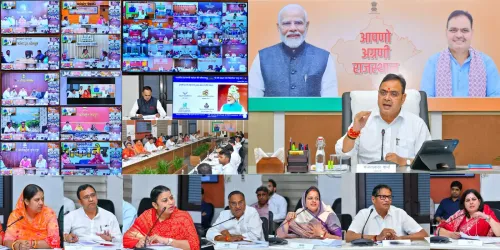
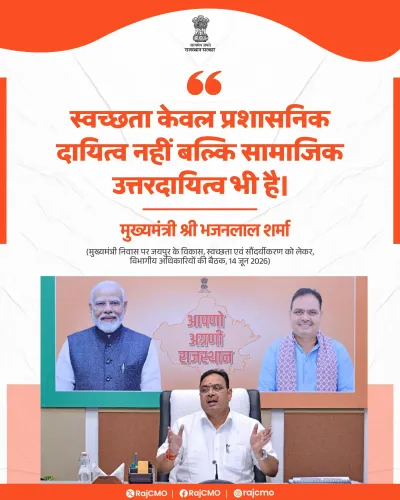
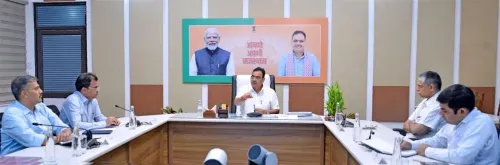
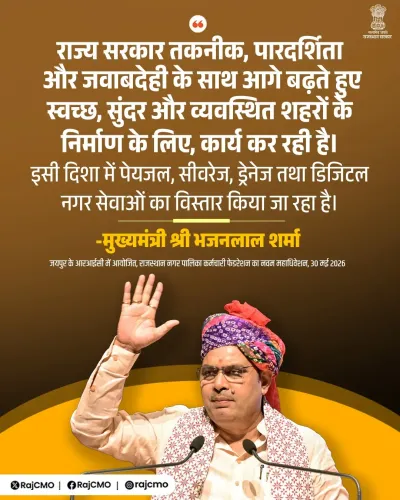
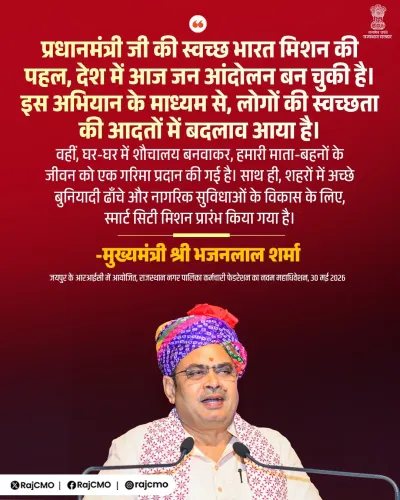
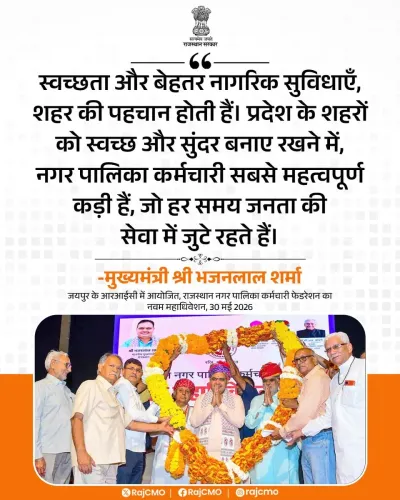
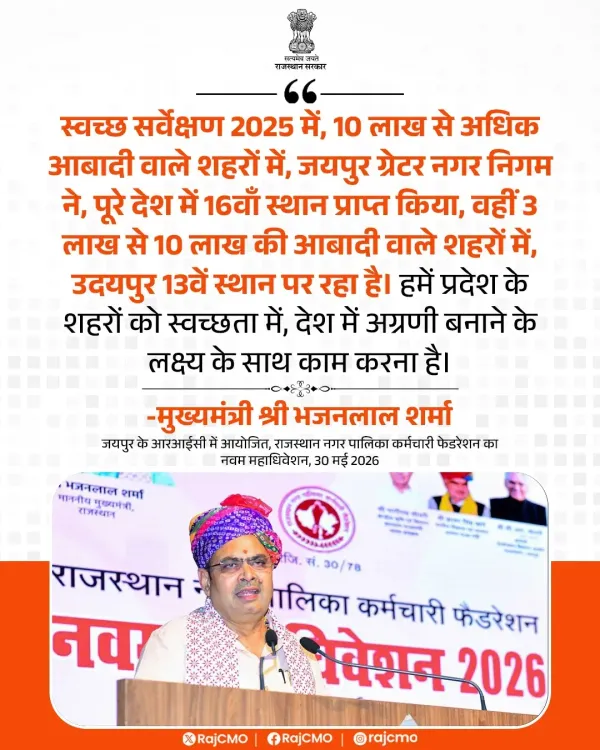
The Chief Minister's Office of Rajasthan posted on X (formerly Twitter) on Sunday, 31 May 2026, sharing a directive from Chief Minister Bhajan Lal Sharma that Rajasthan must work with the goal of making its cities leaders in cleanliness at the national level.
Context
The post, tagged with the hashtag #आपणो_अग्रणी_राजस्थान ('Our Leading Rajasthan'), carries a direct message from CM Bhajan Lal Sharma: 'हमें प्रदेश के शहरों को स्वच्छता में, देश में अग्रणी बनाने के लक्ष्य के साथ काम करना है' — 'We must work with the goal of making the state's cities leaders in cleanliness across the country.' The statement signals a top-level political commitment to urban sanitation performance as a governance priority for the BJP government in Rajasthan.
Bhajan Lal Sharma became Chief Minister of Rajasthan in December 2023 after the party's assembly election victory. Urban cleanliness was among the governance priorities flagged by the new administration in its early policy statements.
Policy Backdrop
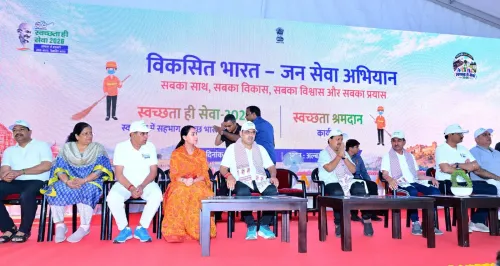
The statement aligns with the Swachh Bharat Mission, the Central government programme launched in 2014 to improve solid waste management, sanitation infrastructure, and open-defecation-free status across urban and rural India. The urban component of the mission has driven significant investment in waste processing capacity and public toilet infrastructure across the country.
Complementing the mission is the Swachh Survekshan, an annual ranking exercise conducted by the Ministry of Housing and Urban Affairs since 2016. The survey assesses and compares cleanliness performance of cities nationwide, with rankings directly influencing central funding allocations and serving as a key political scorecard for state governments. Rajasthan has historically trailed top-performing cities such as Indore and has sought incremental improvements in waste segregation and processing capacity.
Stakeholders and Impact
Rajasthan's urban local bodies — the municipal corporations, councils, and nagar panchayats spread across the state — are the primary implementing agencies for any cleanliness drive. Their operational capacity in areas such as door-to-door waste collection, segregation at source, and public space upkeep will be central to any improvement in national rankings.
For city residents, a sustained push on cleanliness translates into better solid waste management, improved public sanitation facilities, and reduced environmental health risks. Competitive federal rankings also create pressure on local bodies to deliver measurable outcomes, making citizen grievance redressal on sanitation more responsive.
What's Next
The immediate marker will be Rajasthan's performance in the next edition of the Swachh Survekshan rankings, which serve as the most visible national benchmark for urban cleanliness. Observers will also watch for dedicated urban sanitation allocations in the state's forthcoming budget that could back this political commitment with financial resources.
The hashtag #आपणो_अग्रणी_राजस्थान — 'Our Leading Rajasthan' — frames this cleanliness push within a broader state-pride narrative that the Bhajanlal Sharma government has been cultivating since taking office, suggesting the urban sanitation drive will be positioned as a flagship governance achievement heading into future electoral cycles.
Point of View
Which is still consolidating its post-2023 electoral mandate, positioning Rajasthan as a cleanliness leader offers a low-controversy, high-visibility governance win. The invocation of #आपणो_अग्रणी_राजस्थान signals that urban sanitation will be woven into a broader 'leading Rajasthan' identity campaign. Whether the ambition translates into budgetary muscle and operational reform at the urban local body level remains the critical test.
NationPress
22 Oct 2026
Frequently Asked Questions
What did CM Bhajan Lal Sharma say about Rajasthan cities and cleanliness?
CM Bhajan Lal Sharma stated that Rajasthan must work with the goal of making the state's cities leaders in cleanliness at the national level, as shared by the Chief Minister's Office on 31 May 2026.
What is Swachh Survekshan and how does Rajasthan perform?
Swachh Survekshan is an annual cleanliness ranking of Indian cities conducted by the Ministry of Housing and Urban Affairs since 2016. Rajasthan has historically trailed top performers like Indore and has been working to improve its waste segregation and processing capacity.
What is the Swachh Bharat Mission and does it apply to Rajasthan?
The Swachh Bharat Mission is a Central government programme launched in 2014 to improve solid waste management and sanitation across India. Rajasthan's urban local bodies participate in the mission and its associated annual Swachh Survekshan rankings.
What does #AapnoAgraniRajasthan mean?
The hashtag #आपणो_अग्रणी_राजस्थान translates from Rajasthani/Hindi as 'Our Leading Rajasthan' and is used by the state government to frame its governance ambitions — including the urban cleanliness drive — within a state-pride narrative.
Who is Bhajan Lal Sharma and when did he become CM of Rajasthan?
Bhajan Lal Sharma is a BJP leader who became Chief Minister of Rajasthan in December 2023 following the party's victory in the state assembly elections.