CM Bhajanlal Orders Mission-Mode Push for Jaipur's Cleanliness
Synopsis
Chief Minister Bhajanlal Sharma chaired a meeting at his residence on June 15, 2026, directing officials to pursue Jaipur's development and sanitation in mission mode, enforce anti-littering rules, complete pre-monsoon drain cleaning, and launch a Model Road pilot to position Jaipur among India's leading cities.
Key Takeaways
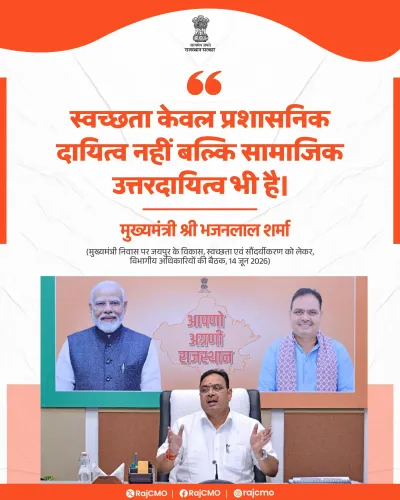
CM Bhajanlal Sharma chaired a meeting at the Chief Minister's Residence on June 15, 2026 focused on Jaipur's development, sanitation, and beautification.
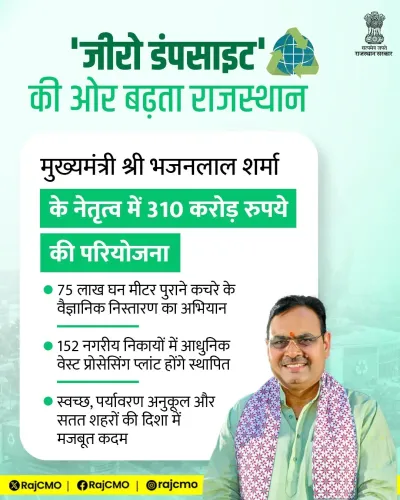
Officials were directed to work in mission mode and take enforcement action against open littering while promoting mechanised cleaning .
Pre-monsoon drain cleaning must be completed on a time-bound basis, with special monitoring of waterlogging-prone areas.
A major road in Jaipur is to be developed as a 'Model Road' under a pilot project, intended as a scalable urban-infrastructure template.
The overarching goal is to position Jaipur among India's leading cities to boost the tourism sector.
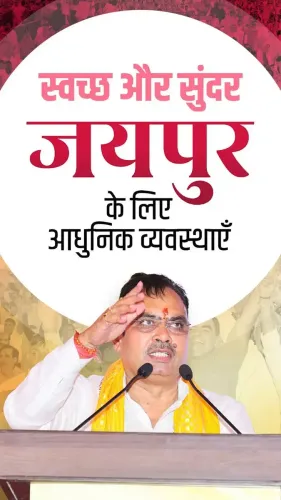
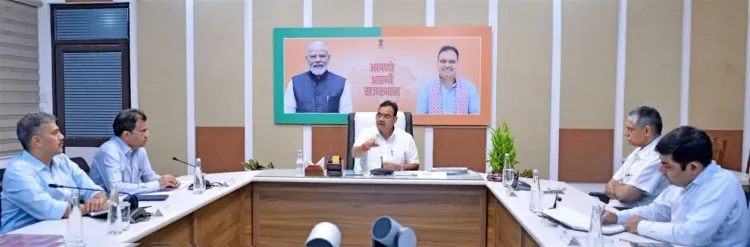
Chief Minister Bhajanlal Sharma chaired a high-level meeting at the Chief Minister's Residence on Monday, June 15, 2026, directing officials to work in mission mode on the development, sanitation, and beautification of Jaipur, the state capital. The meeting focused on strengthening the city's cleanliness infrastructure, tackling open littering through enforcement, and accelerating pre-monsoon drainage clearance across the city.
Context
The Chief Minister's Office shared the directives on X, summarising a wide-ranging set of instructions. Sharma was quoted as saying that Jaipur must be established 'देश के अग्रणी शहरों की श्रेणी में' ('among the leading cities of the country') with a clean, beautiful, and attractive urban environment to promote tourism. Officials were told that action must be taken against those who dump waste in the open, and that mechanised cleaning systems must be actively promoted across the city.
A notable directive called for developing one major road as a 'Model Road' under a pilot project — a scalable intervention intended to set a replicable standard for urban infrastructure across Jaipur.
Policy Backdrop
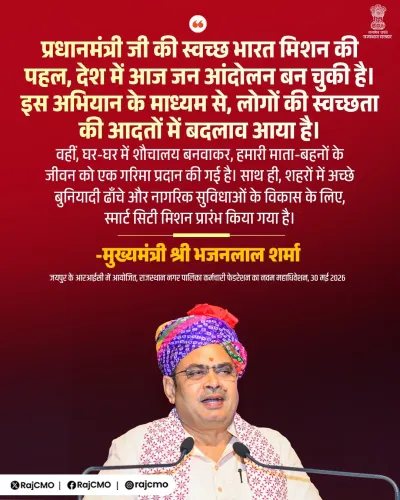
The push aligns closely with two central government programmes. The Swachh Bharat Mission, launched in 2014, provides funding and measurable targets for mechanised cleaning and solid-waste management in Indian cities. Jaipur was also included under the Smart Cities Mission in 2015, which funds integrated urban infrastructure and governance projects in select cities.
State governments across India have routinely intensified urban cleanliness and drainage drives ahead of each monsoon season, tying city aesthetics directly to tourism revenue. The emphasis on penal action against open littering reflects a broader national shift toward enforcement-led approaches within existing municipal legal frameworks.
Stakeholders and Impact
Jaipur is one of India's foremost heritage tourism destinations, drawing millions of domestic and international visitors annually. Chronic challenges — including open waste dumping, inadequate drain maintenance, and monsoon waterlogging in low-lying localities — have long affected both resident quality of life and the city's tourism appeal.
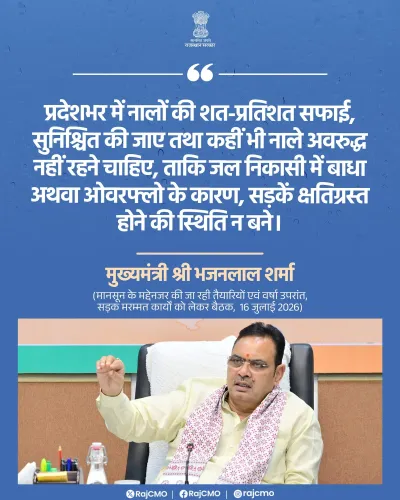
Sharma specifically directed officials to ensure timely completion of drain-cleaning ahead of the monsoon season, maintain special surveillance over waterlogging-prone areas, and prevent inconvenience to citizens. Municipal workers, residents of flood-prone neighbourhoods, and the city's tourism sector are the primary stakeholders in the outcome of these directives.
What's Next
The immediate deliverable is the pre-monsoon completion of drain cleaning across Jaipur, with the Jaipur Municipal Corporation expected to report on progress. The selection and development of a prominent road as a Model Road pilot will be closely watched as a test of the government's capacity to translate meeting-room directives into visible urban change.
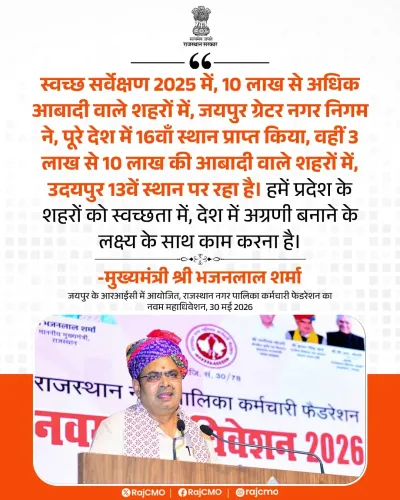
If the pilot succeeds, it is expected to serve as a template for city-wide rollout — a pattern consistent with how urban-governance interventions have been scaled in other Indian state capitals. The broader ambition of positioning Jaipur among India's leading cities will ultimately be measured against the Swachh Survekshan national cleanliness rankings and tourism footfall data in the months ahead.
Point of View
A calculation that has electoral as well as policy dimensions for a BJP administration in a heritage-city state. The 'mission mode' framing and the Model Road pilot are classic pre-monsoon optics, but they also reflect a genuine institutional shift toward enforcement and mechanisation that central missions have been incentivising for over a decade. Whether the directives translate into measurable outcomes will depend on the Jaipur Municipal Corporation's capacity and the political will to sustain enforcement beyond the immediate news cycle. The broader pattern — state capitals competing in national cleanliness rankings — means these announcements carry reputational stakes well beyond local governance.
NationPress
14 Sept 2026
Frequently Asked Questions
What did CM Bhajanlal Sharma announce for Jaipur's cleanliness?
CM Bhajanlal Sharma directed officials to work in mission mode on Jaipur's sanitation, ordering enforcement action against open littering, expansion of mechanised cleaning, timely drain-clearing before the monsoon, and the development of a Model Road pilot project.
What is the Jaipur Model Road pilot project?
The Model Road pilot involves developing one major road in Jaipur to a high standard of infrastructure and aesthetics, intended to serve as a replicable template for city-wide urban improvement.
Why is monsoon drain cleaning important for Jaipur?
Jaipur faces chronic waterlogging in several low-lying areas during the monsoon season. Timely drain cleaning reduces flooding risk and prevents disruption to residents and the city's tourism sector.
How does this relate to the Swachh Bharat Mission?
The Swachh Bharat Mission, launched in 2014, funds mechanised cleaning and solid-waste management in Indian cities. Jaipur's push for mechanised sanitation and anti-littering enforcement aligns directly with the mission's targets and funding framework.
What is the goal of making Jaipur a leading city?
CM Sharma stated that Jaipur should be established among India's leading cities with a clean, beautiful, and attractive urban environment, primarily to boost tourism — a major driver of Rajasthan's economy.