PM Modi Lauds Chandigarh's Cleanliness Drive, Calls It National Model
Synopsis
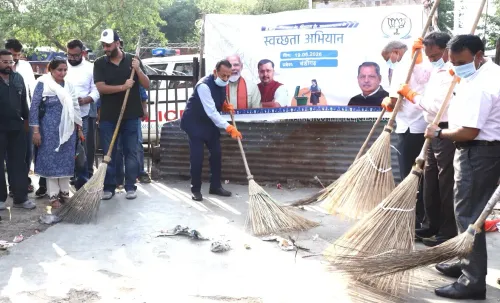
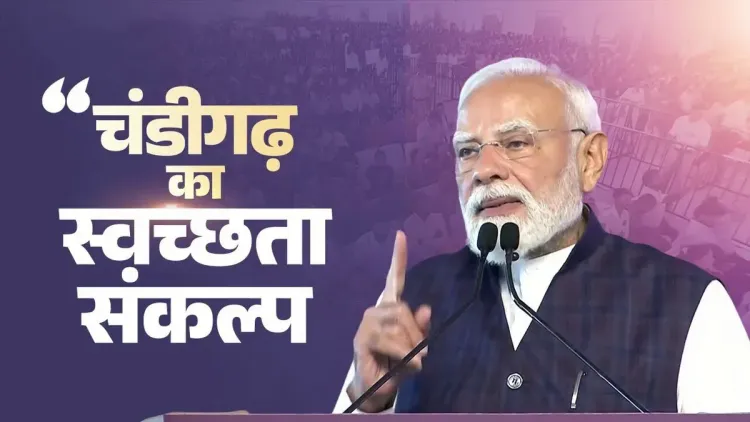
Prime Minister Narendra Modi on 17 July 2026 praised Chandigarh residents for igniting a new spirit of cleanliness, calling their efforts vital to India's national sanitation mission and congratulating them as his own family.
Key Takeaways
PM Modi praised Chandigarh residents on 17 July 2026 for a fresh community-driven cleanliness push.
He described Chandigarh's people as his 'family' and called such campaigns essential for the country today.
Chandigarh is a Union Territory and joint capital of Punjab and Haryana , consistently ranked among India's cleanest cities.
The Swachh Bharat Mission , launched on 2 October 2014 , underpins India's national sanitation and cleanliness drive.
The annual Swachh Survekshan ranking, introduced in 2016 , drives competition among urban local bodies on cleanliness parameters.
Next Swachh Survekshan results and Swachh Bharat Mission-Urban 2.0 progress reports will be key indicators to watch.
Prime Minister Narendra Modi on Friday, 17 July 2026 praised the residents of Chandigarh for igniting a fresh spirit of cleanliness, calling their efforts a vital contribution to the nation's ongoing sanitation mission. Posting on X, he extended personal congratulations to the city's people, describing them as his own family.
In his post, Modi wrote in Hindi: 'चंडीगढ़ के लोगों ने स्वच्छता को लेकर एक नई अलख जगाई है' — ('The people of Chandigarh have lit a new flame of cleanliness') — adding that such cleanliness campaigns are proving immensely useful for the country today.
Context
Chandigarh, the Union Territory that serves as the joint capital of Punjab and Haryana, has long ranked among India's cleanest cities in official government surveys. The Prime Minister's remarks signal continued central recognition of the city's performance under the national sanitation framework, and reflect a broader effort to sustain public momentum around urban cleanliness.
The phrase 'new flame' (nayi alakh) suggests a recent local initiative or community-driven push, though the specific nature of that effort has not been detailed in the post.
Policy Backdrop
The Swachh Bharat Mission, launched on 2 October 2014, is the flagship national programme aimed at eliminating open defecation, improving solid waste management, and driving behavioural change on sanitation across urban and rural India. Its urban arm has since evolved into Swachh Bharat Mission-Urban 2.0, with a sharper focus on waste segregation, processing, and making cities 'garbage-free.'
The annual Swachh Survekshan exercise, introduced in 2016 by the Ministry of Housing and Urban Affairs, ranks urban local bodies on cleanliness parameters and has become a key competitive driver among cities. Chandigarh has consistently performed strongly in these rankings, reflecting close alignment between its local administration and centrally sponsored urban schemes.
Stakeholders and Impact
The primary beneficiaries of sustained cleanliness drives are Chandigarh's urban residents, whose quality of life is directly linked to effective solid waste management and public hygiene. Urban local bodies bear the operational responsibility of translating public enthusiasm into measurable outcomes — from door-to-door waste collection to scientific processing of municipal waste.
Central recognition from the Prime Minister also carries reputational weight for city administrations, often galvanising further local investment in sanitation infrastructure and community participation programmes.
What's Next
Attention will now turn to the release of the next Swachh Survekshan results and state-level progress reports on waste-processing targets under Swachh Bharat Mission-Urban 2.0. Chandigarh's performance in the upcoming rankings will be closely watched as a measure of whether this renewed community push translates into improved scores. The Prime Minister's public acknowledgement is also likely to encourage other cities to intensify their own cleanliness efforts ahead of the next assessment cycle.
Point of View
The post reinforces the mission's identity as a people's movement rather than a top-down government programme. The timing, ahead of what is expected to be the next Swachh Survekshan cycle, is likely to amplify pressure on other urban local bodies to demonstrate visible cleanliness outcomes. It also keeps sanitation — a signature governance theme of the BJP-led government since 2014 — prominent in public discourse.
NationPress
16 Oct 2026
Frequently Asked Questions
Why did PM Modi praise Chandigarh for cleanliness?
PM Modi praised Chandigarh on 17 July 2026 because residents sparked a new community-driven cleanliness initiative, which he described as a model of public participation under the Swachh Bharat Mission.
What is the Swachh Bharat Mission?
The Swachh Bharat Mission is India's flagship national sanitation programme launched on 2 October 2014, aimed at eliminating open defecation, improving solid waste management, and promoting cleanliness behaviour across urban and rural India.
What is Swachh Survekshan and how does Chandigarh perform?
Swachh Survekshan is an annual cleanliness ranking of Indian cities introduced in 2016 by the Ministry of Housing and Urban Affairs. Chandigarh has consistently ranked among the country's top-performing cities in this survey.
Is Chandigarh a state or Union Territory?
Chandigarh is a Union Territory that serves as the joint capital of the states of Punjab and Haryana. It is administered directly by the central government.
What is Swachh Bharat Mission-Urban 2.0?
Swachh Bharat Mission-Urban 2.0 is the second phase of the urban sanitation programme, with a focus on making cities 'garbage-free' through improved waste segregation, scientific processing, and sustainable solid waste management.